14.ai Replaces Entire Customer Support Teams With AI Agents — AI Agency Without Relationship Memory Scales Volume, Not Understanding

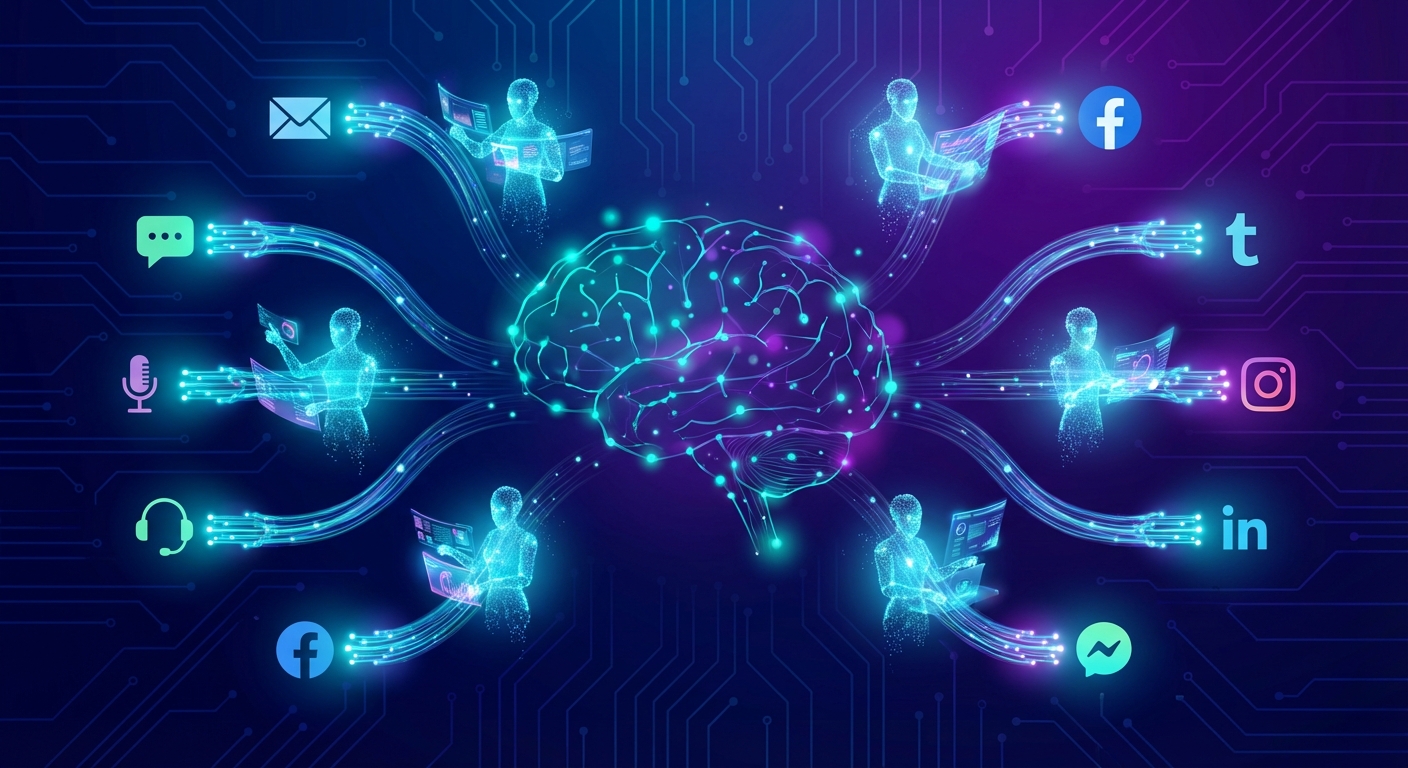
14.ai is not selling customer support software — they are selling a customer support agency. Backed by Y Combinator, General Catalyst, and founders from Dropbox, Slack, Replit, and Vercel, the startup eliminates three line items from startup balance sheets simultaneously: ticketing software, add-on AI tools, and large support teams. Their AI agents handle tickets across email, chat, voice, TikTok, Facebook, Instagram, WhatsApp, Telegram, and SMS. Integration takes a day. They clear backlogged tickets rapidly and operate 24/7 across any language.
The agency model is the key innovation. Instead of providing tools that require human configuration and oversight, 14.ai fully operates customer service end-to-end. The AI agents are not assistants to human support teams — they are the support team, with human oversight reserved for edge cases. Clients like Brilliant Labs, Creative Lighting, and Yon-Ka already operate this way.
But replacing human support teams means replacing human relationship memory too. The human agent who handled a frustrated customer's third complaint this month brought accumulated understanding to that interaction. An AI agency that resolves tickets without relationship memory treats the third complaint identically to the first — escalating volume, not addressing the pattern.
14.ai: What Everyone's Getting Right (And Missing)
The agency model genuinely reduces startup operational burden. Early-stage companies that cannot afford large support teams but need multi-channel customer coverage get enterprise-grade support from day one. The economic model eliminates three separate vendor relationships and their associated integration complexity.
Multi-channel coverage is particularly valuable for consumer brands. Customers expect support wherever they are — not just email and chat, but Instagram DMs, WhatsApp, and TikTok. Staffing human agents across nine channels is prohibitively expensive for startups. AI agents handle the breadth while maintaining consistent quality.
The gap is customer relationship intelligence. 14.ai resolves individual tickets efficiently. But customer relationships are not collections of independent tickets — they are evolving narratives. The customer who returned a product last month and is now asking about a new purchase is expressing loyalty despite a bad experience. Without relationship memory, the AI agency treats this as a standard product inquiry, missing the opportunity to acknowledge the previous issue and strengthen the relationship. Intercom Fin, Zendesk AI, and Ada share the same limitation.
What AI Customer Service Agencies Do With Customer History Today
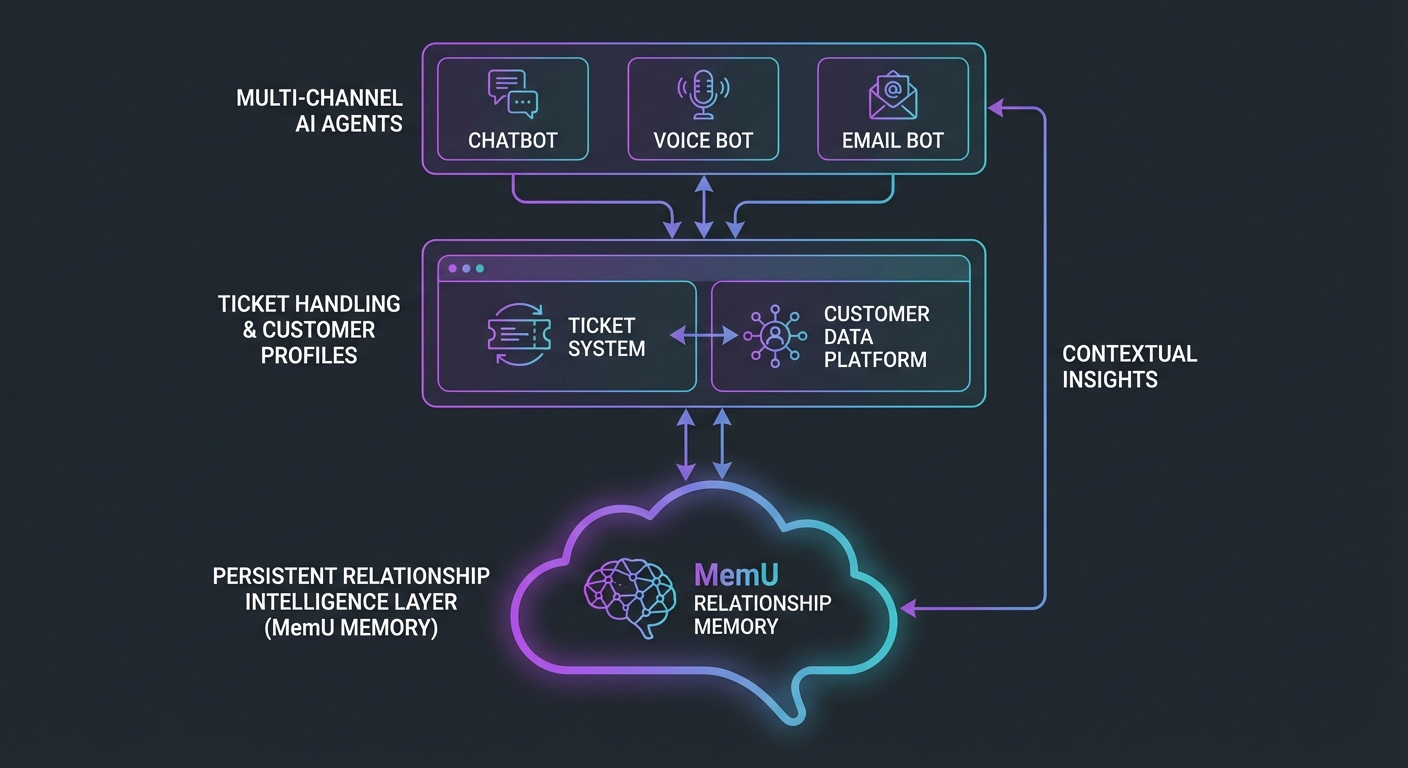
Customer service platforms maintain ticket histories, purchase records, and CRM data. AI agents can reference this structured data — "I see your order was delivered on Tuesday" or "You contacted us about this issue previously." This data lookup provides basic personalization.
But there is a fundamental difference between accessing a customer's ticket history and understanding their relationship trajectory. The structured data shows five tickets in three months. It does not reveal that the customer's sentiment shifted from enthusiastic to frustrated between tickets two and three, that their communication style indicates they value directness over empathy, or that their purchasing pattern suggests they are evaluating competitors.
Customer data exists in databases. Customer understanding — the nuanced relationship intelligence that transforms ticket resolution into genuine service — requires persistent memory that synthesizes interactions into insights.
The MemU Agentic Memory Framework: AI Agencies With Relationship Intelligence
The MemU Agentic Memory Framework provides persistent relationship memory that gives AI customer service agencies the cumulative customer understanding that previously required experienced human agents.
Consider a DTC skincare brand using 14.ai to manage customer support. Without the MemU Agentic Memory Framework, each interaction is independent. A customer who discussed skin sensitivity in January, asked about ingredient sourcing in February, and is now inquiring about a new product gets a generic product description. With MemU, the agent retrieves the complete relationship context: the customer has sensitive skin that reacted to fragrance in a previous purchase, they value transparency about ingredients, and they respond best to detailed technical information rather than marketing language. The product recommendation is immediately specific and trust-building.
The MemU Agentic Memory Framework transforms AI customer service through:
- Relationship trajectory tracking: Customer sentiment, preferences, and engagement patterns persist across every interaction. The framework detects shifts — enthusiasm declining, complaints increasing, purchase frequency dropping — enabling proactive intervention before customers churn.
- Communication style adaptation: Some customers want detailed explanations; others want quick resolutions. The MemU Agentic Memory Framework learns each customer's communication preferences from interaction history, automatically adapting the agent's response style.
- Cross-channel continuity: When a customer moves from Instagram DM to email to voice, the relationship memory follows. No context re-establishment. No repeated explanations. Every channel delivers the same informed service.
An AI support agency without memory resolves tickets. With memory, it builds relationships — the difference between customer service and customer success.
Head-to-Head: Ticket Resolution vs. Relationship Building
14.ai alone: Full-service AI customer support across nine channels with rapid integration, multilingual capability, and 24/7 operation. Ticket volume scales effortlessly — but each interaction is contextually independent.
14.ai + MemU Agentic Memory Framework: Same operational scale plus persistent customer relationship memory. Every interaction deepens the agency's understanding of each customer. Preferences, history, and communication patterns inform every response automatically. Sub-100ms retrieval means zero impact on response time.
This enhancement applies to every AI customer service solution — Intercom Fin, Zendesk AI, Ada, and Sierra all benefit from persistent relationship memory that transforms volume handling into relationship building.
Empowering 14.ai: Better Together
MemU does not replace 14.ai's agency model — it gives the agency genuine customer intelligence.
- Revenue expansion: 14.ai positions itself as a "revenue growth engine" through pre-sales, upsells, and retention. The MemU Agentic Memory Framework provides the customer understanding that makes those growth actions relevant rather than generic — recommending products based on actual preferences, timing upsells based on relationship trajectory.
- Brand voice consistency: Relationship memory ensures the brand voice adapts to individual customers while maintaining consistency. The playful tone that works for one customer and the professional tone that works for another are both on-brand — and both informed by learned preferences.
- Client onboarding acceleration: When 14.ai takes over a new client's support operations, the MemU Agentic Memory Framework can ingest historical customer data and begin building relationship memory from day one, rather than starting cold.
Get Started with MemU
14.ai replaces support teams with AI agents. The MemU Agentic Memory Framework ensures those agents bring the one thing human teams had that AI typically lacks — genuine customer understanding that deepens with every interaction.
Visit memu.pro to explore the Agentic Memory Framework API and add persistent relationship memory to your AI customer service.
Tags: 14.ai, AI customer service, AI agency, customer relationship memory, agentic memory, MemU AI, Y Combinator AI, multi-channel support