AI Security Agents Monitor and Respond Autonomously — But Threat Memory That Resets Each Shift Creates Blinding Gaps

Agent-Driven Cybersecurity: What Everyone's Getting Right (And Missing)
Agent-driven cybersecurity entered mainstream deployment in 2026. Kai Cyber raised $125 million to build autonomous AI agents that monitor networks, detect threats, and execute defensive actions without human intervention. Quantro Security launched VM.Analyst, using AI agents to assess vulnerability risk and prioritize remediation. The thesis is clear: manual defense is too slow for AI-powered attacks. Autonomous security agents must respond at machine speed.
The market is buying in. Kai signed enterprise customers across energy, pharmaceuticals, automotive, and hospitality. Quantro's founding team came from CrowdStrike, Tenable, and Qualys — institutional credibility for agent-based security operations.
But there's a foundational layer autonomous security still depends on getting right — memory. Agents that detect and respond to threats without remembering attack patterns across shifts create blinding gaps. Threat intelligence that resets daily is intelligence that fails when it matters most.
What Agent-Driven Security Does With Memory Today
Kai, Quantro, and同类 platforms deploy security agents that analyze network traffic, correlate events, and trigger responses. Each agent operates with current context: logs, alerts, and asset metadata. Detection rules and ML models run in real time. When a threat is identified, the agent can isolate systems, block traffic, or escalate to humans.
The architectural limitation is temporal. Security agents without persistent threat memory treat every shift as independent. An agent that identified a novel attack vector at 2 AM has no memory of that pattern when the next shift starts at 8 AM. Slow-burn campaigns that evolve over days or weeks — the most dangerous kind — evade detection because no single agent session sees the full pattern. Cross-shift, cross-week threat correlation requires memory that persists.
OpenClaw and Moltbook discussions among security-focused agent builders echo this: SOC teams need agents that remember. Attack campaigns have temporal structure; defense agents without temporal memory are structurally blind to that structure.
The MemU Agentic Memory Framework: A Different Architecture
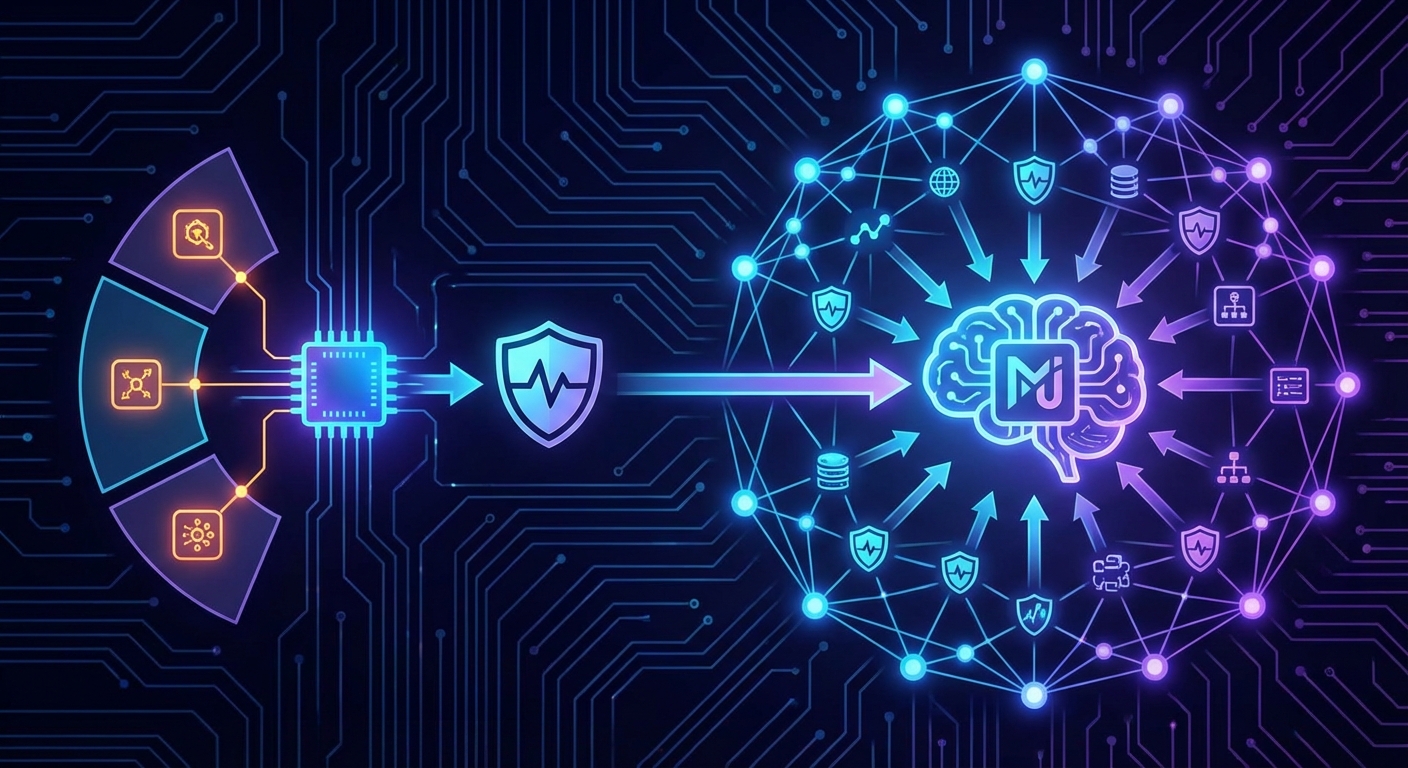
The MemU Agentic Memory Framework provides the persistence layer that autonomous security lacks. Where Kai and Quantro orchestrate detection and response, MemU captures threat intelligence generated during every shift and makes it retrievable across sessions, agents, and time.
Consider an agent that detects unusual outbound traffic from a developer workstation. With MemU, it recalls that the same pattern preceded a data exfiltration incident three months ago. The agent correlates current activity with historical memory and escalates immediately — instead of treating the signal as novel and potentially missing the campaign.
Autonomous security without persistent memory is shift-work amnesia. Every agent shift rediscovers the same threats. Attack campaigns that span time evade agents that cannot span time. Persistent threat memory transforms reactive defense into predictive defense.
The MemU Agentic Memory Framework integrates via REST API alongside security orchestration platforms. Key properties:
- Threat-pattern memory: Memories capture IOCs, behavior signatures, and correlation hypotheses. Cross-session retrieval surfaces patterns that single shifts cannot see.
- Campaign linking: Memory graph links related incidents across time. Slow-burn campaigns become visible when agents recall prior signals.
- Response-outcome tracking: Agents remember which responses worked. False positive rates decrease as agents learn from past decisions.
Head-to-Head: MemU vs. Agent-Only Security
Agent-driven cybersecurity alone: Autonomous detection and response. Real-time correlation. Machine-speed defense. But each agent shift starts with current context only. No memory of prior threats, prior campaigns, or prior response outcomes. Threat intelligence resets. Campaigns that evolve over time evade detection.
MemU Agentic Memory Framework added: The same autonomous capabilities, now backed by persistent threat memory. Every agent shift benefits from every prior shift's intelligence. Attack patterns that span days or weeks become visible. Response quality improves as agents learn from outcomes. Reactive security becomes predictive security.
Empowering Autonomous Security: Better Together
Combining agent-driven cybersecurity with MemU unlocks defense capabilities neither achieves alone:
- Cross-shift campaign detection: Agents correlate current activity with threats detected in prior shifts. Slow-burn campaigns surface before they complete.
- Adaptive false positive reduction: Memory tracks which alerts led to genuine incidents. Agents learn to prioritize and tune thresholds over time.
- Institutional threat intelligence: Security memory compounds across the organization. New agents inherit the threat knowledge of every prior agent.
Get Started with MemU
Agent-driven cybersecurity delivers the autonomous speed enterprises need. What completes the architecture is threat memory that persists — intelligence that compounds across every shift. The MemU Agentic Memory Framework provides that layer.
Visit memu.pro to explore the Agentic Memory Framework API, or check out the GitHub repository to build security agents with persistent threat memory.
Tags: agent-driven cybersecurity, AI security agents, threat memory, MemU Agentic Memory Framework, autonomous security, Kai Cyber, Quantro