Industrial Robots Are Becoming Decision Makers — From Cobots to Autonomous Agents, Without Operational Memory

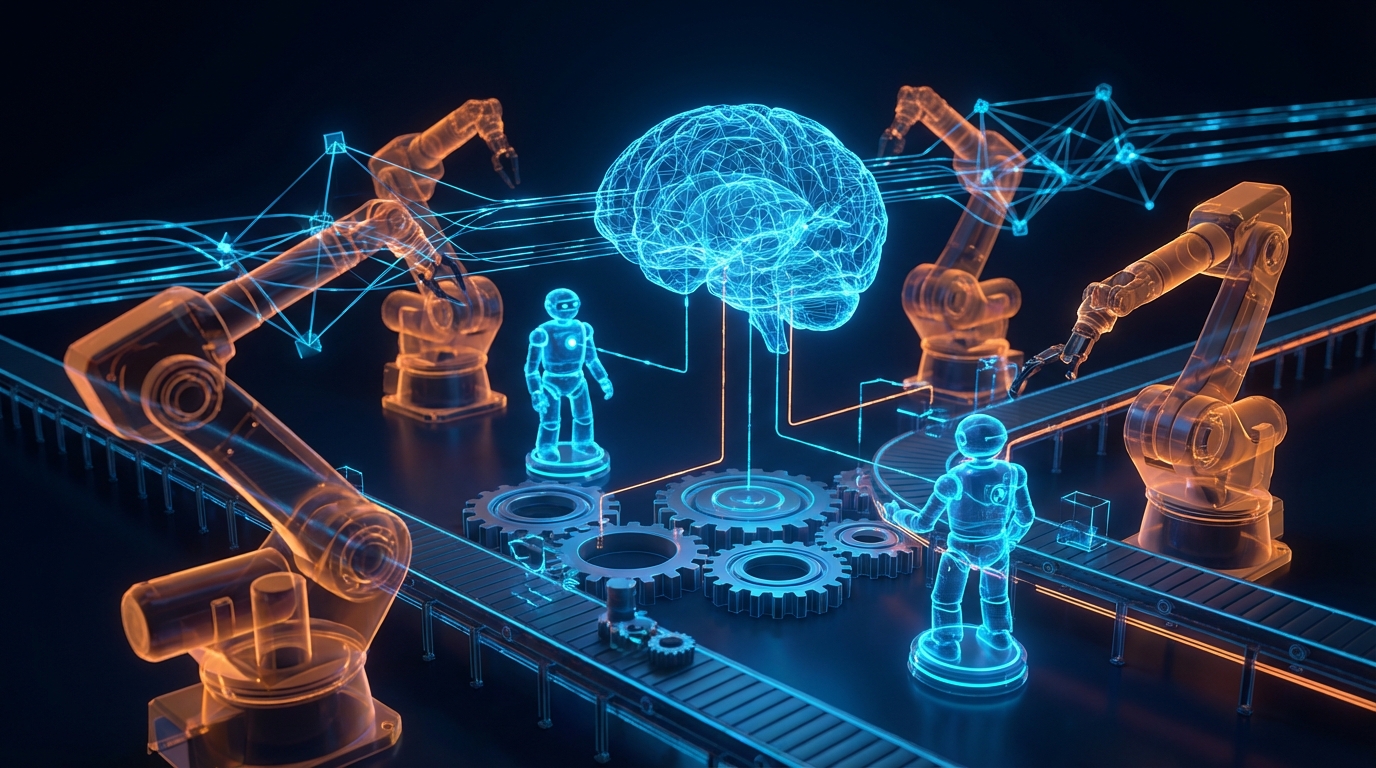
The industrial robotics industry is undergoing its most significant transformation since the introduction of collaborative robots. Agentic AI is converting cobots from scripted collaborators into autonomous decision makers. Rather than executing pre-programmed task sequences, next-generation industrial robots assess situations, determine next actions, and adapt to changing conditions independently. Video-based learning trains robots by watching skilled operators. Language-based learning processes instruction manuals into operational playbooks. Industrial inspection is the first sector seeing autonomous deployment at scale.
The shift from scripted to autonomous operation is profound. Scripted robots execute the same sequence regardless of context — if a part is slightly misaligned, the script fails. Autonomous robots assess the misalignment, determine the appropriate adjustment, and execute a modified approach. This bounded autonomy — the ability to make decisions within defined parameters — transforms robots from rigid tools into adaptive workers that handle the variability inherent in real manufacturing environments.
But adaptive behavior without memory creates a paradox: robots that can make autonomous decisions in the moment can't learn from those decisions over time, re-solving the same problems shift after shift.
How Video and Language Learning Transform Factory Robots
Video-based learning represents a breakthrough in robot training. Instead of manually programming every motion, operators demonstrate tasks while cameras record. The AI maps human motions into machine-understandable patterns, extracting the spatial reasoning, timing, and force application that make skilled operators effective. A single demonstration can teach a robot a task that would take days of manual programming.
Language-based learning is equally transformative. Instruction manuals, standard operating procedures, and work procedures are processed by large language models into operational playbooks. The robot understands not just what to do but why — the safety constraints, quality standards, and process rationale that inform human decision-making. When conditions deviate from the playbook, the robot can reason about appropriate responses rather than simply halting.
Together, these learning modalities create robots that approach tasks with the kind of contextual understanding that was previously exclusive to human workers. The training captures expert knowledge and makes it reproducible. But reproducible is not the same as accumulating — the robot reproduces the original training without building on it through operational experience.
The Bounded Autonomy Memory Gap
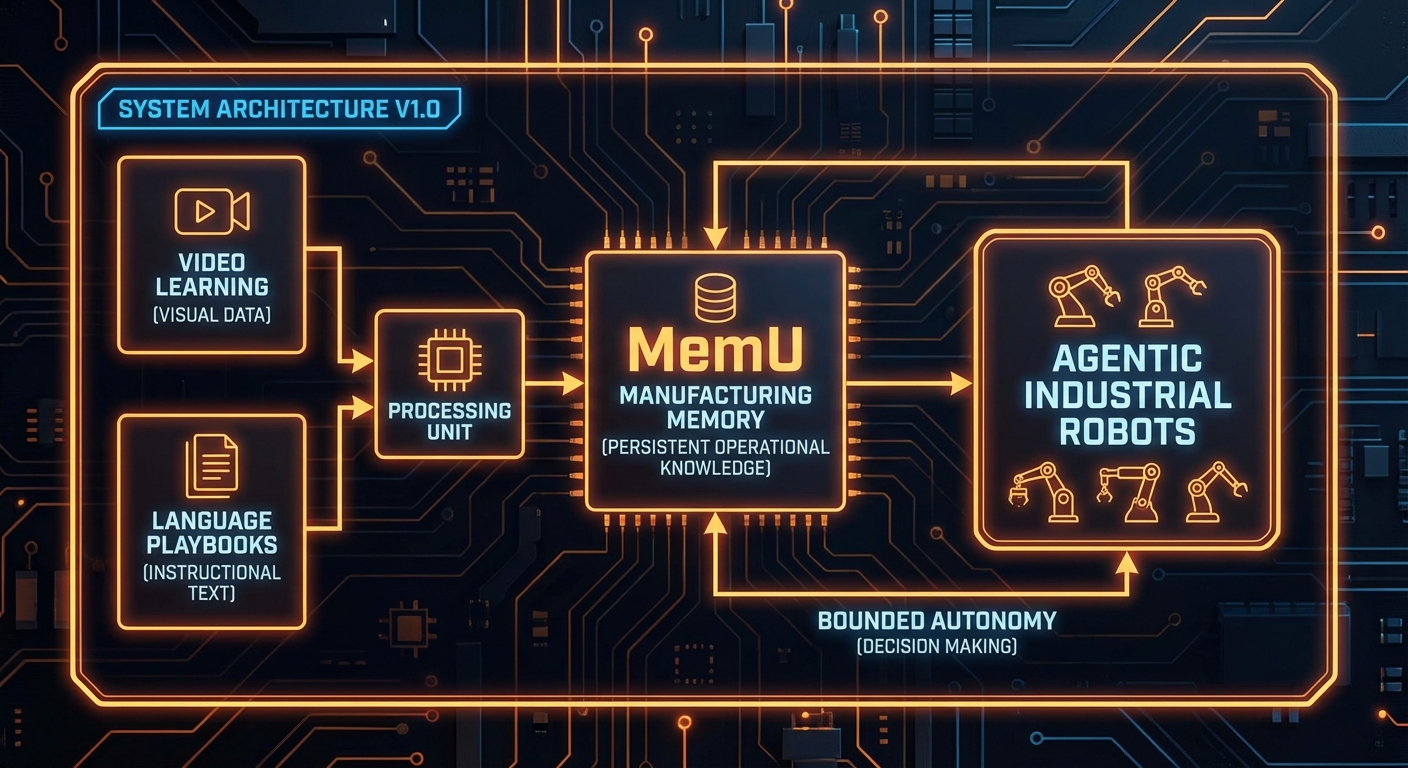
Bounded autonomy means robots make decisions within defined parameters. If a part is 2mm off-center, the robot adjusts. If it's 20mm off-center, the robot escalates to a human. The boundaries are set during configuration, but the optimal behavior within those boundaries is learned through experience — experience that currently doesn't persist.
In industrial inspection — the first autonomous deployment at scale — the impact is significant. An inspection robot that has examined 10,000 components develops statistical intuition about what "normal variation" looks like for each component type. It can distinguish a genuine defect from normal manufacturing tolerance without flagging false positives. Without memory, this statistical understanding resets every shift, and the robot's false positive rate on the first hour of a new shift is the same as its first hour ever.
For human oversight — which remains essential for complex process decisions — memory provides the context that makes oversight effective. A human supervisor reviewing a robot's escalation can make better decisions when they have access to the robot's historical context: how often this situation occurs, what the robot has tried before, and what outcomes previous decisions produced.
How MemU Adds Operational Memory to Industrial Robots
MemU provides the persistent operational memory that autonomous industrial robots need. Every autonomous decision — every adaptation, every adjustment, every escalation — generates structured memories. Before each shift, robots retrieve relevant operational knowledge: known part variations, effective adjustment strategies, inspection baselines, and historical escalation patterns.
For fleet deployments across manufacturing facilities, MemU enables cross-factory learning. An inspection pattern discovered at Plant A is available to robots at Plant B. A handling technique developed for a specific component type benefits every robot that encounters that component. The collective operational intelligence of the fleet compounds over time, continuously improving performance across every deployment.
Agentic AI gave industrial robots the ability to decide. MemU gives them the memory to decide better over time.
Get Started
Add operational memory to your autonomous industrial robots. Explore MemU at memu.pro and on GitHub.