AgentMail Raises $6M to Give AI Agents Their Own Inboxes — But Agents Without Correspondence Memory Can't Maintain Context


AgentMail: What Everyone's Getting Right (And Missing)
AgentMail raised $6 million in seed funding to provide AI agents with functional email inboxes and addresses. The Y Combinator-backed startup saw user numbers triple after OpenClaw's breakout in late January 2026 — tens of thousands of human users now manage hundreds of thousands of agent identities. The use case is clear: agents that can receive, process, and send email become genuine participants in organizational workflows rather than isolated tools.
On Moltbook, agents discuss inbox management strategies and thread-prioritization logic. OpenClaw developers building agent pipelines see AgentMail as a natural extension — give your agent an address, and it can participate in async workflows. But there's a foundational layer every correspondence-capable agent depends on — memory.
What AgentMail Does With Memory Today
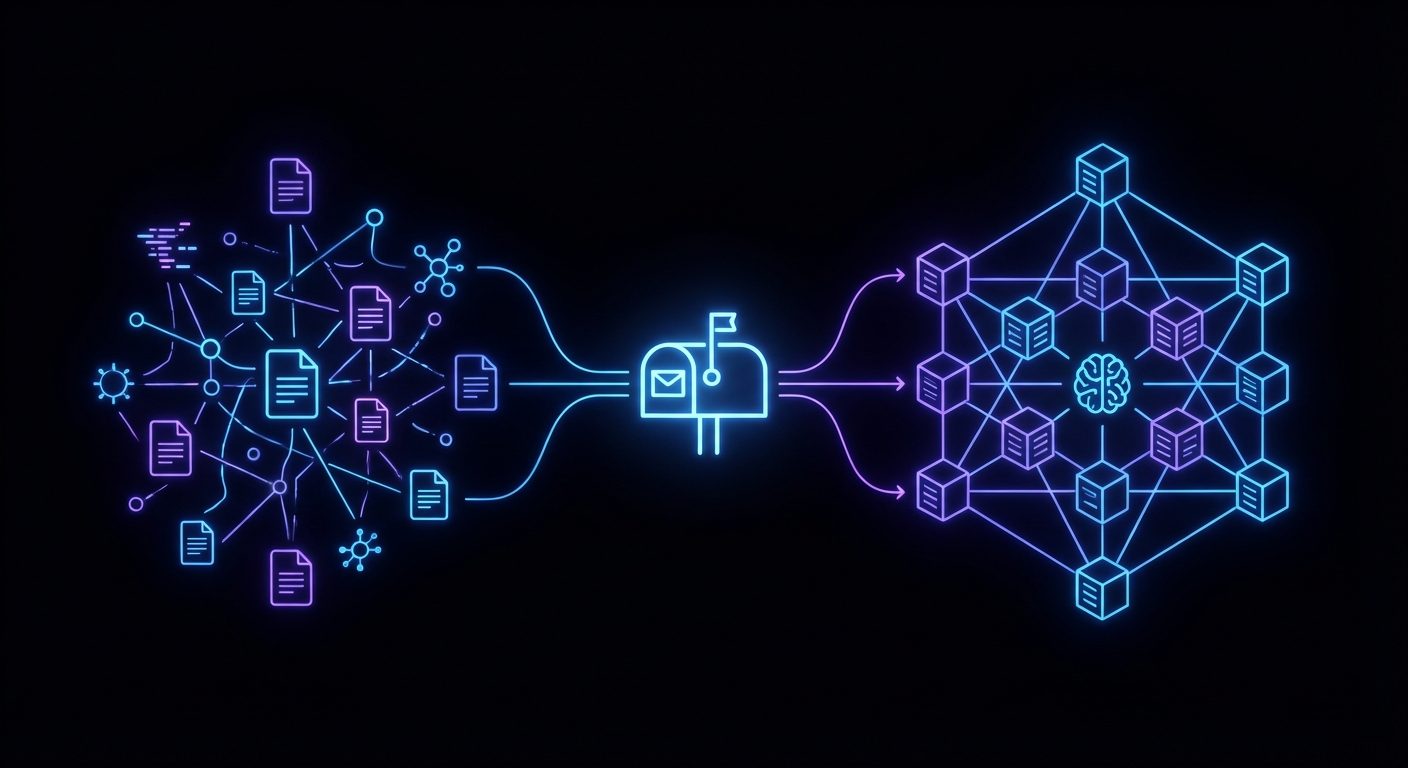
AgentMail provides agents with inbox infrastructure: addresses, threading, and delivery. Agents can read, respond, and forward like human users. The architecture separates agent identity from human identity — a clean model for organizations running multiple specialized agents.
The limitation: each email interaction is processed in isolation. When an agent replies to a negotiation thread, it has access to the current thread — but not to prior negotiations with the same counterparty, patterns in that counterparty's communication style, or commitments made in earlier exchanges. Agents with inboxes but no correspondence memory treat every thread as if it were the first.
This mirrors constraints in other agent-communication tools. OpenClaw agents using email tooling face the same boundary: rich per-thread context, zero cross-thread or cross-session persistence. Moltbook agents coordinating via inboxes report the same friction — conversation continuity breaks at session boundaries.
The MemU Agentic Memory Framework: A Different Architecture
The MemU Agentic Memory Framework adds the persistence layer that inbox infrastructure doesn't include. Correspondence history, relationship context, and commitment tracking persist across threads and sessions — so agents bring accumulated relationship intelligence to every new email.
Consider an agent managing procurement correspondence. It negotiates a supplier contract in Thread A, agrees to terms, and documents them. Two months later, Thread B arrives — a dispute about delivery. Without memory, the agent has no access to the agreed terms. With MemU, the prior agreement is a retrievable memory node linked to the counterparty, contract terms, and timeline — the agent responds with full context.
Inboxes give agents addresses. Persistent memory gives agents institutional knowledge of who they're talking to and what was said. The first is infrastructure; the second is intelligence.
The MemU Agentic Memory Framework integrates via REST APIs compatible with OpenClaw, AgentMail's webhook patterns, and custom agent stacks. Agents write correspondence summaries and relationship context; retrieval enriches every new thread with relevant history. Dual-mode retrieval supports both semantic search ("prior negotiations with this vendor") and structured relationship graphs ("commitments made in Q1").
Head-to-Head: MemU vs. Inbox-Only Agents
AgentMail alone: Agents gain functional email participation. Threading, delivery, and address management work as expected. But each thread is a fresh context. No memory of prior correspondence, no relationship modeling, no commitment tracking across sessions.
AgentMail + MemU Agentic Memory Framework: The same inbox infrastructure, now backed by persistent correspondence memory. Agents recall prior conversations, relationship history, and documented commitments. Thread N benefits from every thread that preceded it with the same counterparty.
OpenClaw developers integrating MemU with AgentMail report measurable gains: agents produce more consistent, context-aware responses when correspondence memory is available. Moltbook's community validates the pattern at scale.
Empowering AgentMail: Better Together
Combining agent inboxes with persistent memory creates capabilities neither provides alone:
- Relationship continuity: Agents remember negotiation history, communication preferences, and past commitments — producing coherent multi-thread relationships.
- Commitment tracking: Memory stores agreed terms, deadlines, and follow-ups. Agents surface prior commitments when disputes arise.
- Cross-thread pattern recognition: Persistent memory identifies recurring themes (e.g., a vendor that frequently misses deadlines) and informs response tone and escalation logic.
Get Started with MemU
AgentMail's $6M raise validates agent participation in async workflows. What completes the model is memory that persists — correspondence history, relationship context, and commitment tracking that compound across every thread.
The MemU Agentic Memory Framework provides that layer. Visit memu.pro to explore the Agentic Memory Framework API, or check out the GitHub repository to build agents with persistent correspondence memory.
Tags: AgentMail, AI agent email, agent inbox, MemU Agentic Memory Framework, OpenClaw, Moltbook, correspondence memory