AI Agents Automate Data Pipelines in Minutes — Then Relearn Your Schema Every Morning


AI-powered data engineering tools are eliminating the drudgery of ETL development. Platforms like Fivetran's AI connectors, dbt's Copilot, Databricks' AI-assisted pipelines, and emerging tools like Y42 and Mozart Data use large language models to generate SQL transformations, build data models, and configure ingestion pipelines from natural language descriptions. What once required days of a data engineer's time — understanding source schemas, writing transformation logic, handling edge cases — now happens in minutes.
The productivity gain is real. Data teams report 60-80% reduction in pipeline development time for standard ingestion patterns. Schema mapping, data type conversion, and basic transformation logic are particularly well-suited to AI automation, and these tools handle them reliably.
But data pipelines aren't build-once artifacts. They're living systems that evolve with your data. When source schemas change, when data quality issues surface, when business logic shifts — the AI agent that built your pipeline has no memory of the original design decisions or the edge cases it previously resolved.
AI Data Pipeline Agents: What Everyone's Getting Right (And Missing)
The automation of pipeline creation addresses a genuine bottleneck. Data engineering teams are chronically understaffed relative to demand. Every business unit wants more data, faster, in more formats. AI agents that handle routine pipeline construction free data engineers for architectural work, optimization, and complex business logic that requires human judgment.
Tools like dbt Copilot understand SQL semantics deeply enough to generate correct transformations from business descriptions. Fivetran's AI connectors auto-detect source schemas and propose mapping configurations. These are meaningful productivity improvements.
The gap emerges in pipeline maintenance — which consumes 60-70% of a data engineer's time. Source schema migrations, data quality regressions, business logic changes, and performance degradation all require understanding not just what the pipeline does, but why it was built that way. AI agents that created the pipeline cannot recall their own design decisions when maintenance is needed.
What AI Data Tools Do With Pipeline Context Today
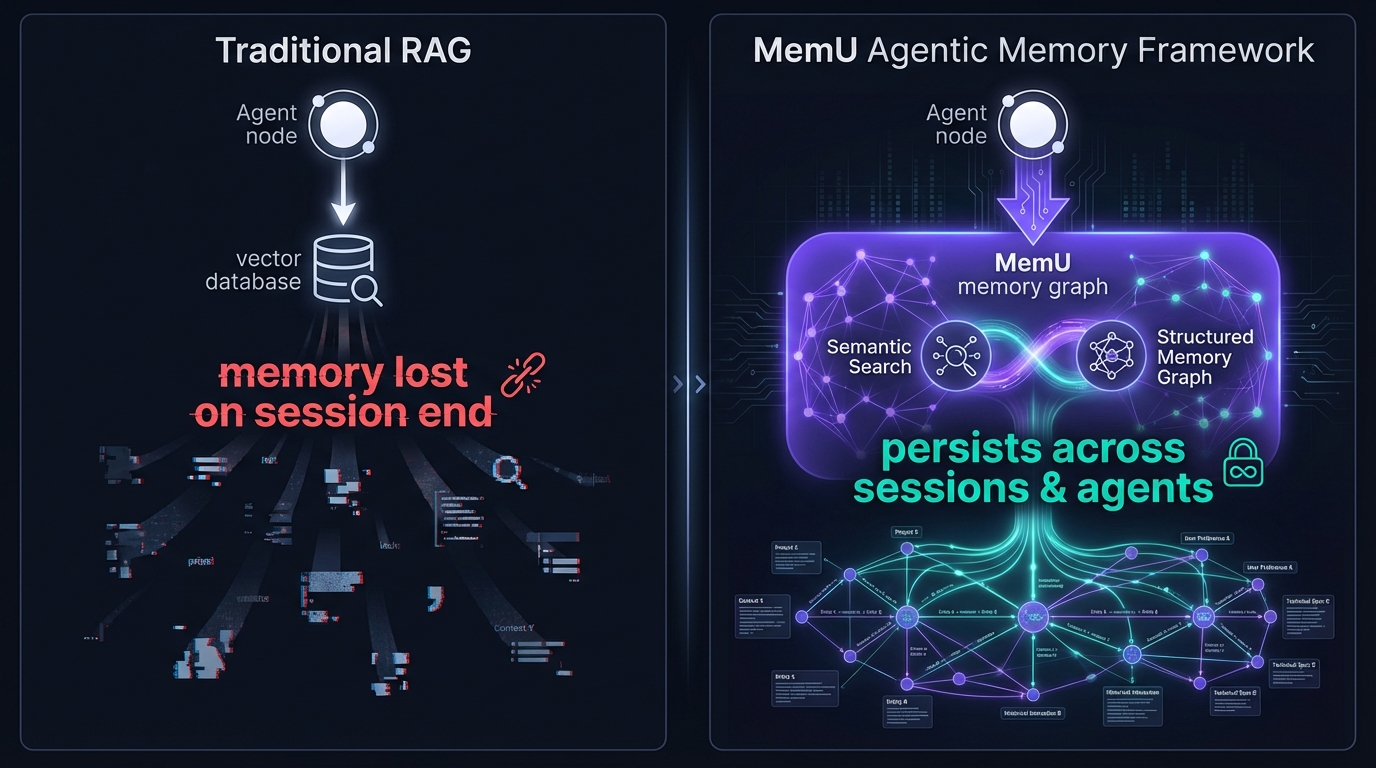
Current AI data tools operate on the visible artifacts: SQL code, schema definitions, configuration files, and lineage metadata. They can analyze existing pipelines, suggest optimizations, and generate documentation from code. Some tools maintain data lineage graphs that track how data flows through transformations.
But lineage isn't memory. Knowing that column A maps to column B doesn't capture why the mapping was implemented that way, what edge cases were considered, or what source data anomalies drove the transformation logic. When a schema change breaks the pipeline, the AI can see the break but can't recall the design intent that would inform the fix.
Pipeline context is fragmented across Jira tickets, Slack threads, code comments, and the memories of engineers who may have left the team. AI data agents don't access any of this — they see only the current state of code and metadata. This limitation affects every AI data tool in the market, from Databricks' assistants to Snowflake's Cortex.
The MemU Agentic Memory Framework: Data Pipelines That Remember Their Own History
The MemU Agentic Memory Framework provides persistent pipeline intelligence that captures not just what a pipeline does, but why it was built that way and how it has evolved. Every design decision, schema change response, and data quality resolution becomes part of the pipeline's memory.
Consider a data team managing 200 pipelines. A source system migrates from v2 to v3 API, changing field names and data types across 15 pipelines. Without the MemU Agentic Memory Framework, the AI agent examines each pipeline's current code and attempts to infer the correct mapping — often incorrectly, because the mapping reflects business logic that isn't evident from code alone. With MemU, the agent retrieves the original design context for each pipeline — which fields were intentionally renamed, which transformations encode specific business rules, which edge cases required special handling.
Three capabilities transform data pipeline management:
- Design decision persistence: The MemU Agentic Memory Framework captures why transformations were implemented, not just how. Business logic rationale, edge case handling decisions, and performance optimization choices persist alongside the pipeline code.
- Schema evolution memory: Every schema change and the corresponding pipeline adjustment is recorded with context. When similar changes occur in the future, the agent retrieves the playbook rather than reinventing the response.
- Data quality pattern recognition: Quality issues, their root causes, and their resolutions accumulate in memory. The agent detects recurring quality patterns earlier and applies proven fixes faster with each occurrence.
Data pipelines encode business logic in SQL. MemU ensures the business context behind that SQL persists even when the engineers who wrote it don't.
Head-to-Head: Stateless Pipeline AI vs. Memory-Enhanced Pipeline AI
AI data tools alone: Rapid pipeline generation from natural language. SQL transformation suggestions based on schema analysis. But every maintenance task requires re-inferring design intent from code — often incorrectly when business logic isn't self-evident.
AI data tools + MemU Agentic Memory Framework: Same generation speed plus persistent design context. Schema changes resolved using original design rationale. Data quality issues addressed with full historical pattern context. Sub-100ms retrieval of pipeline-specific memory keeps development workflows fast.
Whether you use dbt, Fivetran, Databricks, or custom Airflow — the MemU Agentic Memory Framework integrates with any data tool through its API, providing persistent context regardless of your data stack.
Empowering AI Data Tools: Better Together
MemU doesn't replace AI-powered data engineering — it provides the institutional knowledge that makes pipeline automation reliable at scale.
- Maintenance automation: Pipeline breaks that currently require human investigation can be resolved autonomously when the agent has full design context from the MemU Agentic Memory Framework.
- Team knowledge preservation: When senior data engineers leave, their pipeline knowledge often leaves with them. MemU captures design decisions continuously, eliminating single-person knowledge dependencies.
- Cross-pipeline optimization: Patterns that work well in one pipeline inform optimizations across the entire pipeline portfolio. The agent identifies reusable transformation patterns and propagates improvements.
Get Started with MemU
AI-powered data pipeline tools make creation fast. The MemU Agentic Memory Framework makes maintenance intelligent by preserving the context that transforms pipeline code from opaque artifacts into self-documenting, self-maintaining systems.
Visit memu.pro to explore the Agentic Memory Framework API, or check out the open-source repository on GitHub to start building persistent memory into your data engineering workflows today.
Tags: AI data pipelines, ETL automation, data engineering, agentic memory, MemU AI, pipeline maintenance, schema evolution, dbt AI