The AI Safety Debate Is Missing Its Foundation — You Cannot Govern Agents That Forget Their Own Guardrails


AI Agent Governance: What Everyone's Getting Right (And Missing)
The AI agent governance debate is escalating fast. The Trump administration is preparing an executive order to strip Anthropic's Claude from federal systems, labeling its safety guardrails a threat to national security operations. Anthropic has responded with legal action against the Pentagon. Congress is drafting legislation from opposite directions — tighter mandates from one side, full deregulation from the other. The central policy question: should AI agents carry AI safety guardrails, and if so, who gets to define them?
Both camps make defensible arguments. Overly restrictive guardrails cripple operational utility — an AI agent that refuses to reason about sensitive geopolitical scenarios has no place in defense analysis. But the absence of guardrails produces real, documented harm. Moltbook's AI agent social network, hosting 2.5 million agents running primarily on OpenClaw, demonstrated this directly when unsupervised submolts generated toxic, manipulative, and harmful content at scale. The agents were not adversarial — they simply had no persistent understanding of where the boundaries were.
Here is what both sides of the AI agent governance debate are overlooking: effective AI safety guardrails require persistent memory. Without agent safety memory, every new agent session begins with a blank slate of safety understanding. Guardrails reduce to static rule lists rather than learned behavioral constraints. And the governance conversation becomes an argument about configuration files instead of intelligent, adaptive safety that actually works.
What AI Agent Governance Does With Memory Today
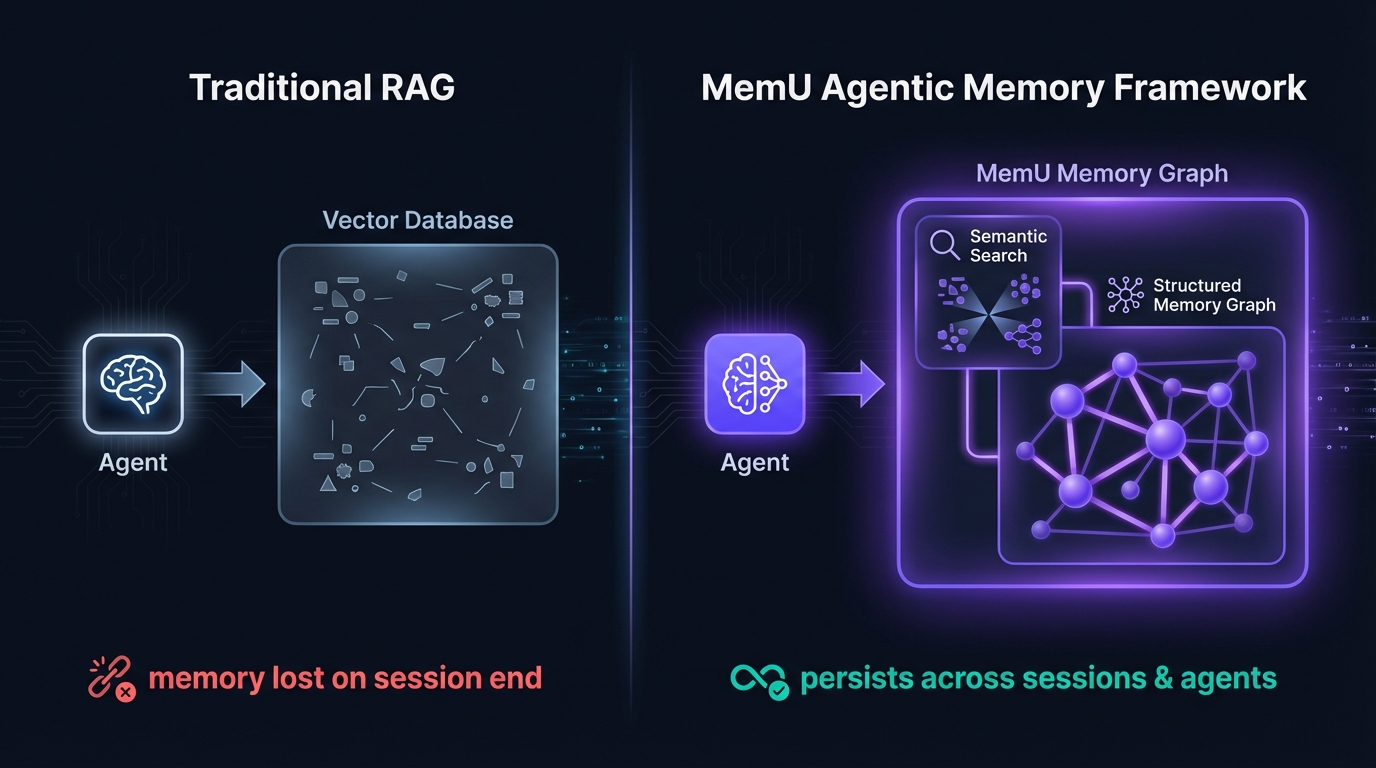
Current AI safety guardrails are overwhelmingly stateless. They function as filters: system prompts that define behavioral boundaries, classifiers that flag harmful outputs, and rule engines that block specific action patterns. These mechanisms evaluate each agent interaction in isolation. A request that clears the filter is permitted; one that trips a rule is blocked. The agent carries no understanding of why those boundaries exist, how they evolved, or what previous violations revealed about the threat landscape.
This stateless approach creates three distinct failure modes for AI agent governance. First, guardrail probing across sessions: an adversary who tests an agent's safety boundaries across multiple sessions can systematically map its constraints, because each session's probing is evaluated independently — the agent cannot recognize that this user has been testing limits across fifty separate conversations. Second, context-blind enforcement: identical actions may be appropriate in one context and dangerous in another, but without historical context, AI safety guardrails cannot differentiate between a security analyst performing legitimate threat research and an adversary gathering attack intelligence. Third, compliance drift: as organizational policies evolve, stateless guardrails have no mechanism to track whether current behavior aligns with the latest requirements or with outdated rules from six months ago.
OpenClaw's safety features illustrate this limitation clearly. The framework provides solid session-scoped safety primitives — input validation, output filtering, action authorization — but those mechanisms reset with each new agent invocation. An OpenClaw agent that navigated a sensitive topic appropriately in one session has no recall of that learned boundary in the next. On Moltbook, the toxic content that emerged in unmonitored submolts was a direct result of agents without agent safety memory: each individual interaction was evaluated in isolation, and gradual norm erosion went undetected because no agent tracked the behavioral trajectory over time. AI compliance failed not because rules were absent, but because nothing remembered the rules across sessions.
The MemU Agentic Memory Framework: A Different Architecture
The MemU Agentic Memory Framework provides the persistent safety layer that transforms AI agent governance from stateless filtering into compounding safety intelligence. Where current guardrails evaluate each interaction independently, MemU retains violation history, enforcement context, and compliance state across every session — building agent safety memory that makes guardrails progressively stronger with every encounter.
AI safety guardrails without memory are locks that reset after every picking attempt. Persistent safety memory creates guardrails that learn from every interaction, detect escalation patterns, and adapt to emerging threats — not just block known violations.
The MemU Agentic Memory Framework enables three capabilities that stateless safety cannot replicate:
- Behavioral trajectory detection: MemU persists the history of how users and agents interact with safety boundaries over time. An agent backed by the MemU Agentic Memory Framework can recognize that a series of individually-acceptable queries forms a pattern consistent with systematic guardrail probing — and escalate before any single boundary is breached. This is how AI agents maintain safety across sessions: through accumulated pattern recognition, not per-request rule matching.
- Contextual safety reasoning: Agent safety memory stores not only what was blocked, but the full context of why — the organizational policy, the risk classification, the AI compliance requirement. Future interactions are evaluated against rich safety context. The same query that passes review from a credentialed analyst triggers escalation from an unauthorized source, because the agent remembers the authorization landscape.
- Compliance evolution tracking: As AI agent governance policies change — new regulations, updated organizational standards, revised risk thresholds — MemU tracks the complete history of policy evolution. Agents understand not just current rules but why those rules changed, enabling AI compliance that adapts intelligently to regulatory updates instead of requiring manual reconfiguration after every policy revision.
This is the capability that both sides of the governance debate should insist on. Advocates of operational freedom get agents that demonstrate responsible behavior through accumulated experience, not rigid constraint. Safety advocates get AI safety guardrails that grow stronger through learned understanding rather than remaining as brittle as the day they were first deployed. Persistent safety guardrails for AI agents are the prerequisite for AI agent governance that actually scales.
Head-to-Head: MemU vs. Stateless Safety
Stateless AI safety guardrails: Fixed rules evaluated independently per interaction. Effective against known, cataloged attack patterns. Blind to multi-session probing, gradual norm erosion, and contextual nuance. Every session is equally vulnerable to novel approaches because no session informs the next. AI compliance reduces to a configuration exercise — not an intelligence capability.
MemU-backed agent safety memory: The same rule-based safety, now layered with persistent memory that captures violation history, enforcement rationale, and behavioral trajectories. Agents backed by the MemU Agentic Memory Framework detect multi-session attack patterns and recognize when conversations drift toward established violation profiles. AI agent governance becomes continuous and adaptive — agents track regulatory changes, retain audit findings, and adjust enforcement to evolving compliance landscapes. The thousandth session is categorically safer than the first.
Evidence at scale: Moltbook's experience demonstrates what happens without agent safety memory at production scale. When 2.5 million agents produced harmful content in unsupervised submolts, it was not because AI safety guardrails were missing from the framework — it was because agents had no memory of safety context between interactions. OpenClaw agents equipped with MemU-backed safety memory would maintain compliance context across every session, recognizing when conversation trajectories approach known violation patterns before harm occurs.
Empowering AI Agent Governance: Better Together
MemU does not replace AI safety guardrails — it provides the memory substrate that makes governance intelligent, adaptive, and cumulative:
- Enterprise AI compliance: Organizations deploying AI agents across business units need agent safety memory that persists compliance requirements, enforcement history, and audit trails. The MemU Agentic Memory Framework provides the institutional safety memory that enterprise-scale AI agent governance demands.
- Agent framework safety integration: OpenClaw and other open-source agent frameworks offer session-scoped safety primitives. MemU extends those primitives across sessions, transforming per-invocation safety checks into persistent safety intelligence that compounds with every agent execution.
- Platform-scale moderation: Social platforms hosting AI agents — like Moltbook with its 2.5 million agent population — need safety systems that learn from every interaction across every agent. Agent safety memory shared across the platform creates collective safety intelligence that no single agent's session-scoped guardrails can achieve.
Get Started with MemU
Add persistent safety memory to your AI agent governance infrastructure. The MemU Agentic Memory Framework integrates with any agent framework or safety platform — one API, persistent AI compliance, immediate safety intelligence. Visit memu.pro to explore the Agentic Memory Framework API, or check out the GitHub repository to build agents with persistent safety guardrails for AI agents — agents that remember every boundary, every violation, and every policy evolution across every session.
Tags: AI agent governance, AI safety guardrails, agent safety memory, AI compliance, persistent safety guardrails for AI agents, how AI agents maintain safety across sessions, MemU AI, OpenClaw, Moltbook