AI QA Agents Run 10,000 Tests per Sprint — Testing Your 100th Release Like They Have Never Seen Your App Before

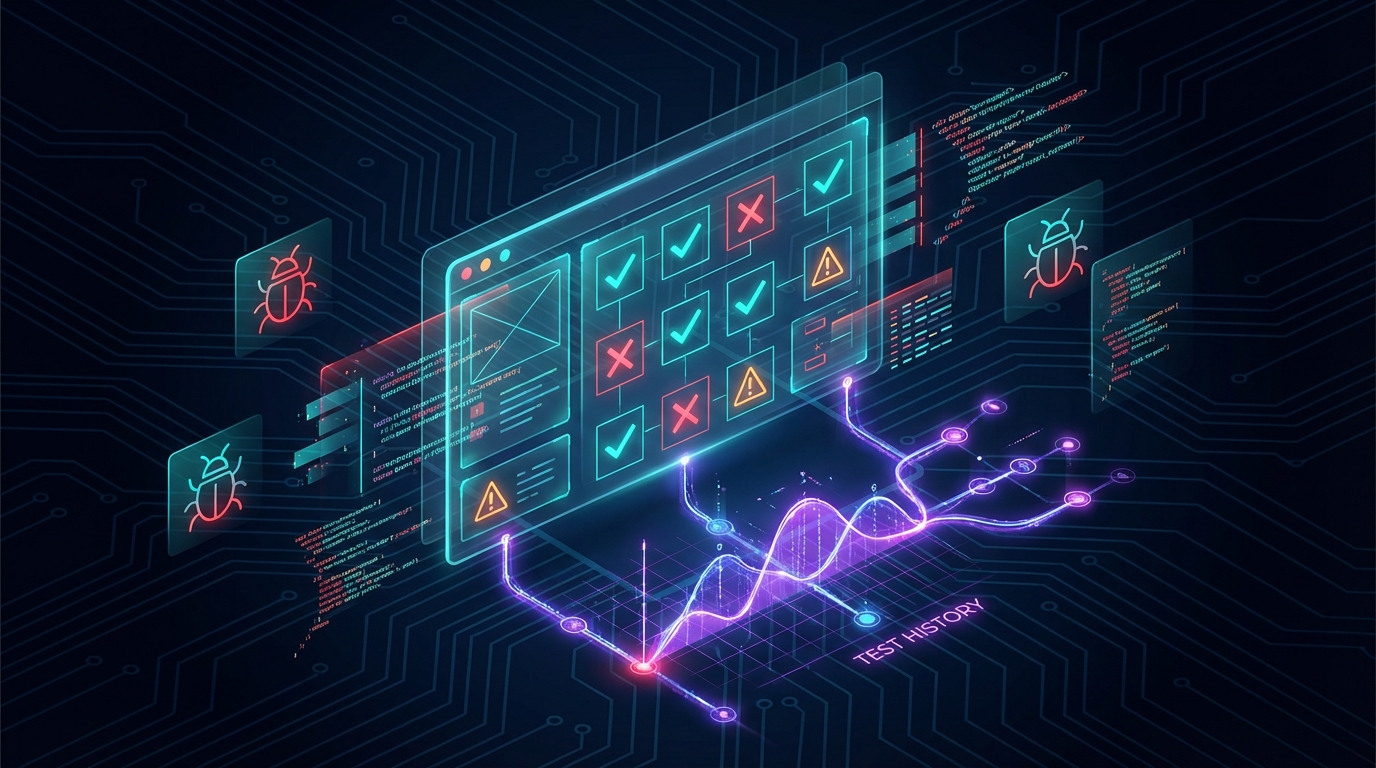
AI-powered testing agents are reshaping quality assurance. Tools like QA Wolf, Testim, Mabl, and emerging agentic testing platforms use large language models to generate test cases from natural language requirements, explore application UIs autonomously, detect visual regressions, and identify edge cases that human testers miss. Some platforms report 10x increases in test coverage while reducing QA team workload by 40-60%.
The approach is fundamentally different from traditional test automation. Instead of brittle selector-based scripts that break with every UI change, AI testing agents understand application behavior semantically. They navigate UIs the way users do, interpret content rather than matching selectors, and adapt to layout changes automatically. This resilience makes them genuinely useful for fast-moving development teams.
But resilience per-session doesn't translate to intelligence across sessions. The AI testing agent that discovered a critical edge case in your checkout flow on Sprint 42 won't check for that edge case on Sprint 43 unless explicitly told to — because it doesn't remember finding it.
AI Testing Agents: What Everyone's Getting Right (And Missing)
The productivity gains in test automation are legitimate. AI-generated test cases cover scenarios that manual test plans miss. Autonomous exploration discovers UI paths that scripted tests never traverse. Visual AI catches regressions that pixel-comparison tools flag as false positives. These are meaningful improvements to software quality processes.
For continuous deployment teams, AI testing agents reduce the QA bottleneck. Tests that took days to write and maintain can be generated in hours and self-heal when the UI changes. This velocity improvement directly enables faster release cycles.
What's missing is accumulated application knowledge. An experienced human QA engineer knows where bugs hide — which features are fragile, which user flows trigger edge cases, which integrations fail under load. This knowledge comes from months of testing the same application. AI testing agents reset this knowledge every sprint.
What AI Testing Tools Do With Application Context Today
Current AI testing platforms maintain test artifacts: test scripts, execution results, bug reports, and coverage metrics. Some tools analyze test history to prioritize which tests to run based on code changes — a form of structural intelligence.
More advanced platforms like Mabl build application models from crawling — understanding page structure, navigation flows, and interactive elements. These models help generate more relevant test cases and detect meaningful regressions versus expected changes.
But artifact history isn't the same as testing intelligence. Knowing that a test failed last sprint doesn't tell the agent why it failed, what root cause was identified, or what related areas are likely vulnerable. The analytics dashboard shows failure rates; the agent needs failure understanding. Competitors across the testing space — from Sauce Labs to BrowserStack's AI features — share this same gap.
The MemU Agentic Memory Framework: QA Agents That Learn From Every Sprint
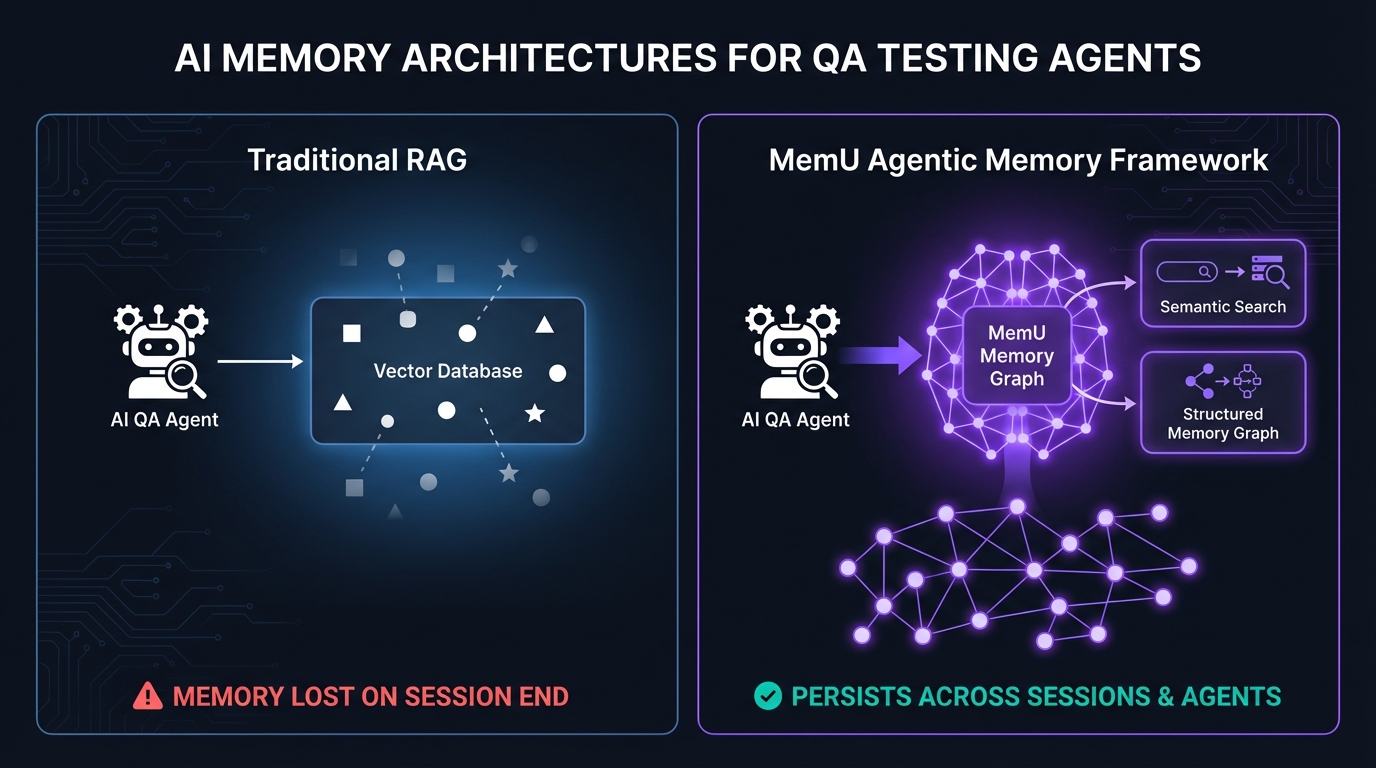
The MemU Agentic Memory Framework transforms testing agents from stateless executors into systems that accumulate application testing intelligence. Every test run contributes to a growing understanding of where bugs hide, which features are fragile, and what patterns predict failures.
Picture an e-commerce application with a complex checkout flow. Sprint 30: the AI testing agent discovers that applying a discount code after changing shipping address causes a price calculation error. The bug is fixed. Sprint 35: a new payment method is added. Without the MemU Agentic Memory Framework, the agent tests the new payment method in isolation. With MemU, it retrieves the pattern — state changes during checkout cause calculation errors — and specifically tests the new payment method combined with address changes and discount codes, catching a regression before production.
Three capabilities enhance testing intelligence:
- Bug pattern memory: Root causes, not just symptoms, persist in the MemU Agentic Memory Framework. When a new feature touches an area with known fragility patterns, the agent automatically generates targeted test cases for those patterns.
- Application behavior modeling: How the application behaves under different conditions — load levels, data volumes, edge case inputs — accumulates over sprints. The agent's understanding of normal vs. abnormal behavior becomes more nuanced with every test cycle.
- Regression prediction: Correlations between code changes and test failures persist as structured knowledge. The agent predicts which areas are most likely to regress based on the current changeset, focusing testing effort where it matters most.
The best QA engineers don't just run tests — they know where to look. MemU gives AI testing agents that same institutional knowledge about your application.
Head-to-Head: Stateless Testing vs. Memory-Enhanced Testing
AI testing agents alone: Autonomous test generation, visual regression detection, and self-healing test scripts. Each sprint's testing benefits from the model's general testing knowledge but zero application-specific testing history. The agent tests Sprint 100 with the same understanding as Sprint 1.
AI testing agents + MemU Agentic Memory Framework: Same autonomous testing plus persistent application intelligence. Bug patterns, fragile areas, and failure correlations inform every test run. Test prioritization improves with each sprint based on actual application behavior history. Sub-100ms memory retrieval integrates seamlessly into test generation workflows.
This improvement applies across the testing landscape — QA Wolf, Testim, Mabl, Playwright-based AI tools — any testing agent benefits from persistent application memory.
Empowering AI Testing: Better Together
MemU doesn't replace AI testing capabilities — it provides the accumulated application knowledge that makes those capabilities increasingly targeted over time.
- Risk-based test prioritization: Instead of running all tests equally, the MemU Agentic Memory Framework identifies which areas are most likely to fail based on historical patterns, focusing compute and time on high-risk areas.
- Cross-team test intelligence: When multiple QA engineers work on the same application, their testing insights merge into shared memory. One tester's discovery of a fragile feature benefits the entire team's future test runs.
- Release confidence scoring: With accumulated knowledge of which patterns predict production incidents, MemU enables testing agents to provide meaningful confidence scores for releases — not just pass/fail, but risk-informed readiness assessment.
Get Started with MemU
AI testing agents generate more tests faster than any human team. The MemU Agentic Memory Framework ensures those tests get smarter with every sprint. The combination transforms QA from a stateless gate into an intelligent, learning quality system.
Visit memu.pro to explore the Agentic Memory Framework API, or check out the open-source repository on GitHub to start building persistent memory into your AI testing workflows today.
Tags: AI testing, QA automation, agentic memory, test intelligence, MemU AI, software quality, AI QA agents, regression testing