Bolt.new Lets You Build Apps With AI in Seconds — But AI Builders Without Project Memory Rebuild From Scratch Each Session

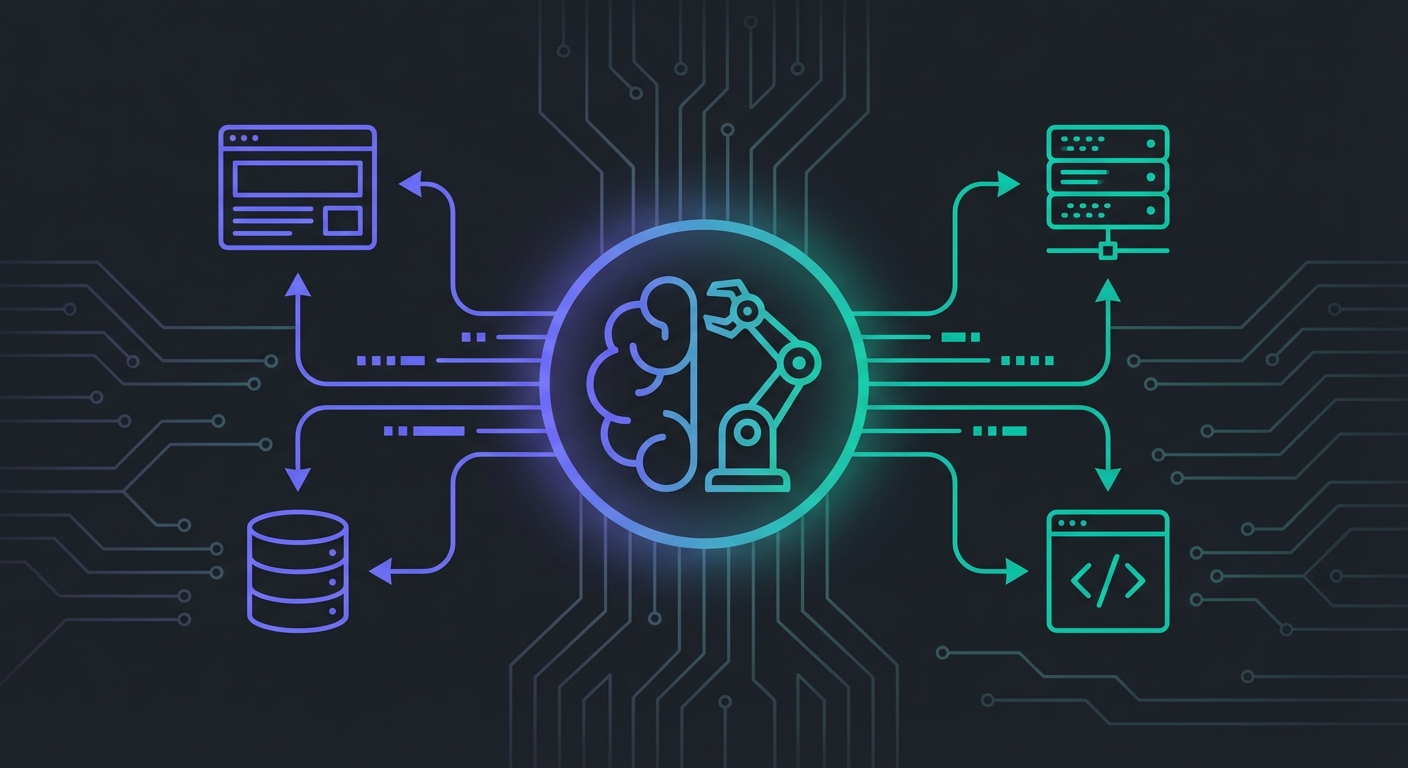
Bolt.new by StackBlitz has redefined the prompt-to-application workflow. Describe your app in natural language, and Bolt.new generates a complete full-stack application — React frontend, Node.js backend, API integrations, Tailwind styling — running live in your browser. Powered by Claude and StackBlitz's WebContainers technology, the entire Node.js environment runs in WebAssembly inside the browser tab. No local setup, no dependency management, no terminal configuration. The AI controls the filesystem, package manager, dev server, and terminal, producing a working application from a single prompt that you can deploy to Netlify with one click.
But Bolt.new shares a fundamental limitation with every current AI builder: session memory is ephemeral. When you start a new project — or return to iterate on an existing one in a new session — the AI has no recollection of your architectural preferences, the component patterns you favor, or the design decisions that worked well in previous projects. AI builders without project memory rebuild understanding from scratch every session.
Bolt.new: What Everyone's Getting Right (And Missing)
Bolt.new's breakthrough is the in-browser development environment. WebContainers eliminate the gap between AI code generation and code execution — the model generates code, the runtime compiles and serves it, and the developer sees results instantly. This tight feedback loop between generation and preview means the AI can iterate rapidly, catching errors and refining output without waiting for external build systems. The technology is genuinely novel and solves a real pain point in AI-assisted development.
The platform also handles the full stack intelligently. A prompt like "build a project management app with user auth and a Kanban board" produces a working application with database schemas, API routes, authentication flows, and styled UI components. For prototyping and MVP development, this speed-to-value is transformative. Developers who previously spent days scaffolding projects can now have a functional starting point in minutes.
What's absent is continuity across projects and sessions. A developer who has built ten applications with Bolt.new has effectively trained the AI ten times over — teaching it their preferred state management approach, their API design patterns, their component naming conventions. But none of that learning persists. Project eleven starts with the same default assumptions as project one. Other AI builders — including Lovable, Cursor Composer, and Replit Agent — face the same constraint. They optimize for single-session generation quality; none capture the developer's evolving preferences as persistent intelligence.
The MemU Agentic Memory Framework: Developer Intelligence That Compounds
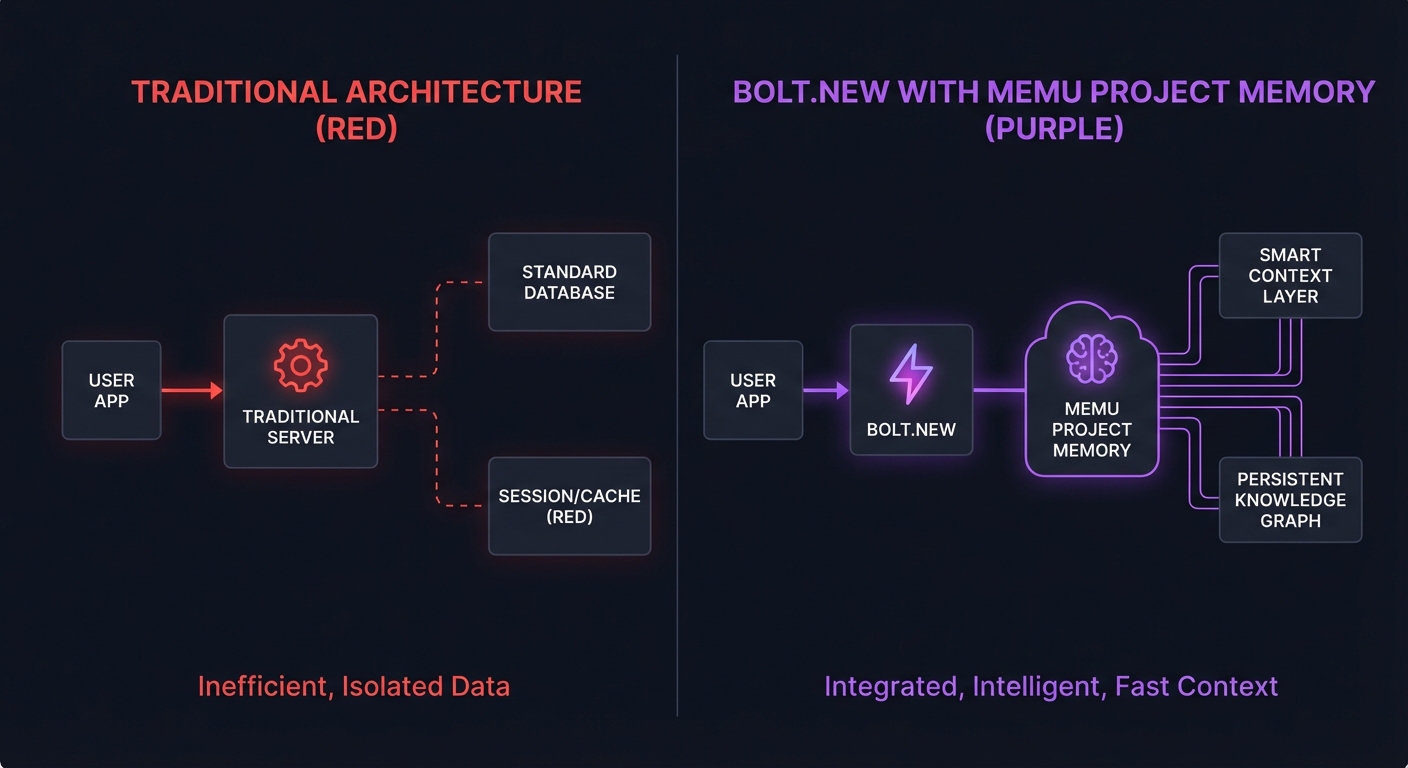
The MemU Agentic Memory Framework provides the persistent memory layer that AI builders like Bolt.new do not include natively. Instead of treating each development session as an isolated generation task, MemU captures the architectural decisions, code patterns, and user preferences that emerge during building and stores them in a structured memory graph that persists across projects, sessions, and even different development tools.
Consider a developer who regularly builds SaaS applications with Bolt.new. Without persistent memory, every new project starts with generic defaults — the AI chooses its own state management strategy, its own API structure, its own component architecture. With the MemU Agentic Memory Framework, the AI retrieves the developer's established patterns: they prefer Zustand over Redux for state management, use tRPC for type-safe APIs, organize components by feature rather than type, and always include error boundaries at the route level. The generated application reflects months of accumulated preference rather than starting from a blank template.
The framework addresses three core limitations of session-bounded AI builders:
- Architectural preference persistence: Every design decision — framework choices, folder structures, naming conventions, error handling patterns — is captured and recalled in future sessions. The AI stops asking the same clarifying questions and starts generating code that already matches the developer's standards.
- Cross-project pattern learning: The MemU Agentic Memory Framework identifies patterns across multiple projects. When a developer consistently refactors the AI's initial authentication implementation to use a specific pattern, MemU learns that preference and applies it to future projects automatically.
- Iteration history retention: When a developer iterates on generated code — fixing bugs, adjusting layouts, refining logic — those corrections become persistent intelligence. The AI that generated a faulty date formatting function and was corrected once never makes the same mistake again for that developer.
The power of AI builders is speed — going from idea to application in minutes. But speed without memory means rebuilding understanding every session. The MemU Agentic Memory Framework turns every development session into accumulated intelligence that makes the next project faster and more aligned with the developer's standards.
Integration with Bolt.new workflows is straightforward. The MemU Agentic Memory Framework provides REST APIs that can be called at the start of each session to retrieve developer context and at the end to store new patterns. The memory layer operates alongside the generation engine, enriching prompts with historical context without modifying the core AI builder architecture.
Head-to-Head: Stateless AI Building vs. Memory-Enhanced Development
Bolt.new alone: Industry-leading prompt-to-app generation with full-stack capabilities running entirely in the browser. The WebContainers technology provides instant feedback loops and seamless deployment. But every new session starts fresh — the AI rebuilds its understanding of the developer's preferences, architectural style, and quality standards from the current conversation context alone.
Bolt.new + MemU: The same rapid generation, now informed by persistent developer memory. The AI begins each session already knowing the developer's framework preferences, component patterns, and code style. Generated applications match the developer's standards from the first prompt. Iteration patterns learned across previous projects are applied automatically, reducing the rounds of correction needed to achieve production-quality output.
The difference compounds with usage. A developer's first ten projects with memory-enhanced AI building establish a rich preference profile. By project fifty, the AI generates code that feels like it was written by the developer themselves — matching their architectural opinions, naming conventions, and quality bar without explicit instruction.
Empowering Bolt.new: Better Together
The combination of Bolt.new's instant full-stack generation and the MemU Agentic Memory Framework's persistent memory unlocks development patterns that neither capability achieves alone:
- Personalized scaffolding: Instead of generic project templates, each new application starts with the developer's proven architecture — their preferred auth pattern, their data fetching strategy, their component library choices. The AI generates a starting point that reflects accumulated expertise rather than framework defaults.
- Cross-project consistency: Developers building multiple related applications — a suite of internal tools, or a product family — get consistent code architecture across projects. Shared patterns, naming conventions, and utility functions carry forward automatically through persistent memory.
- Team knowledge sharing: When multiple developers on a team use AI builders with shared memory, organizational coding standards emerge naturally. A senior developer's architectural corrections become available to the AI serving junior developers, raising the quality bar across the entire team.
Persistent memory transforms Bolt.new from a powerful generation tool into an intelligent development partner that learns, adapts, and improves with every project the developer builds.
Get Started with MemU
Bolt.new represents a genuine leap in AI-assisted development — proof that full-stack applications can be generated from natural language prompts and run instantly in the browser. The WebContainers technology and AI-controlled development environment solve real friction points in the prototyping and MVP development workflow.
The next step is giving that AI builder a memory that persists. Development sessions where the AI already knows your preferences before you type the first prompt. Projects where architectural decisions compound across your entire development history. Teams where coding standards propagate through shared intelligence rather than style guides that nobody reads.
The MemU Agentic Memory Framework provides that foundation. Drop-in API integration, dual-mode retrieval with semantic search and structured memory graphs, and cross-session persistence that turns every development interaction into compounding knowledge.
Visit memu.pro to explore the Agentic Memory Framework API, or check out the GitHub repository to start building agents that remember.
Tags: Bolt.new, AI coding, agentic AI, agent memory, MemU AI, LLM memory, AI development