Claude Code Security Reasons Like a Human Researcher — But Forgets What It Found Last Scan

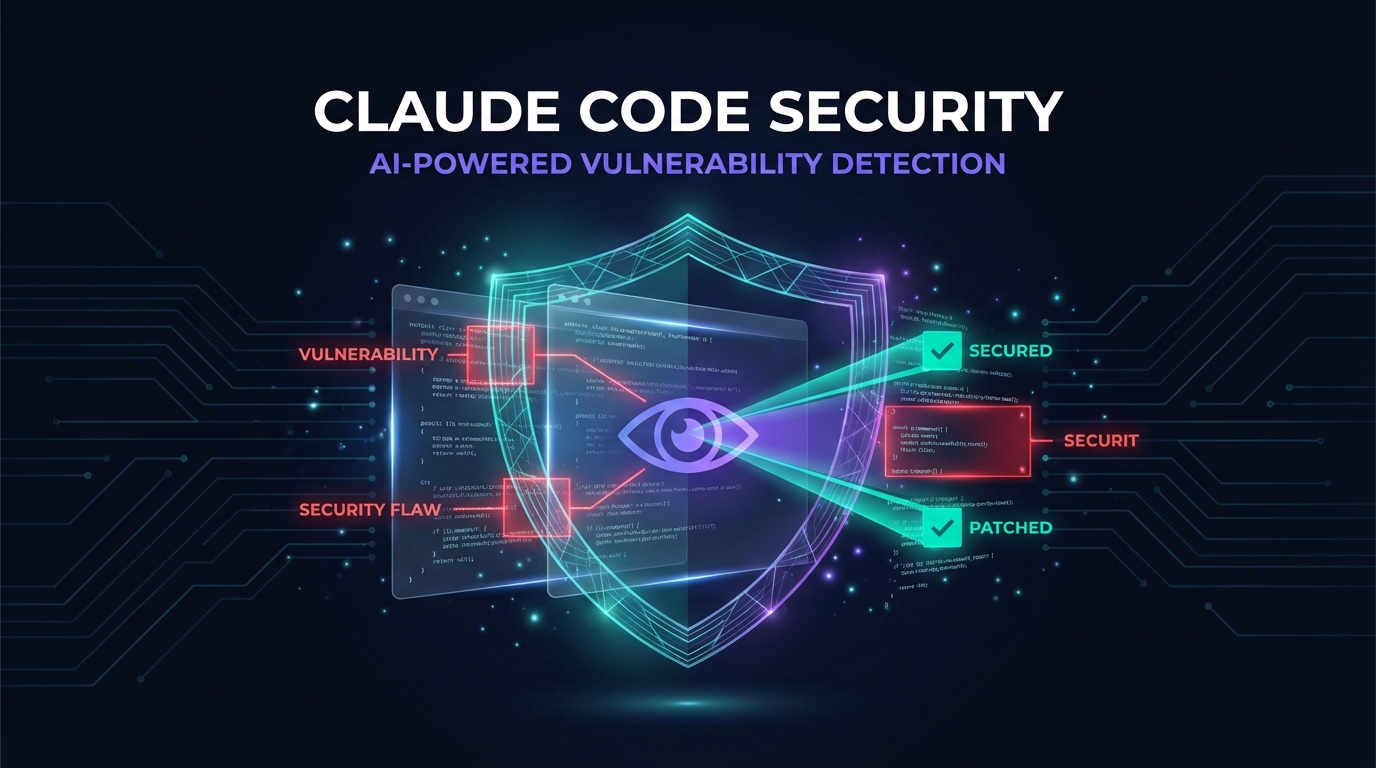
Anthropic just changed how code vulnerabilities get found. Claude Code Security, launched as a research preview in February 2026, doesn't match patterns like traditional static analysis — it reasons about code the way a human security researcher would. It understands component interactions, traces data flow across modules, and catches complex vulnerabilities in business logic and access control that rule-based scanners systematically miss.
The tool includes multi-stage verification to filter false positives, assigns confidence ratings to findings, and presents results in a dashboard for human review before any fixes are applied. For enterprise and open-source teams drowning in vulnerability backlogs, this is the shift from pattern-matching to genuine security reasoning.
But there's an irony in building AI that reasons about code security: each scan starts from zero, with no memory of what it found before.
Claude Code Security: What AI-Powered Scanning Achieves (And Repeats)
The capability gap between Claude Code Security and traditional SAST tools is significant. Static analysis tools like Snyk, SonarQube, and Semgrep match known patterns — they're fast and comprehensive for documented vulnerability types. But they generate false positives, miss novel attack vectors, and struggle with business logic vulnerabilities that don't fit pattern templates.
Claude Code Security reasons about intent. It understands that a particular API endpoint should require authentication, even if the code technically compiles without it. It traces data flow through complex module interactions and identifies where sanitization should exist but doesn't. It evaluates access control logic against the application's apparent security model, not just against a checklist.
This reasoning-based approach catches what patterns miss. But it also re-discovers what it already found. Run a scan today, and Claude Code Security identifies a class of access control vulnerability in your authentication module. Fix it. Run a scan next week on new code, and the tool has no memory of the previous finding — it can't say "this new code introduces the same vulnerability pattern we found before," because "before" doesn't exist in its context.
How Claude Code Security Handles Scan Context
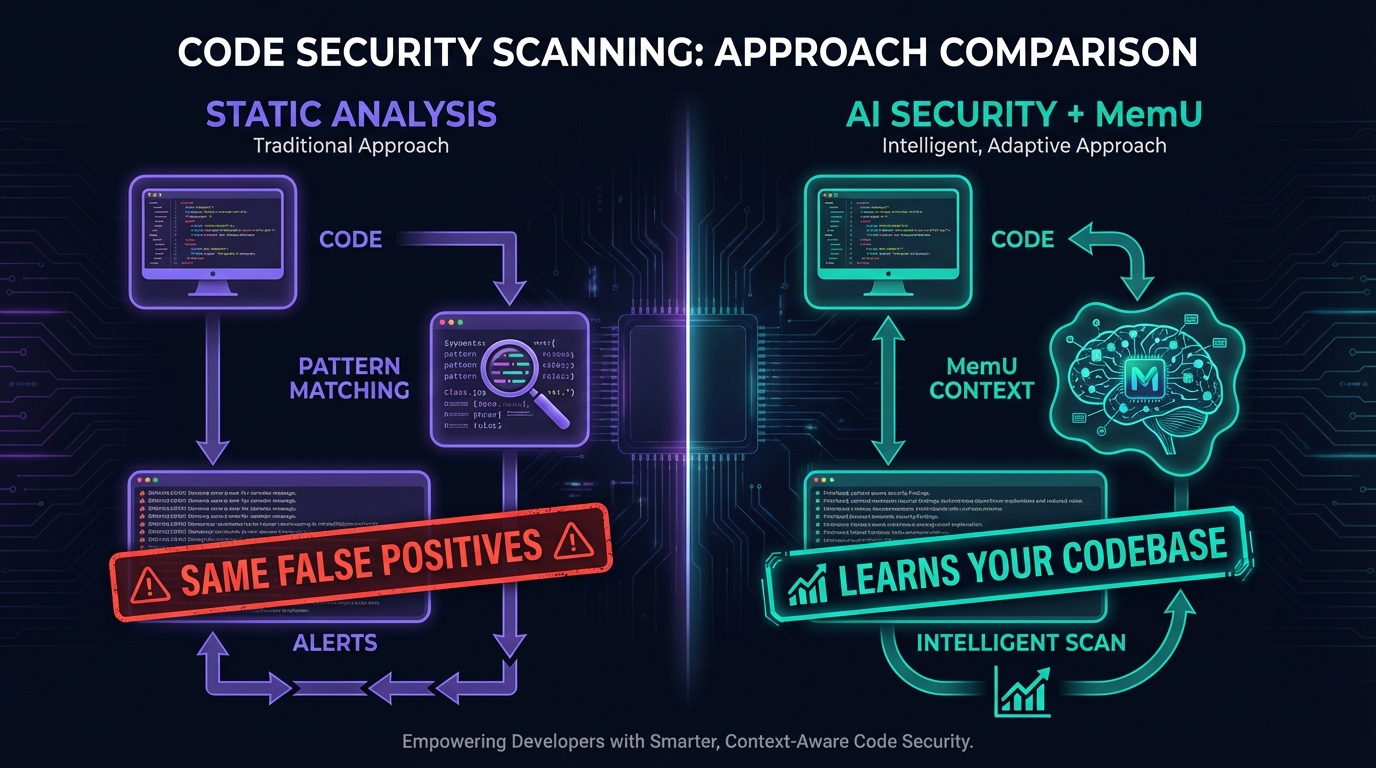
Each Claude Code Security scan processes the codebase within its context window. The model reads code, reasons about security implications, identifies vulnerabilities, and generates findings with confidence scores. Multi-stage verification reduces false positives by cross-checking findings from different analytical perspectives.
Within a single scan, the reasoning is sophisticated. The model builds an understanding of the application's architecture, identifies security-critical paths, and evaluates them holistically. Findings include not just the vulnerability location but the reasoning chain that identified it.
Scan-to-scan continuity doesn't exist. The security model built during Monday's scan isn't available on Friday. The vulnerability pattern identified in Module A doesn't inform scanning of similar Module B in a different session. The understanding of your application's specific security architecture — its trust boundaries, authentication flows, authorization patterns — must be reconstructed from code every time.
For organizations running regular security scans, this means the AI repeatedly builds application understanding that already existed in previous scans. The cognitive overhead is invisible but real — each scan spends reasoning capacity reconstructing context that persistent memory would provide instantly.
The MemU Agentic Memory Framework: Security Intelligence That Compounds
The MemU Agentic Memory Framework provides the scan-to-scan memory that security tooling currently lacks. Rather than rebuilding application security understanding from scratch, MemU captures vulnerability patterns, architectural insights, and historical findings into persistent memory that future scans can draw on.
Consider a security team running weekly Claude Code Security scans on a growing codebase. With the MemU Agentic Memory Framework, each scan starts with accumulated security intelligence: known vulnerability patterns specific to this codebase, previously identified trust boundaries, the application's authentication architecture, and historical finding trends. New code gets evaluated against this accumulated understanding rather than against generic security principles alone.
The architecture enables three capabilities for security workflows:
- Vulnerability pattern memory: The MemU Agentic Memory Framework captures recurring vulnerability types, their locations, and the fix patterns that resolved them. When similar code appears elsewhere, the scan can flag it proactively.
- Application security model persistence: The understanding of trust boundaries, authentication flows, and authorization patterns persists across scans. The AI doesn't rebuild application context — it retrieves it.
- Finding trend analysis: Historical findings become queryable context. Security teams can ask "are we seeing more access control issues since the refactor?" and get answers grounded in scan history.
MemU transforms security scanning from isolated analysis into cumulative intelligence that deepens with every scan.
Integration complements existing security workflows: the MemU Agentic Memory Framework provides APIs that store scan findings and retrieve relevant security context before new scans.
Head-to-Head: Isolated Scans vs. Memory-Enhanced Security
Claude Code Security alone: Reasoning-based vulnerability detection that outperforms pattern matching. But each scan is isolated — no accumulated understanding of the codebase's security patterns, no historical finding context, no progressive deepening of security intelligence.
Claude Code Security + MemU: Same reasoning capabilities plus persistent security memory. Previous scan findings inform current analysis. Application security architecture persists across scans. Retrieval across thousands of historical findings with sub-100ms latency. Security intelligence compounds with every scan cycle.
Claude Code Security provides the reasoning. The MemU Agentic Memory Framework provides the memory that makes that reasoning cumulative.
Empowering Security Teams: Better Together
The MemU Agentic Memory Framework isn't a replacement for Claude Code Security — it's the memory layer that makes AI security scanning progressively more effective.
- Regression detection: When a previously fixed vulnerability pattern reappears, the scan identifies it immediately by referencing historical findings rather than discovering it fresh.
- Codebase-specific intelligence: Over time, the security model becomes specialized to your application's architecture. Generic scanning becomes targeted, informed analysis.
- Compliance continuity: Audit-ready finding history persists. Security teams can demonstrate how vulnerability posture has evolved over time, with specific remediation timelines.
Adding security memory takes a single integration. The MemU Agentic Memory Framework handles finding storage, pattern extraction, and context retrieval — your security scans just get more precise over time.
Get Started with MemU
Claude Code Security represents a genuine advance in vulnerability detection. AI that reasons about code security rather than pattern-matching it catches what traditional tools miss. For organizations with growing codebases and expanding attack surfaces, this capability matters.
The next step is making that security intelligence cumulative. Scans that build on previous findings. Application security models that persist and deepen. Vulnerability patterns that get flagged proactively based on historical intelligence rather than discovered repeatedly.
The MemU Agentic Memory Framework provides that foundation. Drop-in integration with security scanning workflows means you can add persistent security memory without changing your process. Structured finding graphs capture the relationships between vulnerabilities, code patterns, and fixes. And retrieval scales to support years of accumulated security intelligence.
Visit memu.pro to explore the Agentic Memory Framework API, or check out the open-source repository on GitHub to start building persistent memory into your security workflows today.