Microsoft Copilot Tasks Runs Its Own Computer to Get Things Done — But It Forgets Every Task It's Ever Completed

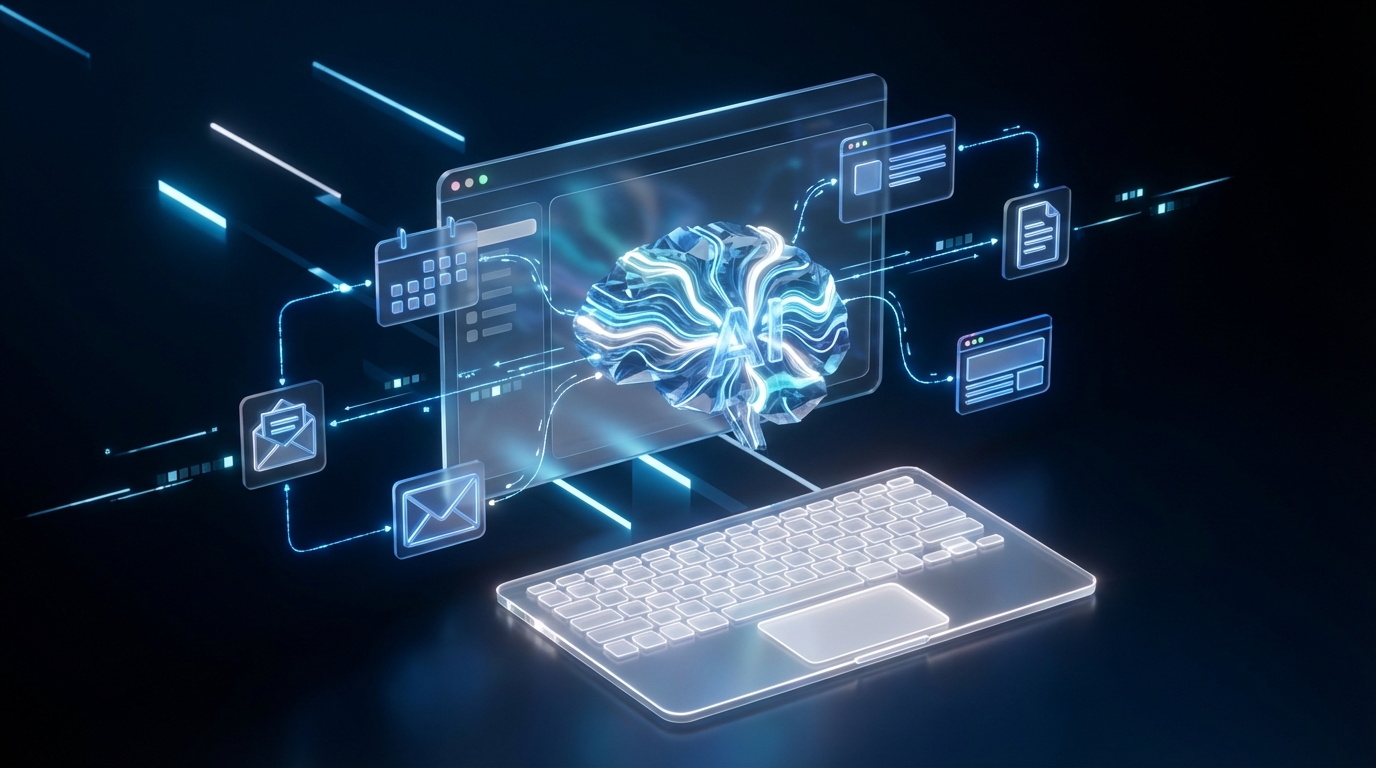
Microsoft just shipped the "second chapter" of AI with Copilot Tasks — an autonomous agent that operates its own cloud-based computer to complete tasks without human intervention at every step. Announced February 26, 2026, Copilot Tasks shifts AI from conversation to action. Describe what you need in natural language, and the agent plans, executes, and reports back. It monitors apartment listings weekly, triages your email daily, converts documents into slide decks, books appointments, and manages subscriptions — all autonomously, on a recurring schedule.
The architecture is genuinely autonomous: Copilot Tasks gets its own browser and computer in the cloud, navigates websites, fills forms, compares prices, and produces results. Users maintain control through consent checkpoints — the agent asks before payments or messages — but the execution is independent. It's the first consumer-facing AI agent from a major platform that actually does things rather than just suggesting them.
But every completed task vanishes from the agent's awareness: Copilot Tasks has no memory of the tasks it previously completed, the patterns it discovered, or the preferences it inferred from your behavior.
What Copilot Tasks Can Actually Do
The capability range is broader than any previous consumer AI agent. Recurring tasks run on schedules: weekly apartment hunting that monitors listings matching your criteria, daily email triage with draft replies, automatic expense tracking from receipts. One-time tasks handle complex multi-step operations: creating tailored resumes from job descriptions, finding service providers and comparing quotes, arranging transportation logistics.
The shopping and appointment capabilities are particularly notable. Copilot Tasks can search for service providers, compare reviews and pricing, and prepare booking options — requiring user consent only for the final transaction. For hotel monitoring, it tracks rates and suggests rebooking when prices drop. This level of autonomous action across real-world services represents a significant step beyond the chatbot paradigm.
Microsoft positioned this directly against competitors: OpenAI's operator capabilities, Anthropic's computer use, and Perplexity's action features. But Copilot Tasks integrates natively with the Microsoft 365 ecosystem — Outlook, Teams, Office — giving it access to your work context that standalone AI agents can't match. The question isn't whether the agent can act. It's whether it can learn from acting.
The Stateless Task Execution Problem
Consider the apartment monitoring use case. Copilot Tasks runs weekly, checking listings against your criteria. Week one: it finds 15 listings and presents them. Week two: it finds 18 listings, including 12 that were already presented last week. Without memory, the agent can't distinguish new listings from previously reviewed ones. It can't learn that you consistently ignore listings without parking. It can't notice that the neighborhood you initially specified has seen a price spike and proactively suggest an adjacent area.
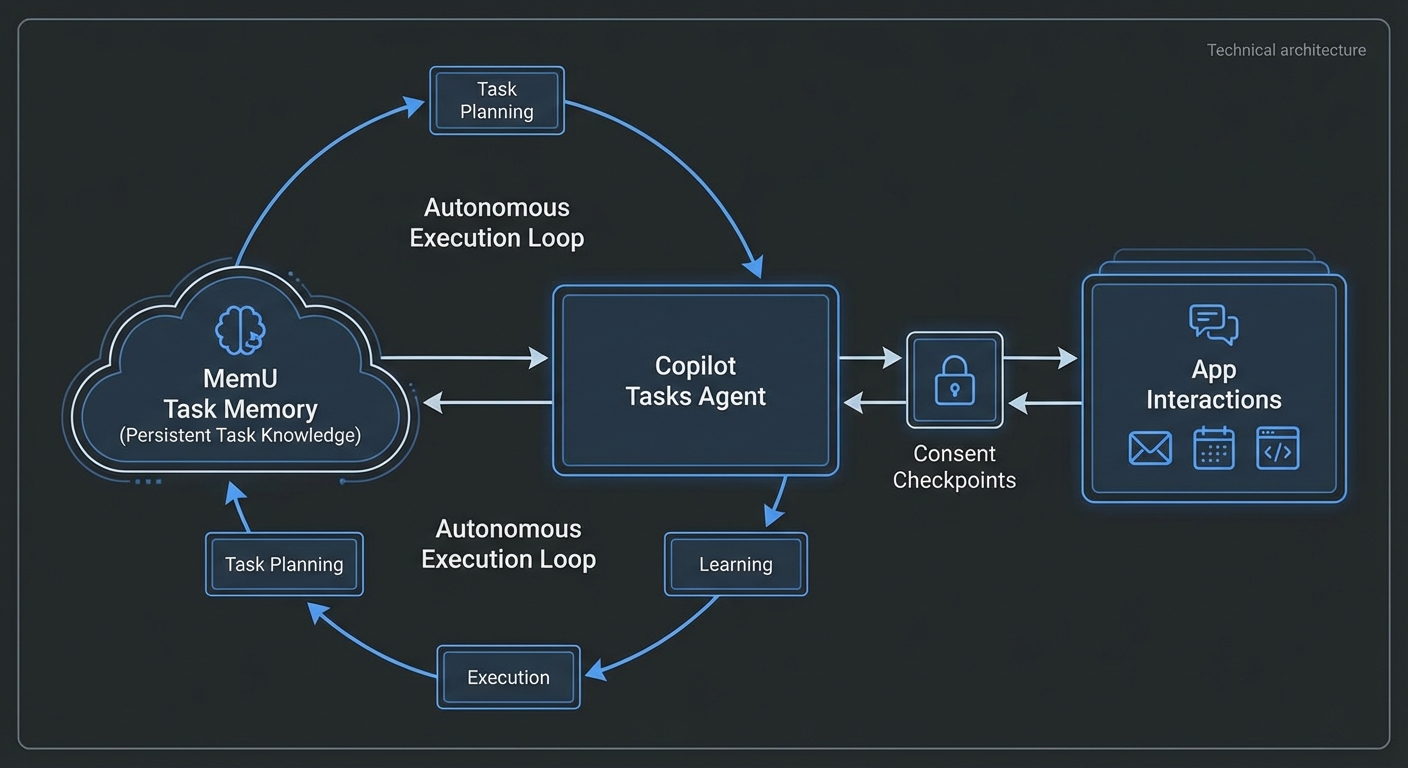
The email triage case is even more revealing. An effective email assistant learns which senders are high-priority, which types of messages need immediate attention, and what communication style you prefer in replies. Without memory, Copilot Tasks must re-derive these preferences from scratch every day — or rely entirely on explicit rules that can't capture the nuance of real email management.
For recurring tasks, the absence of memory means the agent never improves. The tenth execution is as naive as the first. Every week, the same irrelevant results. Every day, the same generic email categorizations. The agent performs actions but never develops the accumulated understanding that makes an assistant truly useful.
From Task Execution to Task Intelligence
The evolution from task execution to task intelligence requires three types of memory. Preference memory captures what users actually want based on their behavior — not just stated criteria but revealed preferences from which results they click, ignore, or modify. Pattern memory records recurring patterns in the task domain — price trends, seasonal variations, and typical workflows. Outcome memory tracks what happened after task completion — was the booked hotel satisfactory? Did the drafted reply get sent as-is or heavily edited?
Together, these memory types transform a stateless task executor into an intelligent assistant that improves with every interaction. The apartment agent that remembers your preference patterns finds better listings. The email agent that remembers your editing patterns drafts better replies. The shopping agent that remembers your satisfaction with previous purchases makes better recommendations.
How MemU Adds Memory to Autonomous Agents
MemU provides the persistent memory layer that autonomous agents like Copilot Tasks need to evolve from task executors to intelligent assistants. Every task execution generates memories: user preferences, discovered patterns, and interaction outcomes. Before each subsequent execution, the agent retrieves relevant memories, starting with accumulated understanding rather than blank-state criteria.
For recurring tasks, MemU enables compounding intelligence. Each weekly apartment search builds on the last. Each daily email triage refines the agent's understanding. Over months of recurring execution, the agent develops deep familiarity with the user's needs — not because it was programmed with rules, but because it learned from experience.
Microsoft built the autonomous execution layer. MemU provides the memory that makes autonomous execution intelligent. Together, they deliver the "second chapter" of AI that actually learns from the actions it takes.
Get Started
Give your autonomous agents the memory to improve with every task. Explore MemU at memu.pro and on GitHub.