Dapr AI Agents Combine Stateful Workflows With Agentic AI — But Workflow State Is Not Agent Memory

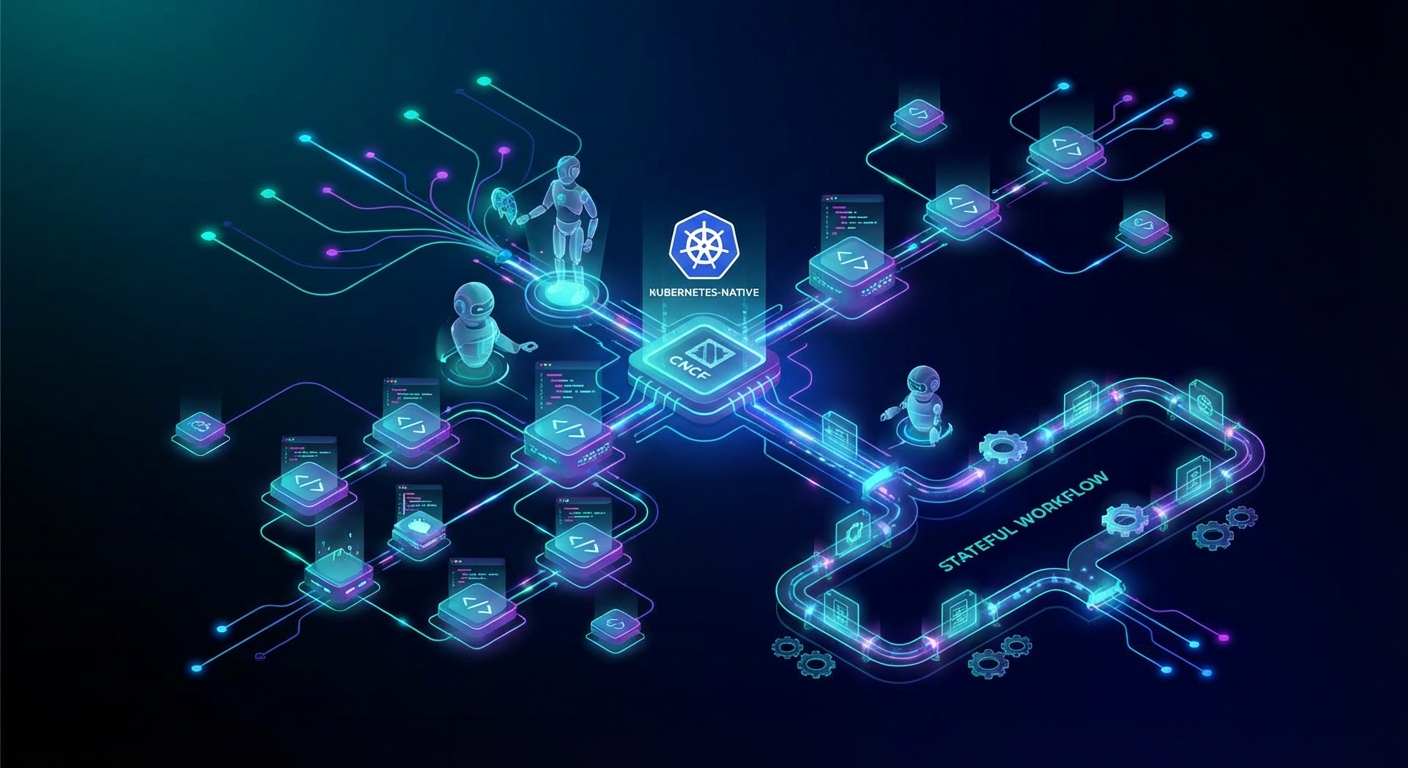
Dapr AI Agents launched as a vendor-neutral developer framework combining stateful workflow coordination with agentic AI. Built on the trusted Dapr enterprise framework, it supports multi-agent systems with built-in security and observability. It deploys natively on Kubernetes, bringing agentic capabilities to cloud-native infrastructure. The CNCF announcement signals serious enterprise adoption potential.
But there is a distinction that matters — workflow state is not agent memory.
Dapr AI Agents: What Everyone's Getting Right (And Missing)
Dapr AI Agents get workflow coordination right. Stateful workflows maintain execution context within a run — sagas, compensation logic, and step persistence. Multi-agent support with security and observability addresses real operational concerns. Vendor neutrality and Kubernetes-native deployment make it practical for heterogeneous infrastructure. This is solid agentic infrastructure.
What Dapr provides is workflow state — the context needed to complete a single run. What agents need is memory — the accumulated knowledge from prior runs that improves future execution. Workflow state survives a run; agent memory should survive runs. When a Dapr workflow completes, its agent participants forget what they learned.
LangGraph, Temporal, and other workflow platforms share this distinction. They manage execution state; they do not manage learned experience.
The MemU Agentic Memory Framework: Memory Beyond Workflow State
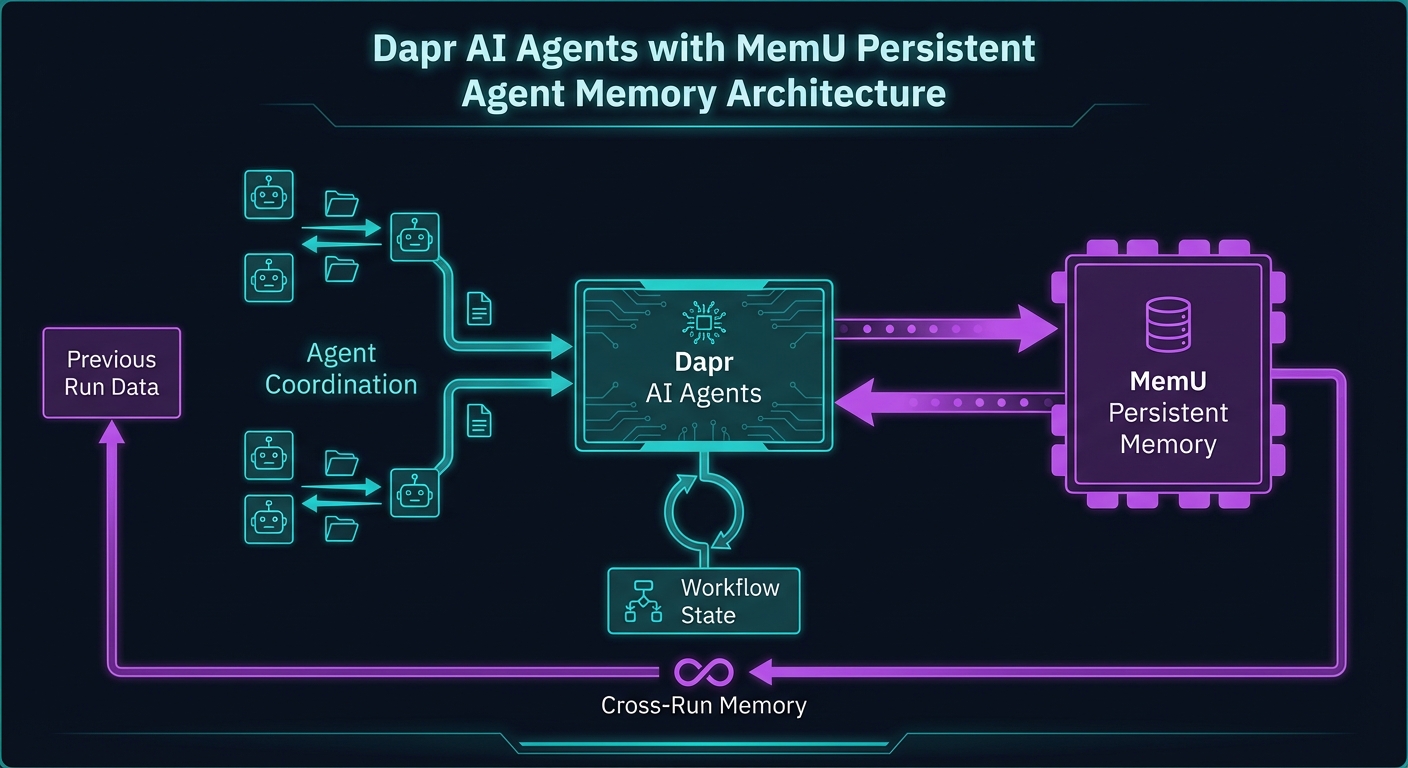
The MemU Agentic Memory Framework adds the memory layer that workflow state cannot provide. Where Dapr coordinates execution, MemU accumulates experience.
Consider a Dapr workflow that processes customer orders. Workflow state tracks the current order through steps. With MemU, the agent also recalls: this customer prefers express shipping, had a return last month, and tends to order during weekend promotions. Workflow state + memory = execution plus intelligence.
The MemU Agentic Memory Framework provides:
- API integration: MemU memory calls plug into any Dapr workflow step. Agents read before acting, write after learning. No workflow engine changes required.
- Cross-run persistence: Memory survives workflow completion. The next workflow run retrieves what the last run learned. Experience compounds across executions.
- Multi-agent memory sharing: When Dapr coordinates multiple agents in a workflow, MemU enables them to share learned knowledge — not just pass workflow tokens.
Workflow state completes the run. Agent memory improves the next run. The MemU Agentic Memory Framework gives Dapr agents both.
Head-to-Head: Workflow State Alone vs. State + Memory
Dapr workflow state alone: Execution context persists within the run. Compensation and retries work. But when the workflow completes, agents forget. The hundredth order workflow has the same starting intelligence as the first.
Dapr + MemU Agentic Memory Framework: Workflow state manages execution; MemU accumulates customer patterns, failure modes, and optimization insights. The hundredth workflow runs with the intelligence of ninety-nine prior completions.
Empowering Dapr AI Agents: Better Together
- Order processing: Dapr coordinates fulfillment steps; MemU provides customer preference and past issue memory for smarter routing.
- Incident response: Dapr orchestrates remediation workflow; MemU recalls similar incidents and what resolved them.
- Multi-step research: Dapr manages parallel agent tasks; MemU ensures findings from prior research inform current workflow decisions.
Get Started with MemU
Add persistent agent memory to your Dapr AI Agents. The MemU Agentic Memory Framework works with any workflow engine. Visit memu.pro to explore the API.
Tags: Dapr AI Agents, stateful workflow, agentic AI, CNCF, MemU AI, agent memory