DeepKeep Maps AI Agent Attack Surfaces for Free — Security Scans Without Historical Memory Miss the Patterns That Matter

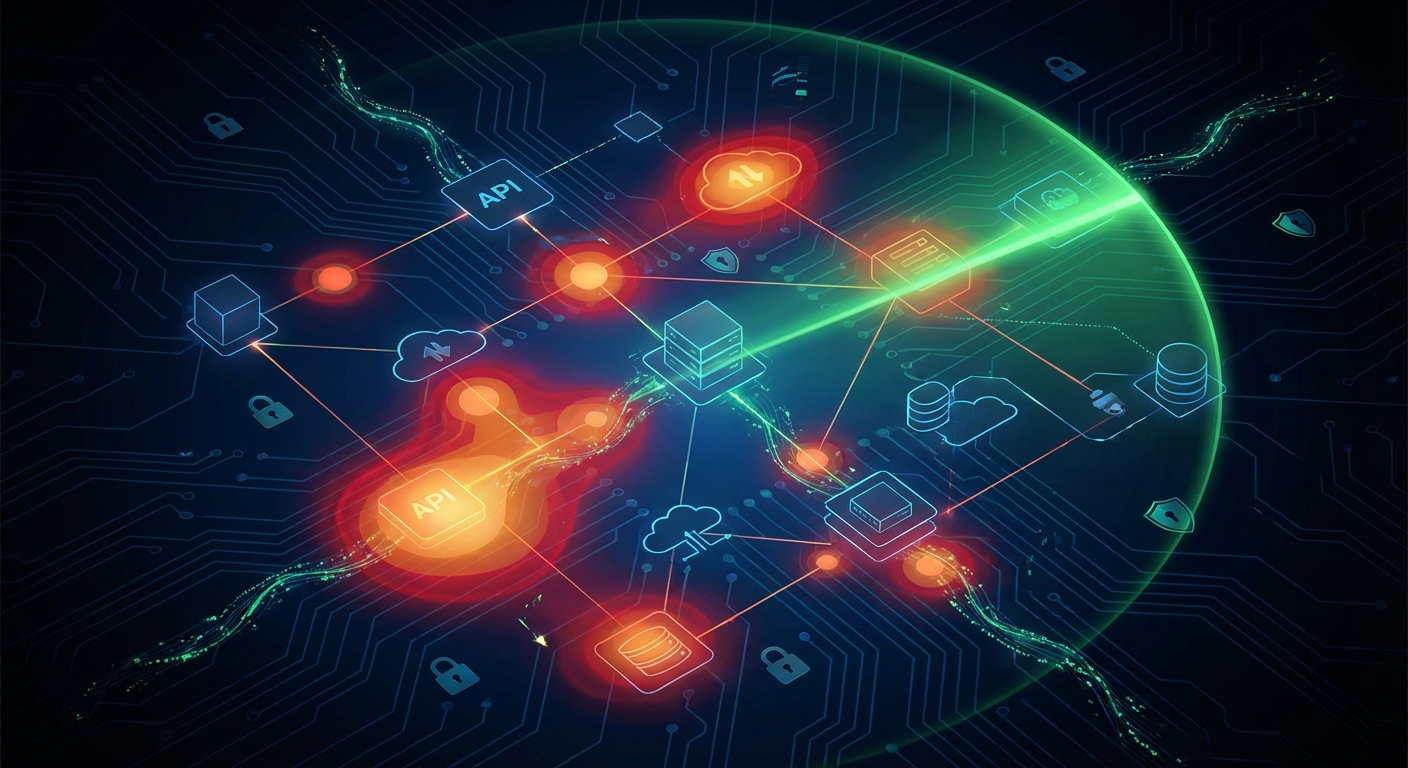
DeepKeep just made AI agent security accessible to every enterprise. Their newly launched AI Agent Scanner maps the complete attack surface of agentic deployments — which tools agents can access, what data they interact with, and where vulnerabilities hide. The scanner supports Microsoft-based frameworks, Agentforce, OpenAI Agents, CrewAI, Amazon Bedrock AgentCore, n8n, and Make. It maps risks against the OWASP Top 10 for Agentic Applications and recommends where AI firewalls and guardrails should be deployed. Best of all, it is free for enterprises.
The timing is critical. Gartner projects that AI agents will make at least 15% of routine business decisions by 2028. These agents autonomously interact with external tools, applications, and knowledge bases, creating attack surfaces that traditional cybersecurity controls were never designed to handle. DeepKeep addresses this gap with automated discovery and visual risk mapping.
But attack surfaces are not static. They evolve with every deployment, configuration change, and new integration. A single-point-in-time security scan reveals today's vulnerabilities while remaining blind to the patterns that predict tomorrow's exploits.
DeepKeep: What Everyone's Getting Right (And Missing)
The agent security problem is real and growing. Every new tool integration, data connection, and API endpoint expands the blast radius of a compromised agent. DeepKeep's scanner provides the visibility that most enterprises completely lack — a clear map of what their agents can do, where data flows, and which pathways present the highest risk.
The OWASP alignment is particularly valuable. Rather than inventing a proprietary framework, DeepKeep maps findings to industry-standard risk categories that security teams already understand. This accelerates remediation by connecting agent-specific risks to established security practices.
The gap is temporal intelligence. DeepKeep scans the current state of an agent deployment and produces an accurate snapshot. But the most dangerous security patterns unfold across time — gradual permission escalation, slowly expanding data access, configuration drift that incrementally widens attack surfaces. WitnessAI and Teramind's governance platform face the same limitation: excellent real-time visibility without longitudinal pattern recognition.
What AI Agent Security Tools Do With Scan History Today
Security scanners generate reports. Enterprises store these reports in document management systems or SIEM platforms. A diligent security team might manually compare consecutive scans to identify changes, but this comparison is labor-intensive, error-prone, and typically limited to the most recent scan pair.
The deeper intelligence — how an agent's attack surface has evolved over six months, which tool integrations repeatedly introduce vulnerabilities, which configuration patterns correlate with security incidents — requires the kind of longitudinal analysis that point-in-time scanners are architecturally unable to provide.
Security data accumulates in logs. Security intelligence requires memory that connects scans across time, correlates findings across agents, and surfaces the slow-moving patterns that point-in-time analysis misses.
The MemU Agentic Memory Framework: Security Intelligence That Compounds
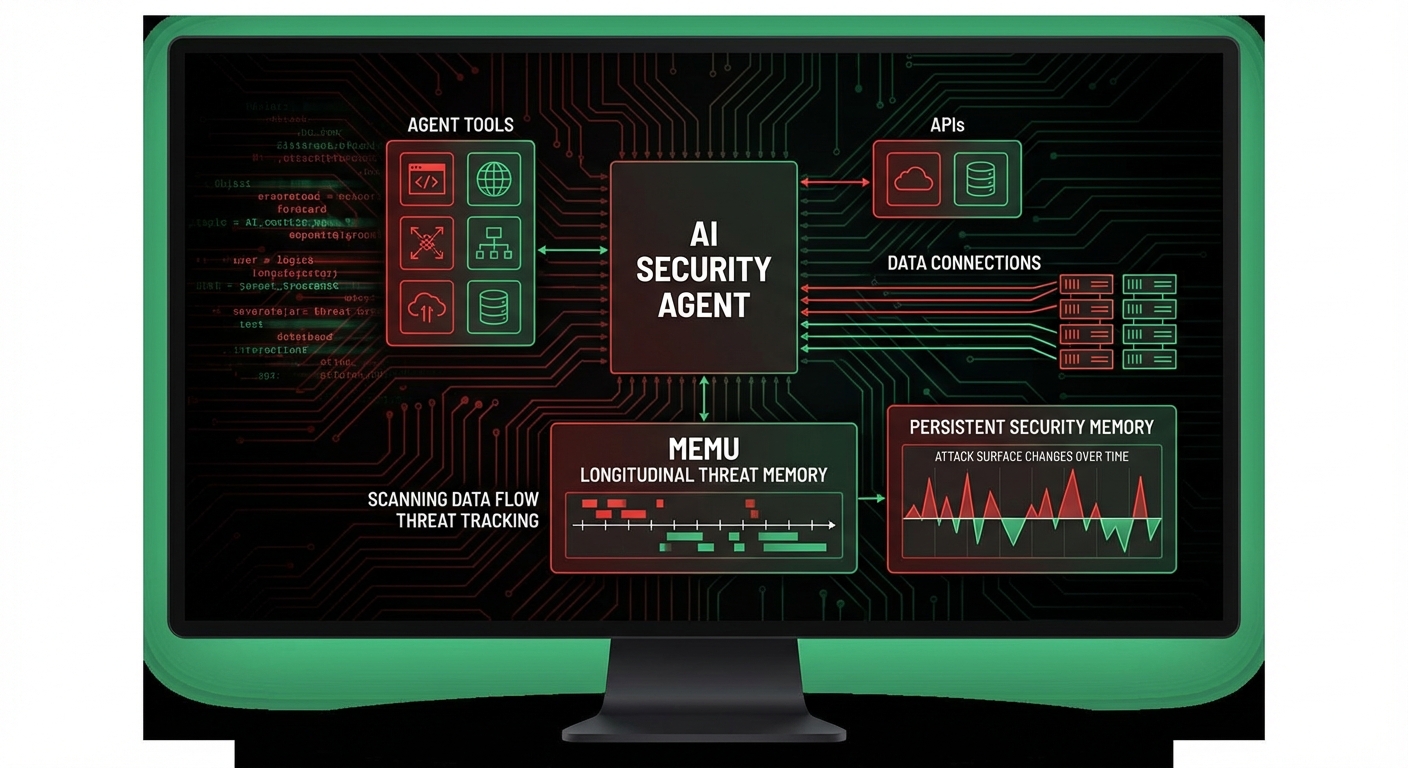
The MemU Agentic Memory Framework provides persistent security memory that transforms individual scans into cumulative threat intelligence, connecting findings across time, agents, and deployment environments.
Consider an enterprise running DeepKeep scans weekly across 50 AI agents. Without the MemU Agentic Memory Framework, each scan produces an independent report. The security team manually tracks remediation and hopes they notice emerging patterns. With MemU, every scan result feeds into persistent security memory. The framework automatically detects that Agent 12's attack surface has grown 40% over three months, that a specific tool integration pattern has introduced vulnerabilities in four different agents, and that post-deployment configuration changes consistently weaken access controls within two weeks.
The framework enhances agent security through:
- Longitudinal threat detection: Attack surface changes tracked across every scan reveal gradual security degradation that no single scan can detect. Permission creep, integration sprawl, and configuration drift become visible patterns rather than hidden risks.
- Cross-agent correlation: Vulnerabilities discovered in one agent inform security assessments of all agents sharing similar architectures or integrations. The MemU Agentic Memory Framework creates organizational security memory, not just per-agent snapshots.
- Predictive risk scoring: Historical patterns predict future vulnerabilities. Agents following a trajectory toward known-risky configurations are flagged before the vulnerability materializes.
Point-in-time security scans answer "what's vulnerable now." Memory-enhanced security answers "what's becoming vulnerable" — the question that prevents breaches instead of documenting them.
Head-to-Head: Snapshot Security vs. Memory-Enhanced Security
DeepKeep Agent Scanner alone: Comprehensive attack surface mapping with OWASP alignment, visual risk maps, and framework-specific scanning across seven major platforms. Each scan is accurate and actionable — but contextually isolated from every previous and future scan.
DeepKeep + MemU Agentic Memory Framework: Same scanning depth plus persistent security memory. Findings accumulate into organizational threat intelligence. Attack surface trends, remediation effectiveness, and cross-agent vulnerability patterns become automatically visible. Sub-100ms memory retrieval means scan enrichment adds negligible processing time.
This enhancement applies across the agent security landscape — WitnessAI, Teramind, and enterprise SIEM platforms all benefit from persistent security memory that transforms point-in-time monitoring into longitudinal intelligence.
Empowering DeepKeep: Better Together
MemU does not replace DeepKeep's scanning capabilities — it transforms isolated scans into compounding security intelligence.
- Automated regression tracking: When a vulnerability is remediated, the MemU Agentic Memory Framework monitors for recurrence. Security teams stop re-discovering the same issues and focus on genuinely new risks.
- Compliance audit trails: Persistent security memory creates an auditable history of every agent's security posture over time, satisfying regulatory requirements that point-in-time snapshots cannot address.
- Incident response acceleration: When a breach occurs, security memory provides the historical context to understand how the vulnerability developed, which other agents might be similarly exposed, and what remediation has previously worked for similar patterns.
Get Started with MemU
DeepKeep scans what agents can do today. The MemU Agentic Memory Framework remembers what they did yesterday and predicts what they will be vulnerable to tomorrow. Together, they deliver agent security that compounds intelligence with every scan.
Visit memu.pro to explore the Agentic Memory Framework API and add persistent security memory to your agent infrastructure.
Tags: DeepKeep, AI agent security, attack surface mapping, agentic memory, MemU AI, OWASP agentic applications, AI security scanning