Dify Raises $30M at $180M Valuation for Open-Source Agentic Workflows — But 1.4 Million Workflow Machines Without Shared Memory Create Isolated Intelligence

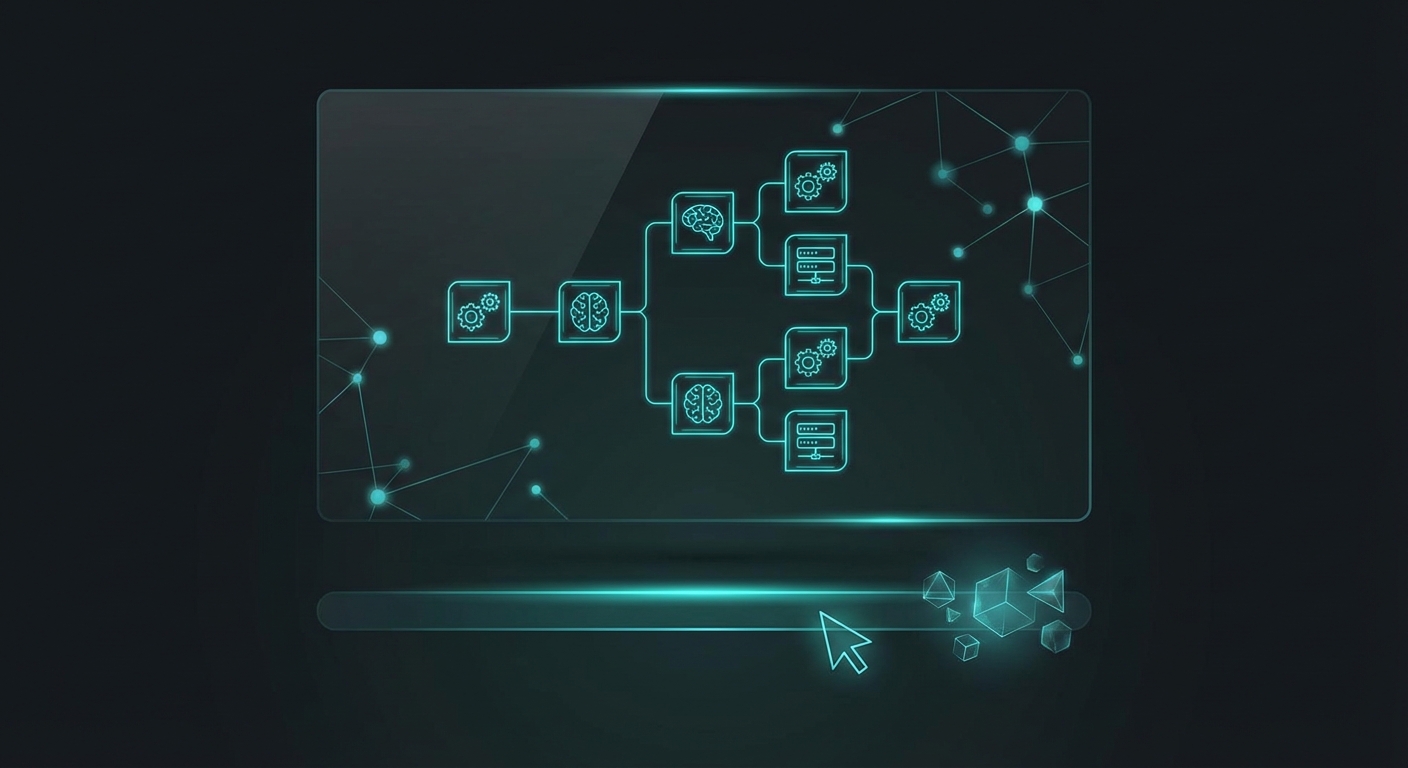
Dify has closed a $30 million Series Pre-A round led by HSG at a $180 million valuation, cementing its position as a leading open-source AI platform for building and deploying production-grade AI applications and agentic workflows. Running on more than 1.4 million machines and used by over 2,000 teams and 280 enterprises, Dify offers a visual workflow builder, model orchestration layer, and RAG pipeline that lets developers ship AI agents without writing boilerplate infrastructure code. The funding validates an enormous demand for accessible agent development tooling.
But there is a foundational gap that funding alone cannot close — agentic workflows that forget everything between runs create isolated pockets of intelligence that never compound.
Agentic Workflows: What Everyone's Getting Right (And Missing)
Dify gets the developer experience right. The visual workflow canvas lets teams compose multi-step agent pipelines by connecting LLM nodes, tool calls, conditional branches, and human-in-the-loop checkpoints into production-ready agentic workflows. Model-agnostic by design, Dify supports OpenAI, Anthropic, local models, and dozens of other providers through a unified interface. The built-in RAG pipeline handles document ingestion, chunking, embedding, and retrieval without requiring teams to stitch together separate vector database infrastructure.
At scale — 1.4 million machines, 280 enterprise deployments — this open-source AI platform has proven that non-trivial agent systems can be assembled visually and deployed reliably. The workflow abstraction removes significant friction from the path between prototype and production.
What the workflow abstraction does not solve is memory across runs. Each Dify workflow execution starts with the inputs defined for that run. The customer support agent that resolved a complex billing dispute yesterday cannot recall that resolution when the same customer returns today. The data analysis pipeline that discovered an anomaly pattern last week has no mechanism to carry that pattern into this week's analysis. Dify orchestrates execution beautifully, but intelligence accumulated during execution evaporates when the workflow completes. Across 1.4 million machines, that is a staggering volume of lost operational knowledge.
The MemU Agentic Memory Framework: Persistent Memory for Agentic Workflows
The MemU Agentic Memory Framework provides the persistence layer that workflow platforms need but do not natively include. Where Dify manages how agents execute, MemU manages what agents retain after execution ends.
Consider an enterprise customer success workflow built on Dify. An agent handles a ticket about API rate limiting. With the MemU Agentic Memory Framework, the agent recalls that this customer hit the same limit three months ago, that the resolution involved upgrading their plan tier, and that the customer's engineering team prefers email communication over Slack. Without MemU, the agent processes the ticket with only the current message and whatever documents the RAG pipeline surfaces — no relational context, no interaction history, no accumulated understanding of this customer.
The MemU Agentic Memory Framework provides capabilities designed for workflow-native integration:
- Workflow-scoped memory: Memory entries are tagged by workflow ID, run ID, and entity references. Agents within a Dify workflow can read memories from all previous runs of the same workflow or query across workflows for cross-functional intelligence. Every run enriches the memory pool for future runs.
- Dual retrieval modes: Semantic search surfaces relevant memories by meaning, while structured graph queries traverse entity relationships — customer histories, ticket escalation paths, resolution patterns. Agentic workflows get both fuzzy relevance and precise relational lookups.
- Zero-infrastructure persistence: MemU operates as a managed API. Teams using the open-source AI platform do not need to deploy additional databases or manage memory infrastructure. One API call to store, one API call to retrieve — workflow nodes can integrate MemU in minutes.
A workflow that runs a thousand times should be a thousand times smarter than a workflow that runs once. The MemU Agentic Memory Framework makes every workflow execution contribute to a growing intelligence layer that future executions inherit automatically.
Retrieval operates at sub-100ms latency across 10,000+ memory entries, adding negligible overhead to Dify workflow execution times even in latency-sensitive production environments.
Head-to-Head: Dify vs. Alternative Workflow Platforms
Dify alone: Workflows execute with the inputs and RAG context available at runtime. Each run is independent. The thousandth execution of a support workflow carries no more institutional knowledge than the first. Agents answer questions accurately based on retrieved documents but cannot learn from past interactions or adapt to patterns discovered in previous runs.
Dify + MemU Agentic Memory Framework: Every workflow run reads from and writes to persistent memory. Support agents recall customer histories. Analysis pipelines build on previously discovered patterns. Onboarding workflows remember where each user left off. The open-source AI platform gains a stateful intelligence layer that deepens with every execution across every machine in the deployment.
Compared to alternatives — LangFlow, Flowise, n8n AI nodes — Dify leads in production readiness, enterprise adoption, and model flexibility. But all workflow platforms share the same memory gap. Adding the MemU Agentic Memory Framework to any of these platforms addresses the constraint that no visual builder or model router can fix: the absence of cross-run memory. The combination of Dify's workflow orchestration with MemU's persistent memory creates agentic workflows that genuinely learn from experience.
Empowering Dify: Better Together
MemU does not replace Dify — it makes every workflow running on the platform more valuable over time:
- Customer-facing agents: Dify orchestrates the conversation flow and tool calls; MemU supplies the customer's full interaction history, preference profile, and resolution patterns — turning every support interaction into a personalized experience informed by every prior touchpoint.
- Data and analytics pipelines: Dify manages the extraction and transformation steps; MemU stores anomaly patterns, trend baselines, and analytical conclusions from prior runs — letting analysis workflows build longitudinal intelligence instead of treating each dataset as an isolated snapshot.
- Multi-team deployments: Across 2,000+ teams using Dify, MemU enables controlled memory sharing between workflows. A product team's insights about user behavior can inform a marketing team's content generation workflow, with access controls and scoping to prevent data leakage. Agentic workflows become organization-wide intelligence networks.
Get Started with MemU
Add persistent memory to your Dify workflows in minutes. The MemU Agentic Memory Framework works with any workflow platform and any model provider — one API, zero lock-in, immediate compounding intelligence. Visit memu.pro to explore the Agentic Memory Framework API, or check out the GitHub repository to start building agents that remember.
Tags: Dify, agentic workflows, open-source AI platform, workflow memory, LLM orchestration, agentic memory, persistent memory, MemU AI