Figma AI Assists Design Workflows — But Design Agents Without Style Memory Re-Learn Preferences Each Project


Figma AI has integrated artificial intelligence across its entire product suite — Figma Design, FigJam, Figma Slides, and Figma Sites. The AI features span the design workflow: Figma Make turns text prompts into interactive prototypes with Supabase backend support, the image generation tools create and edit visuals directly on canvas, and smart copy features rewrite text for different tones, translate content, and adjust messaging — all without leaving the design environment. Powered by OpenAI and Google Gemini models, Figma AI provides AI credits to all seat types, making intelligent design assistance available across organizations from individual designers to enterprise teams.
But Figma AI's intelligence is bounded by the current session and file. The AI that learned your brand's color system, typography hierarchy, and component composition preferences while working on the homepage design cannot recall those preferences when you open a new project for the mobile app. Design agents without style memory re-learn visual preferences from scratch each time.
Figma AI: What Everyone's Getting Right (And Missing)
The breadth of Figma AI's integration is impressive. Unlike standalone AI design tools that require context-switching, Figma embeds AI directly into the design workflow. A designer can generate a layout component from a prompt, edit it on canvas, then use AI to refine the copy — all within the same file. The visual search feature finds assets by description rather than file name. One-click background removal eliminates the need for external image editing tools. FigJam AI generates diagrams, organizes sticky notes, and summarizes design feedback. Each feature reduces friction in a specific part of the design process.
Figma Make represents the most ambitious AI feature — generating interactive prototypes from text descriptions. A prompt describing "a settings page with dark mode toggle, notification preferences, and account management" produces a functional prototype with proper component hierarchy, interactions, and even backend data models. For rapid prototyping and stakeholder demos, this capability compresses days of design work into minutes.
What Figma AI does not preserve across files and sessions is the designer's accumulated visual language. A designer who has spent months establishing a product's design system — specific corner radius values, shadow depths, spacing rhythms, and color application rules — cannot transfer that intelligence to AI-generated components in new files. The AI generates quality components using its training data defaults, not the designer's established standards. Other AI design tools — including Uizard, Galileo AI, and Framer AI — share this same constraint. They generate from general knowledge, not from the specific design system the team has built.
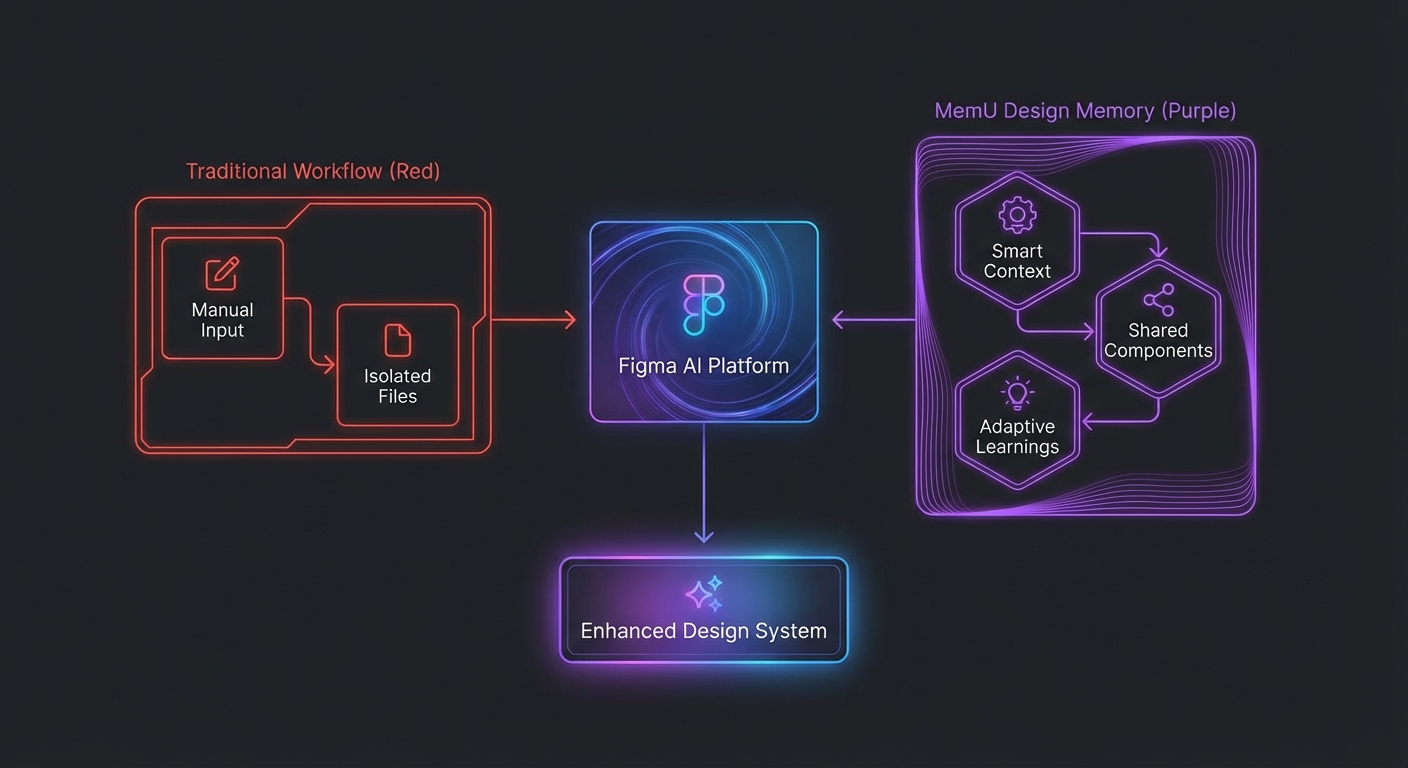
The MemU Agentic Memory Framework: Brand Intelligence That Compounds
The MemU Agentic Memory Framework provides the persistent memory layer that design tools like Figma AI do not include natively. Instead of treating each AI-assisted design interaction as an isolated generation event, MemU captures the visual decisions, brand standards, and design patterns that emerge during design work and stores them in a structured memory graph that persists across files, projects, and team members.
Consider a design team building a fintech application with Figma AI. Without persistent memory, each Figma Make generation uses default component styles — generic padding values, standard color palettes, conventional typography scales. With the MemU Agentic Memory Framework, the AI retrieves the team's established design language: they use 12px base spacing with a 4px grid, their primary action color is a specific blue (#2563EB) with a 600-weight variant for hover states, data tables use condensed typography with mono-spaced number columns, and all interactive elements follow a specific focus ring style for accessibility compliance. Generated prototypes arrive pre-aligned with the existing product, not as generic templates requiring hours of visual adjustment.
The framework addresses three core limitations of session-bounded design AI:
- Brand language persistence: Every visual decision — color tokens, typography scales, spacing systems, shadow layers, border treatments — is captured and recalled across files and projects. The MemU Agentic Memory Framework maintains a living record of the design system as it actually gets applied, not as it was documented months ago.
- Component pattern intelligence: When a designer consistently modifies AI-generated card components to follow a specific layout — icon left, title stacked, action buttons right-aligned — MemU learns that pattern. Future card generations reflect the team's established composition rather than generic alternatives.
- Cross-platform design continuity: Teams designing for web, mobile, and tablet simultaneously need consistent visual language across platforms. Persistent memory ensures that AI-generated mobile components follow the same design principles as the web components, adapting layout while preserving brand identity.
Great design systems are built through thousands of small visual decisions made consistently over time. AI that cannot remember those decisions forces designers to re-teach preferences endlessly. The MemU Agentic Memory Framework captures design intelligence as it emerges and applies it everywhere the team works.
The MemU Agentic Memory Framework integrates through REST APIs that can be called before AI-assisted design actions to provide brand context and after to capture new visual decisions. The memory layer operates alongside Figma's AI features, enriching generation prompts with accumulated design intelligence without requiring changes to Figma's core functionality.
Head-to-Head: Stateless Design AI vs. Memory-Enhanced Design
Figma AI alone: Comprehensive AI features embedded directly in the design workflow — generation, editing, copy assistance, and visual search. Figma Make produces interactive prototypes from text prompts. But every generation uses the AI's default design assumptions rather than the team's established visual standards. Generated components require manual adjustment to match the existing design system.
Figma AI + MemU: The same embedded AI capabilities, now informed by persistent design memory. Every generated component arrives pre-aligned with the team's brand language. Color applications, spacing values, typography choices, and component compositions reflect accumulated design decisions rather than generic defaults. The gap between AI-generated and hand-crafted components narrows dramatically.
For teams with mature design systems, the productivity gain is substantial. Instead of spending 30-40% of AI-assisted design time adjusting generated components to match brand standards, designers can focus on layout decisions, user experience flows, and creative exploration — the high-value design work that AI should enable, not replace.
Empowering Figma AI: Better Together
The combination of Figma AI's embedded design capabilities and the MemU Agentic Memory Framework's persistent memory unlocks design workflows that neither capability achieves alone:
- Intelligent design system enforcement: Rather than relying on static design tokens files that drift from actual usage, persistent memory captures the real design system as designers apply it. When a new team member generates components with Figma Make, the output automatically reflects the team's current visual standards — enforced through memory, not documentation.
- Client-specific design memory: Agencies and freelancers working with multiple clients can maintain separate design memory profiles. Switching from a fintech client's clean, data-dense aesthetic to a consumer brand's playful, illustration-heavy style happens through memory retrieval rather than manual prompt engineering.
- Design evolution tracking: Persistent memory creates a history of design decisions and their evolution. Teams can trace how their design language shifted over time, understand why certain visual choices were made, and make informed decisions about future design system updates.
Persistent memory transforms Figma AI from a powerful generation tool into a design partner that understands your brand, remembers your preferences, and generates components that belong in your product from the first prompt.
Get Started with MemU
Figma AI has made intelligent design assistance accessible across the entire design workflow — from prototype generation to copy refinement to visual search. The integration depth across Figma's product suite means designers can leverage AI without disrupting their established workflow.
The next step is giving that AI design assistance persistent brand memory. Sessions where generated components match your design system without manual adjustment. Projects where visual consistency is maintained automatically through accumulated design intelligence. Teams where brand standards propagate through shared memory rather than style guides.
The MemU Agentic Memory Framework provides that foundation. Drop-in API integration, dual-mode retrieval with semantic search and structured memory graphs, and cross-session persistence that turns every design interaction into compounding brand intelligence.
Visit memu.pro to explore the Agentic Memory Framework API, or check out the GitHub repository to start building agents that remember.
Tags: Figma AI, design agents, agentic AI, agent memory, MemU AI, LLM memory, AI design