Gemini Agent Books Your Uber and Orders Your Food — But Forgets Your Preferences by Next Week

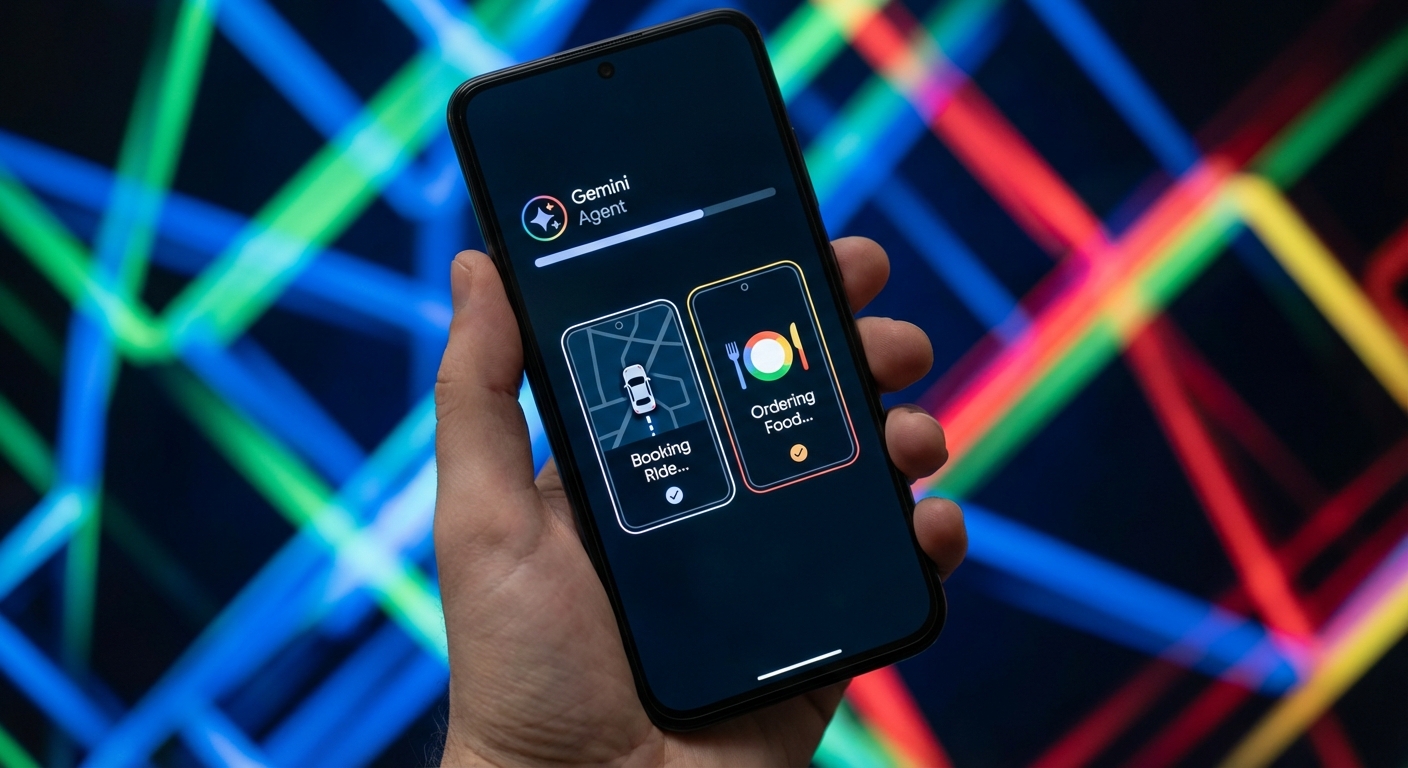
Google just turned your phone into an AI employee. Gemini Agent, launching in beta on Pixel 10 and Samsung Galaxy S26, handles multi-step tasks that previously required switching between multiple apps. Long-press the power button, tell Gemini to book a ride home, and it opens Uber, enters your destination, selects your preferred ride type, and confirms the booking — all while you watch through a secure virtual window.
The initial capabilities cover food delivery, grocery ordering, and rideshare booking, with restaurant reservations, calendar management, and email handling following. Google AI Ultra subscribers get web-based access to even broader task automation including live research and online purchases.
Safety features are thoughtfully designed: automations begin with your command, live notifications let you monitor progress, and you can jump in or stop at any point. Gemini runs apps in a secure virtual window with limited access.
But there's a gap in this otherwise impressive automation stack: Gemini Agent executes tasks without remembering how you prefer them done.
Gemini Agent: What Mobile Task Automation Achieves
The execution quality is impressive. Gemini Agent doesn't just send commands to apps — it navigates interfaces the way a human would, understanding UI elements, making selections, and handling multi-step flows. Book a DoorDash order, and the agent navigates menus, applies your saved payment method, and confirms delivery details.
The transparency model is well-designed for trust building. Users see exactly what Gemini Agent is doing at each step, maintaining control without micromanaging every interaction. This is the right approach for an AI agent handling real transactions with real money.
The limitation is personalization over time. Every time you ask Gemini Agent to order lunch, it starts from your verbal instruction — not from accumulated knowledge of your preferences. It doesn't know you always order extra napkins from that Thai place, prefer the back seat in Uber, or avoid restaurants that took longer than 45 minutes last time. Each task execution is technically competent but personally naive.
How Gemini Agent Handles User Context
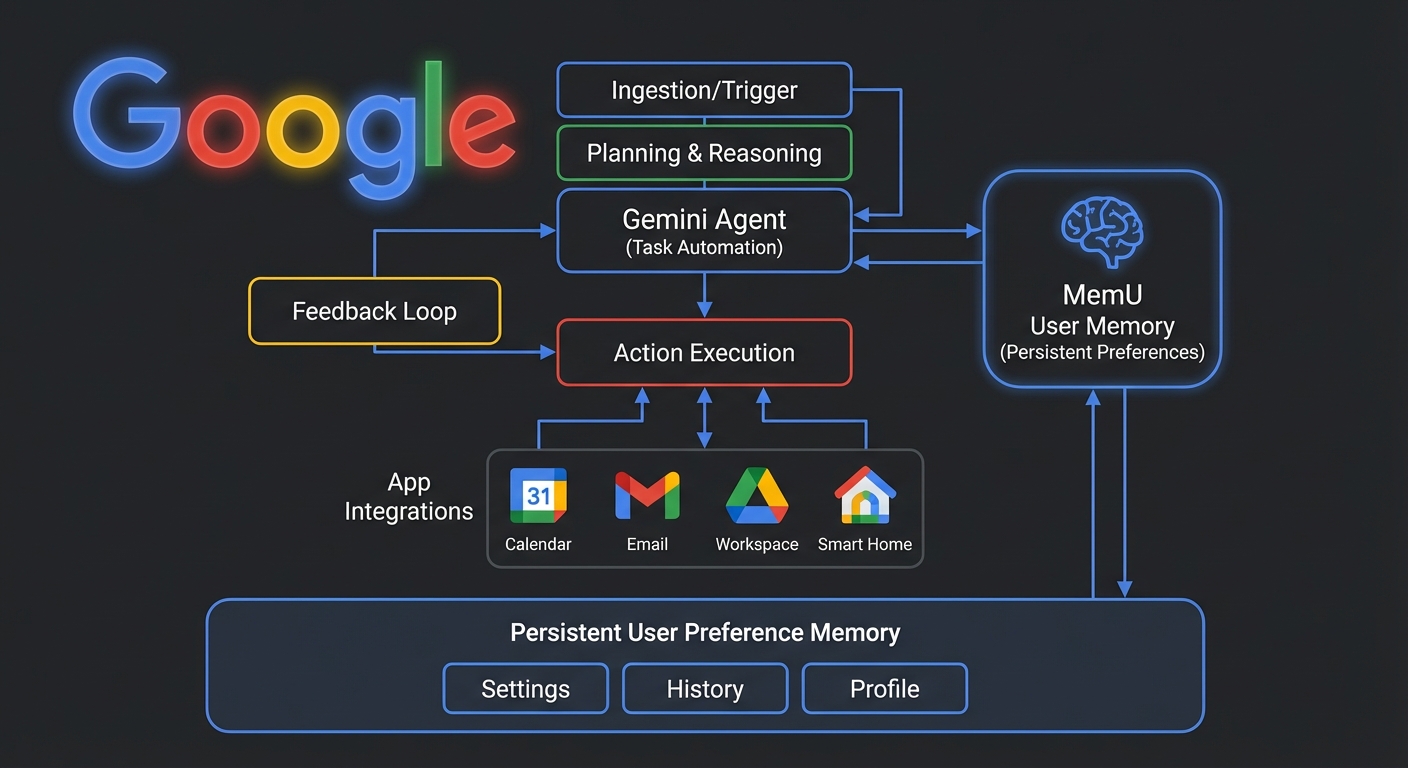
Gemini Agent accesses your device context — contacts, calendar, location — to inform task execution. It uses your saved payment methods, delivery addresses, and app preferences. Within a conversation, you can refine instructions and the agent adjusts accordingly.
Google's Memories and Rules feature provides some customization — you can set persistent preferences that guide Gemini's behavior. But these are manually configured rules, not learned behaviors.
Experiential learning doesn't happen. The agent that booked your ride perfectly last Friday doesn't remember that you changed the destination mid-ride, or that you mentioned preferring quiet drivers, or that the pickup location was wrong and you had to walk a block. Manual rules capture what you think to configure; memory captures what actually happens.
The MemU Agentic Memory Framework: Mobile Agents That Learn From Every Interaction
The MemU Agentic Memory Framework provides the experiential memory that transforms task automation from repeated execution to progressive personalization.
Consider a professional who uses Gemini Agent daily for lunch orders, ride bookings, and meeting scheduling. After two weeks, the MemU Agentic Memory Framework has captured patterns: Monday meetings always run late so schedule 15 minutes buffer, the Thai restaurant order should include extra rice, and morning rides should be scheduled 5 minutes earlier than requested because the pickup point has a walk. Gemini Agent stops being a task executor and becomes a personal assistant that genuinely knows you.
The architecture enhances Gemini Agent through three capabilities:
- Preference learning: The MemU Agentic Memory Framework captures interaction outcomes — not just what you ordered but what you liked, not just where you went but how the experience was. Preferences emerge from behavior, not manual configuration.
- Pattern recognition: Regular usage patterns become predictive context. "It's Tuesday at noon" triggers context about your typical Tuesday lunch preferences without you needing to specify them.
- Cross-app intelligence: Memory persists across different task types. Your calendar context informs ride timing. Your restaurant preferences inform grocery suggestions. The agent builds holistic understanding rather than app-specific knowledge.
MemU transforms Gemini Agent from an app navigator that follows instructions to a personal assistant that anticipates needs.
Head-to-Head: Task Execution vs. Personal Intelligence
Gemini Agent alone: Capable multi-step task automation with safety controls and transparency. But each task starts from explicit instructions — no learned preferences, no experiential context, no progressive personalization.
Gemini Agent + MemU: Same execution capability plus persistent personal memory. Interactions get smoother over time. Preferences emerge from behavior. Sub-100ms memory retrieval adds zero perceptible delay to task execution.
Get Started with MemU
Gemini Agent represents a genuine step toward AI that handles real-world tasks on your behalf. The execution quality, safety model, and cross-app capability make mobile AI assistance feel viable rather than gimmicky.
The MemU Agentic Memory Framework provides the personal memory that makes that assistance genuinely personal. Every interaction teaches the agent something new. Every task execution gets slightly more tailored.
Visit memu.pro to explore the Agentic Memory Framework API, or check out the open-source repository on GitHub to start building persistent memory into your mobile AI applications today.