Google Opal Shows Enterprise the Blueprint for Adaptive AI Agents — But Adaptive Routing Without Memory Is Reactive, Not Learned

Google Opal: What Everyone's Getting Right (And Missing)
Google Opal marks a decisive shift in how enterprises think about AI agent orchestration. Rather than hardcoding agent behavior into rigid, pre-defined workflows, Google Opal introduces adaptive agent routing — a pattern where agents dynamically select tools, models, and execution paths based on real-time goal evaluation. With frontier models like Gemini 3 and Claude Opus 4.6 delivering stronger reasoning capabilities, Google Opal gives enterprises the framework to harness that reasoning for dynamic agent workflows that respond to novel situations without requiring manual reconfiguration.
The design is intelligent. Google Opal pairs adaptive routing with human-in-the-loop governance, ensuring that agents can make autonomous decisions within clearly defined safety boundaries. For enterprise AI orchestration teams managing dozens of agent deployments, this combination of flexibility and control addresses real operational friction. Agents no longer need exhaustive workflow definitions for every possible scenario — they evaluate goals, assess available tools, and route execution accordingly.
But there's a structural gap in the architecture. Google Opal routes adaptively based on current context — the present state of the task, the available models, the active governance constraints. What it doesn't do is learn from previous routing decisions. An agent that discovered a more efficient tool chain for financial compliance workflows last Tuesday has no mechanism to recall that discovery today. Adaptive agent routing without memory is reactive intelligence — capable in the moment, but unable to compound its effectiveness over time.
What Google Opal Does With Memory Today
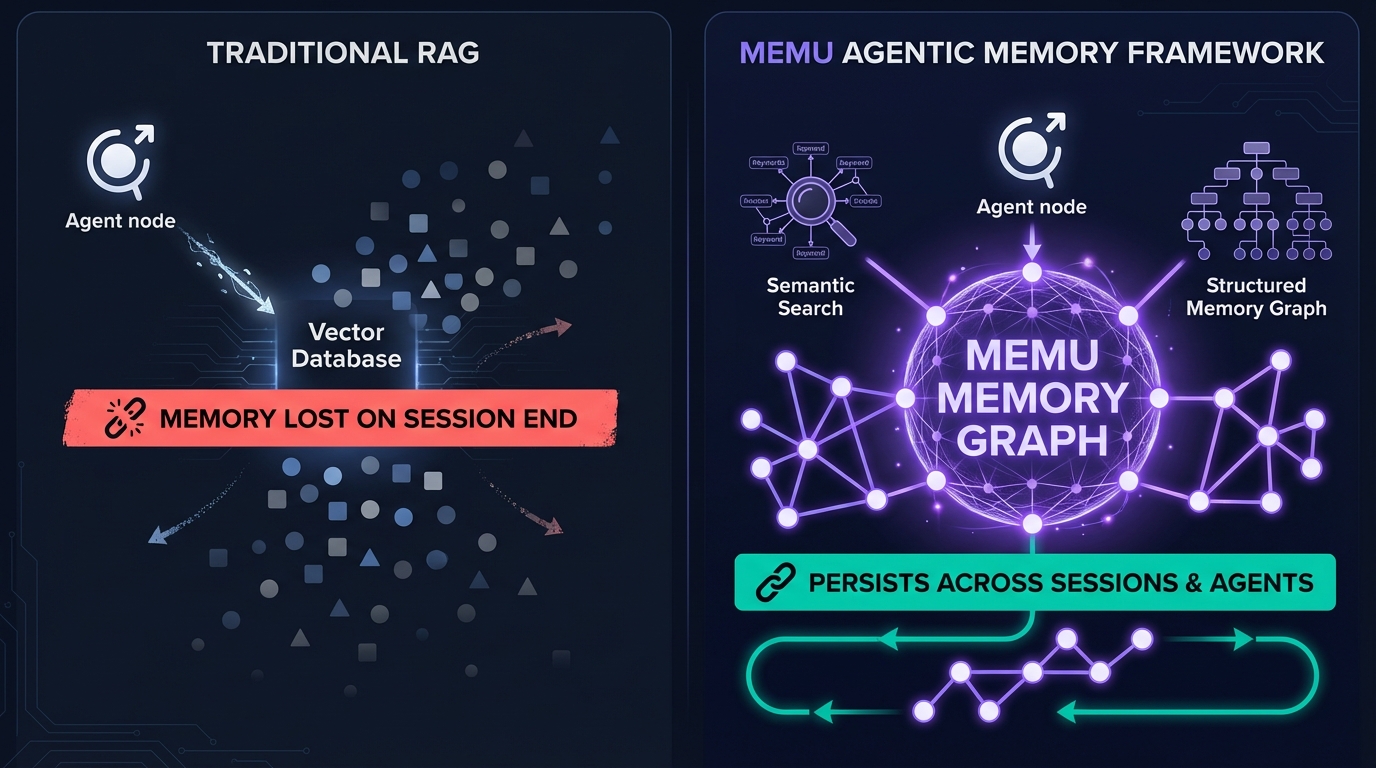
Google Opal operates on a stateless routing model. Each time an agent encounters a decision point — which model to call, which tool to invoke, which execution path to follow — the routing engine evaluates the current context: task parameters, available resources, governance rules, and model capabilities. The decision is made in real time, optimized for the present situation, and discarded after execution completes.
This approach works well for isolated tasks. When an agent processes a single customer request or executes a well-bounded workflow, stateless adaptive agent routing delivers strong results. The agent selects the right model (cost-optimized for simple queries, reasoning-heavy for complex analysis), applies the appropriate tools, and completes the task efficiently. Human-in-the-loop controls provide the governance layer that enterprise deployments require.
The limitation surfaces in multi-session, multi-agent environments. Google Opal agents running enterprise workflows across days or weeks make thousands of routing decisions, but none of those decisions inform future behavior. A routing pattern that consistently produces faster execution for data pipeline tasks never gets reinforced. A model fallback that degraded output quality in legal document analysis never gets deprioritized. Each routing decision starts from the same baseline, regardless of what previous decisions revealed.
For enterprise AI orchestration at scale, this means teams must manually tune routing configurations based on observed patterns — a process that is slow, error-prone, and fundamentally at odds with the adaptive philosophy that Google Opal promotes.
The MemU Agentic Memory Framework: A Different Architecture
The MemU Agentic Memory Framework addresses the persistence gap in adaptive routing systems like Google Opal. Instead of treating each routing decision as an ephemeral computation, MemU captures the full decision context — inputs, selected path, execution outcomes, and performance signals — and stores it in a structured memory graph that persists across sessions, agents, and organizational boundaries.
Adaptive routing that forgets every decision it makes is optimization without learning. Persistent memory turns routing decisions into accumulated intelligence that makes every future decision more informed than the last.
The architecture integrates directly with dynamic agent workflows. When a Google Opal agent faces a routing decision, the MemU Agentic Memory Framework provides historical context: similar tasks routed through this tool chain produced 40% faster execution; this model performed poorly on comparable compliance queries; this fallback pattern triggered three governance escalations last week. The agent doesn't just evaluate present conditions — it evaluates them in light of accumulated organizational experience.
Three capabilities distinguish the framework from session-bounded routing:
- Routing decision persistence: Every adaptive routing choice — model selection, tool invocation, execution path — is stored with outcome data. The MemU Agentic Memory Framework builds a comprehensive map of what works, enabling agents to prioritize proven paths.
- Cross-agent learning: When one agent discovers an efficient routing pattern, that knowledge propagates to other agents in the same organization. Enterprise AI orchestration benefits from collective intelligence rather than isolated per-agent optimization.
- Governance memory: The MemU Agentic Memory Framework tracks which routing decisions triggered governance interventions, enabling agents to proactively avoid paths that have historically required human override. Compliance improves through learned behavior, not just rule enforcement.
Integration requires no modification to Google Opal's routing engine. The framework exposes REST APIs that intercept routing decisions, enrich them with historical context, and record outcomes — functioning as a persistent memory layer that wraps around any adaptive routing system.
Head-to-Head: MemU vs. Google Opal
Google Opal alone: Strong adaptive routing with real-time goal evaluation, model selection, and human-in-the-loop governance. Agents respond intelligently to novel situations and maintain compliance within enterprise boundaries. But each routing decision starts from scratch — no learning from prior executions, no cross-agent knowledge sharing, no accumulated routing intelligence.
Google Opal + MemU: The same adaptive agent routing capabilities, now backed by persistent memory that captures every routing decision and its outcomes. Agents start each task with access to organizational routing history — which paths produced optimal results, which model selections underperformed, which tool chains triggered governance flags. Dynamic agent workflows become progressively more efficient as the memory layer compounds routing intelligence across every execution.
The performance difference is most visible in complex, multi-step enterprise workflows. A Google Opal agent processing financial regulatory filings across a 15-step workflow makes 15 independent routing decisions. With the MemU Agentic Memory Framework, each of those decisions draws on hundreds of previous executions of similar workflows — routing becomes data-informed rather than context-only, and execution quality improves with every completed workflow.
For teams managing enterprise AI orchestration at scale, the combination eliminates the manual tuning loop that stateless routing requires. Routing configurations self-optimize through accumulated experience rather than requiring human analysis of execution logs.
Empowering Adaptive Routing: Better Together
The convergence of Google Opal's adaptive routing and persistent memory creates capabilities that neither system delivers independently:
- Self-optimizing model selection: Agents that remember which models performed best for specific task types automatically route to optimal providers. Cost efficiency and output quality improve simultaneously as routing memory accumulates across thousands of executions.
- Predictive governance: Instead of triggering human-in-the-loop reviews reactively, agents with routing memory anticipate which execution paths are likely to require governance intervention and adjust proactively. Compliance overhead drops while audit quality improves.
- Cross-workflow intelligence: Insights from Google Opal agents in one domain (financial analysis) transfer to agents in adjacent domains (risk assessment) through shared memory. Organizations build a unified routing intelligence layer that accelerates every new agent deployment.
- Failure-aware routing: Persistent memory of routing failures — timeouts, quality degradation, cost overruns — enables agents to avoid known failure modes. Dynamic agent workflows become resilient by default through accumulated failure context rather than manual error handling rules.
Persistent memory transforms adaptive agent routing from a stateless optimization technique into a compounding intelligence asset that improves with every decision an organization's agents make.
Get Started with MemU
Google Opal demonstrates that enterprise AI agents can move beyond rigid workflows into genuinely adaptive execution. The combination of real-time routing, frontier model reasoning, and human-in-the-loop governance addresses real deployment challenges that have held back enterprise AI orchestration at scale.
What turns adaptive agents into learning agents is persistent memory. Routing decisions that inform future routing. Cross-agent intelligence that compounds organizational knowledge. Governance patterns that improve through accumulated experience rather than manual rule updates.
The MemU Agentic Memory Framework delivers that persistence layer. Drop-in API integration with any adaptive routing system — including Google Opal — means adding persistent memory requires no architectural changes. Structured knowledge graphs ensure routing history is retrievable, contextual, and actionable.
Visit memu.pro to explore the Agentic Memory Framework API, or check out the GitHub repository to start building agents that learn from every routing decision.
Tags: Google Opal, adaptive agent routing, enterprise AI orchestration, dynamic agent workflows, MemU Agentic Memory Framework, persistent memory, agent routing intelligence