KDDI Launches AI Agent for Instant Fault Identification — Diagnosing Cloud Failures Without Incident Memory

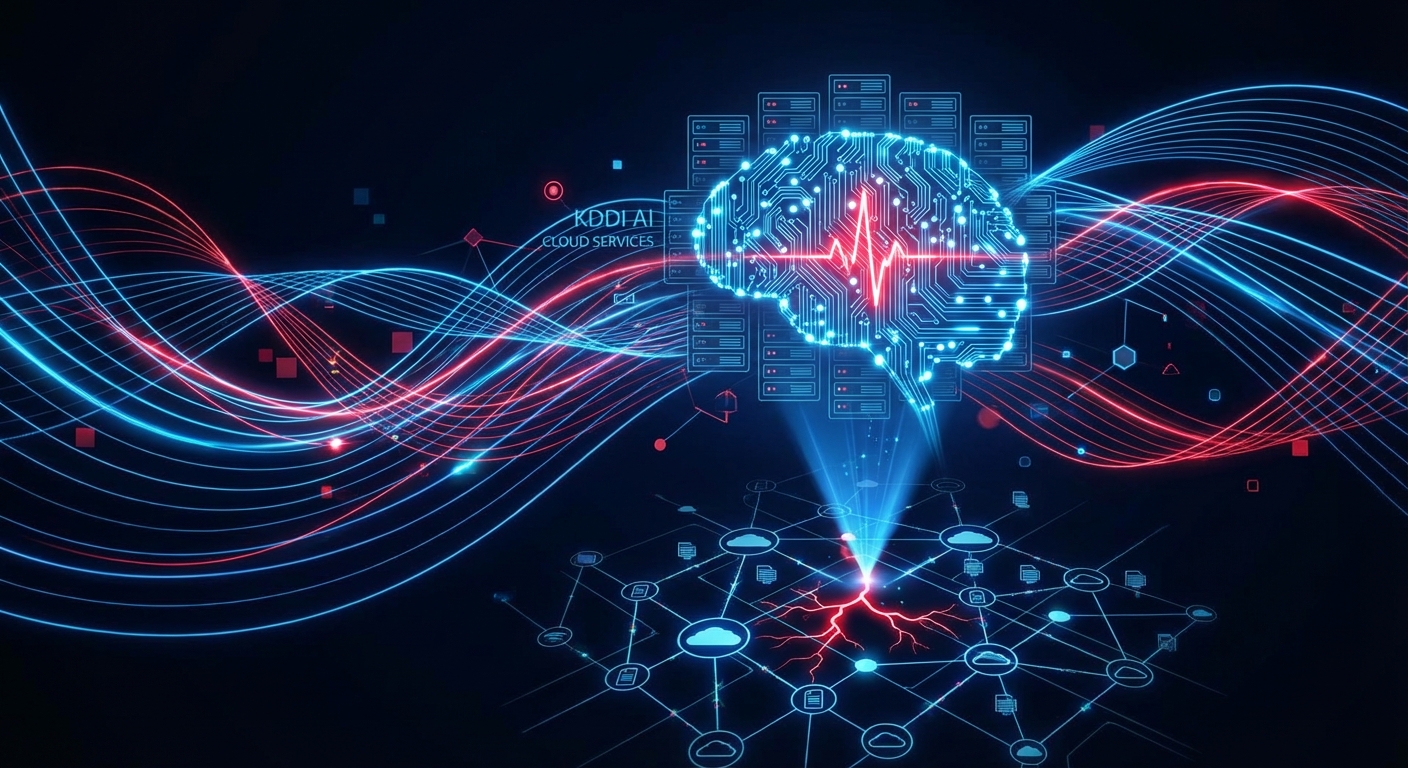
KDDI just deployed a Fault Recovery support Agent that immediately identifies failure causes in cloud services by analyzing correlations between affected systems and equipment alarms. The Japanese telecom giant plans to introduce a fully Autonomous Maintenance Agent in FY2026 that will not only diagnose but automatically execute recovery measures. This represents the evolution from manual incident response — where engineers spend hours correlating logs — to AI-driven diagnosis that identifies root causes in seconds.
The technical approach is correlation-based: when a service failure occurs, the agent analyzes alarm data from related systems, identifies the correlations that point to the root cause, and presents the diagnosis to engineers. For cloud infrastructure that spans thousands of interconnected components, this automated correlation dramatically reduces mean time to diagnosis. Engineers go from searching for the needle to having it handed to them.
But cloud infrastructure failures follow patterns: the same root causes recur with predictable frequency, and an agent that remembers past incidents could identify them before correlation analysis even begins.
From Correlation to Pattern Recognition
KDDI's current approach diagnoses each incident independently by correlating real-time alarm data. This works for novel failures — situations the system hasn't encountered before. But most cloud failures aren't novel. The same hardware failures, the same software bugs, the same configuration drift issues recur across the infrastructure. An operations team with years of experience recognizes familiar patterns instantly: "This alarm combination usually means the storage controller firmware needs updating."
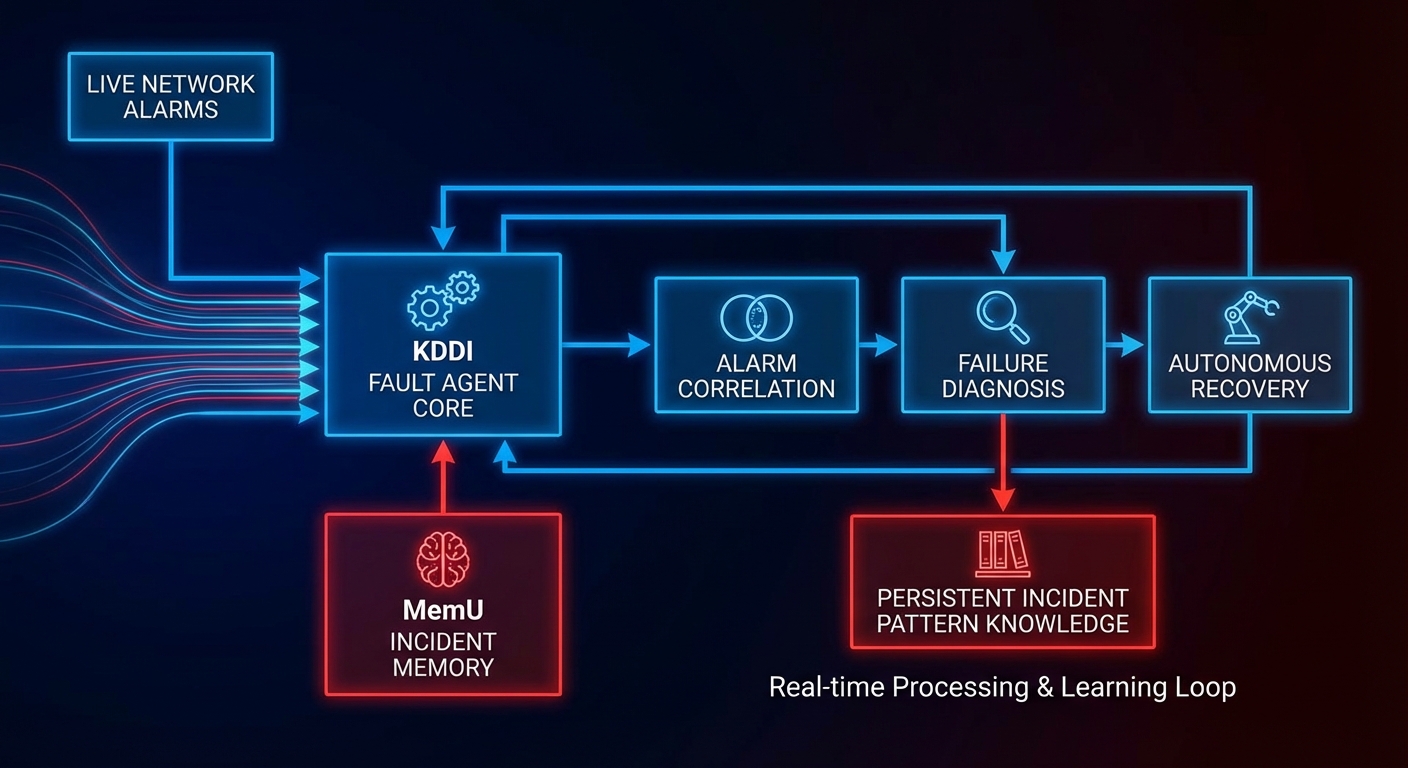
Without incident memory, the AI agent performs full correlation analysis for every incident — including ones it has diagnosed dozens of times before. The diagnosis is correct, but it takes longer than necessary and misses the opportunity to detect emerging patterns: when a previously rare failure starts occurring more frequently, it signals a systemic issue that needs proactive attention rather than reactive diagnosis.
How MemU Adds Incident Memory to Fault Recovery
MemU provides persistent incident memory that transforms fault diagnosis from reactive correlation to predictive intelligence. Every resolved incident generates memories: the symptoms, the root cause, the resolution, and the time to recovery. Before analyzing a new incident, the agent retrieves similar past incidents, potentially identifying the root cause in seconds rather than minutes.
For KDDI's planned Autonomous Maintenance Agent, memory is even more critical. Autonomous recovery requires confidence that the resolution is correct — confidence that comes from remembering that this exact pattern was successfully resolved the same way dozens of times before. Memory transforms autonomous recovery from a risky experiment into a well-informed decision.
KDDI built the fault diagnosis agent. MemU gives it the incident memory to diagnose faster and recover with confidence.
Get Started
Add incident memory to your infrastructure AI agents. Explore MemU at memu.pro and on GitHub.