Khanmigo Guides Millions of Students Through Socratic Discovery — But It Doesn't Remember What Each Student Struggled With Yesterday

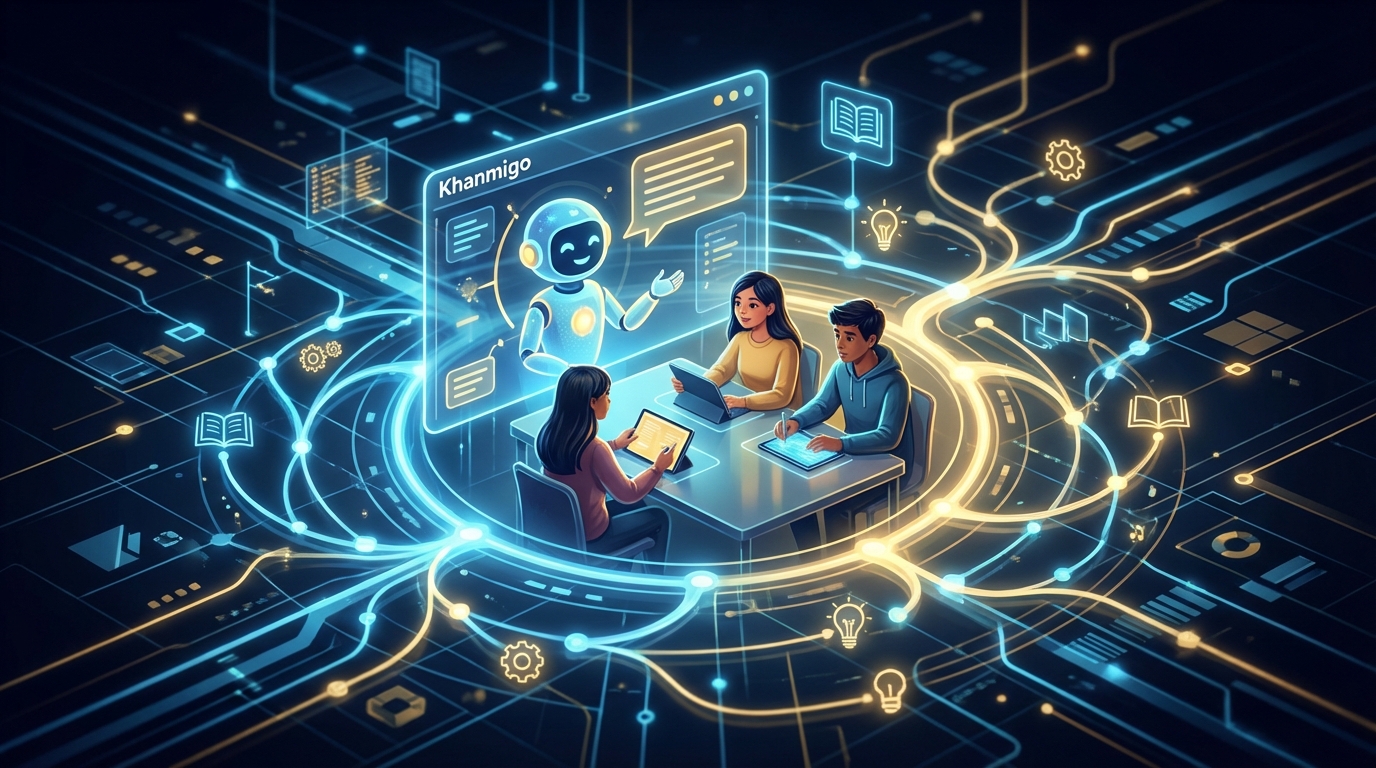
Khan Academy's Khanmigo has become the most widely deployed AI tutor in education — guiding students to discover answers through Socratic dialogue rather than providing them directly. Integrated across math, humanities, coding, and social studies, Khanmigo earned a 4-star rating from Common Sense Media. The approach is pedagogically sound: when students work through problems with guidance rather than receiving answers, they develop deeper understanding and better retention. For millions of students, Khanmigo is their first experience with personalized, AI-powered learning.
The Socratic method is the ideal tutoring approach. Instead of "The answer is 42," Khanmigo asks "What happens when you try dividing both sides by 3?" This guided discovery builds mathematical reasoning, not just answer recall. For humanities, it asks probing questions that help students develop their own arguments. For coding, it hints at debugging strategies rather than fixing the code. The pedagogical design is excellent.
But effective tutoring depends on knowing the student: a tutor who doesn't remember that a student consistently struggles with fractions, already mastered linear equations, and learns best through visual examples is starting from scratch every session.
Why Personalized Tutoring Requires Memory
The best human tutors develop a mental model of each student: their strengths, weaknesses, preferred learning modalities, common misconceptions, and emotional relationship with different subjects. This model informs every tutoring decision — which questions to ask, which examples to use, when to challenge and when to encourage. Without this model, every session is a generic interaction rather than a personalized one.
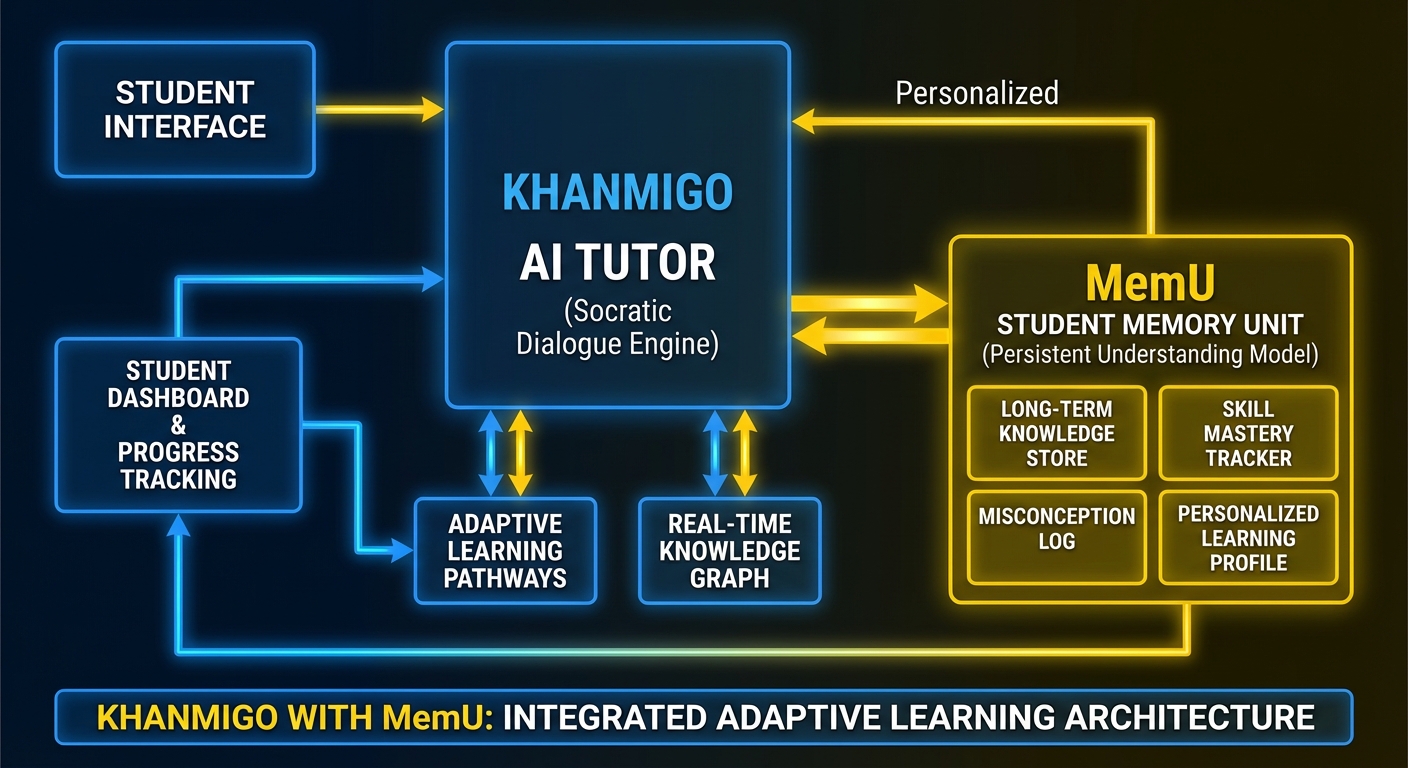
Khanmigo's Socratic approach actually amplifies the need for student memory. The quality of a Socratic question depends entirely on understanding what the student already knows. Asking "What happens when you divide both sides?" is brilliant if the student understands division but not equation manipulation. It's frustrating if the student doesn't understand division. Knowing which question to ask requires knowing where the student is in their learning journey — and that requires memory.
The Learning Journey Persistence Gap
Students don't learn in single sessions. A concept introduced on Monday is practiced on Wednesday and assessed on Friday. The tutoring interaction on Wednesday should build on Monday's introduction. Without memory, Wednesday's session treats the student as if Monday never happened. The tutor re-assesses the student's level, re-discovers their misconceptions, and re-establishes rapport — wasting the most valuable minutes of the session on context that should have been remembered.
Kiddom Atlas, another education AI tool, demonstrates the potential: it identifies misconceptions and learning gaps daily, generating differentiated instruction for small groups. Early data shows 18% gains compared to peers. The differentiator is persistent awareness of each student's specific needs — exactly the kind of longitudinal understanding that requires memory.
How MemU Adds Student Memory to AI Tutoring
MemU provides the persistent student memory that AI tutors need. Every tutoring session generates structured memories: which concepts the student mastered, where they struggled, which explanations resonated, and which misconceptions persist. Before each new session, the tutor retrieves the student's accumulated learning profile, beginning with personalized understanding rather than generic assessment.
Over a school year, the tutor builds a comprehensive model of each student — not through standardized testing but through accumulated interaction. The tutor that has worked with a student for three months knows them better than any assessment can capture. This is the promise of personalized education: every student gets a tutor who truly knows them.
Khan Academy built the Socratic tutoring approach. MemU gives each student a tutor that remembers their journey.
Get Started
Add persistent student memory to your educational AI. Explore MemU at memu.pro and on GitHub.