Lio Raises $30M to Automate Enterprise Procurement With AI Agents — But Procurement Memory Doesn't Persist Across Negotiations

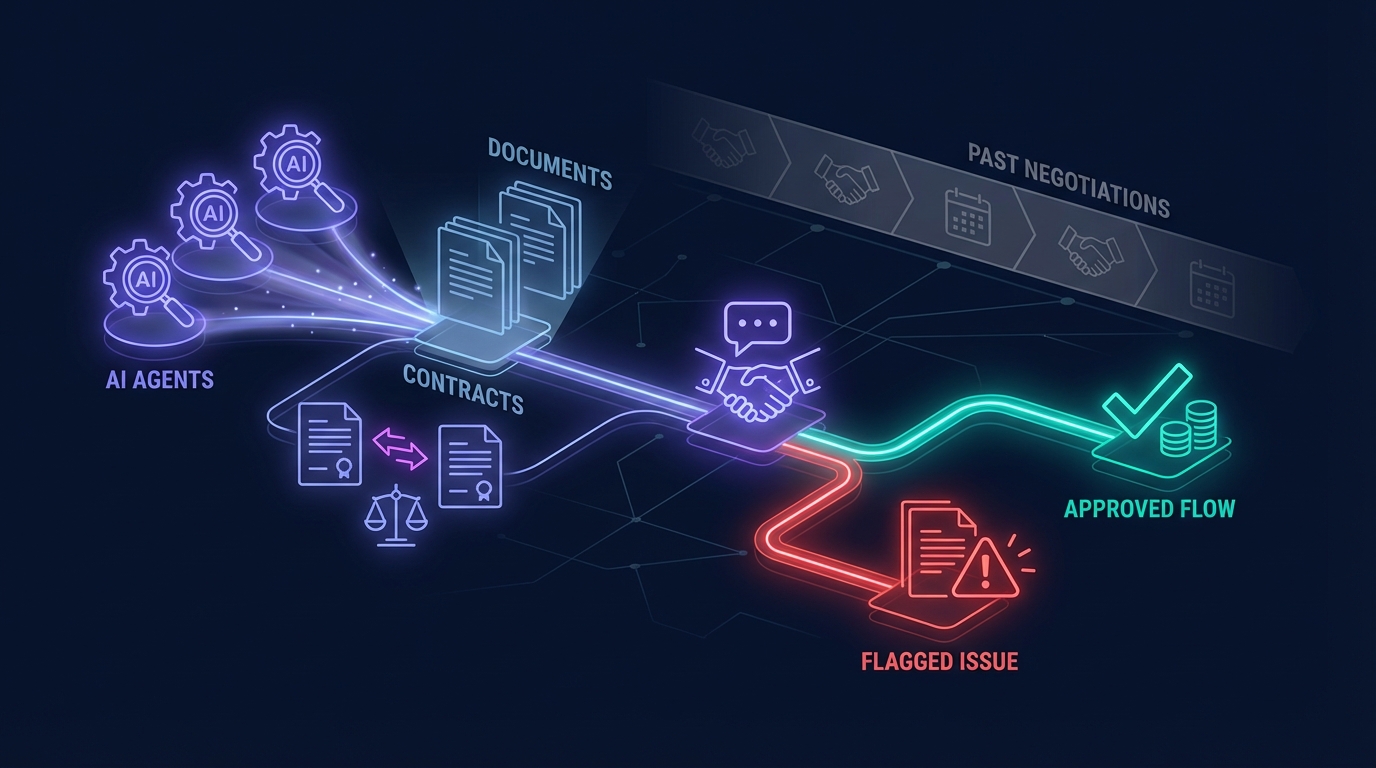
Lio just raised $30 million in Series A funding led by Andreessen Horowitz to bring agentic AI to enterprise procurement. The platform deploys AI agents that automate supplier analysis, compliance checks, and contract negotiation across billions in enterprise spending. Fortune 500 companies including Munich Re and Novozymes already use Lio's agents to transform procurement workflows that previously required teams of specialists and weeks of manual review.
But there is a foundational layer that procurement agents depend on more than most — persistent memory of supplier relationships, negotiation history, and compliance patterns that accumulates across deals.
Lio Procurement AI: What Everyone's Getting Right (And Missing)
Lio gets procurement automation right. AI agents that can analyze supplier proposals, check compliance requirements, and negotiate terms autonomously remove the bottleneck that makes enterprise procurement painfully slow. When a company manages thousands of supplier relationships across multiple categories and geographies, automation is the only path to scalable procurement operations.
What procurement agents at scale have not fully solved is institutional procurement memory. Each negotiation benefits from the outcome of every previous negotiation — which suppliers honored commitments, which pricing structures worked for similar volumes, which compliance requirements changed and how they affected timelines. Lio automates procurement workflows; institutional procurement intelligence requires a memory architecture.
Other procurement AI platforms — Coupa AI, SAP Ariba with AI, Jaggaer — share this same limitation. They automate procurement processes; none of them accumulate procurement wisdom across deals.
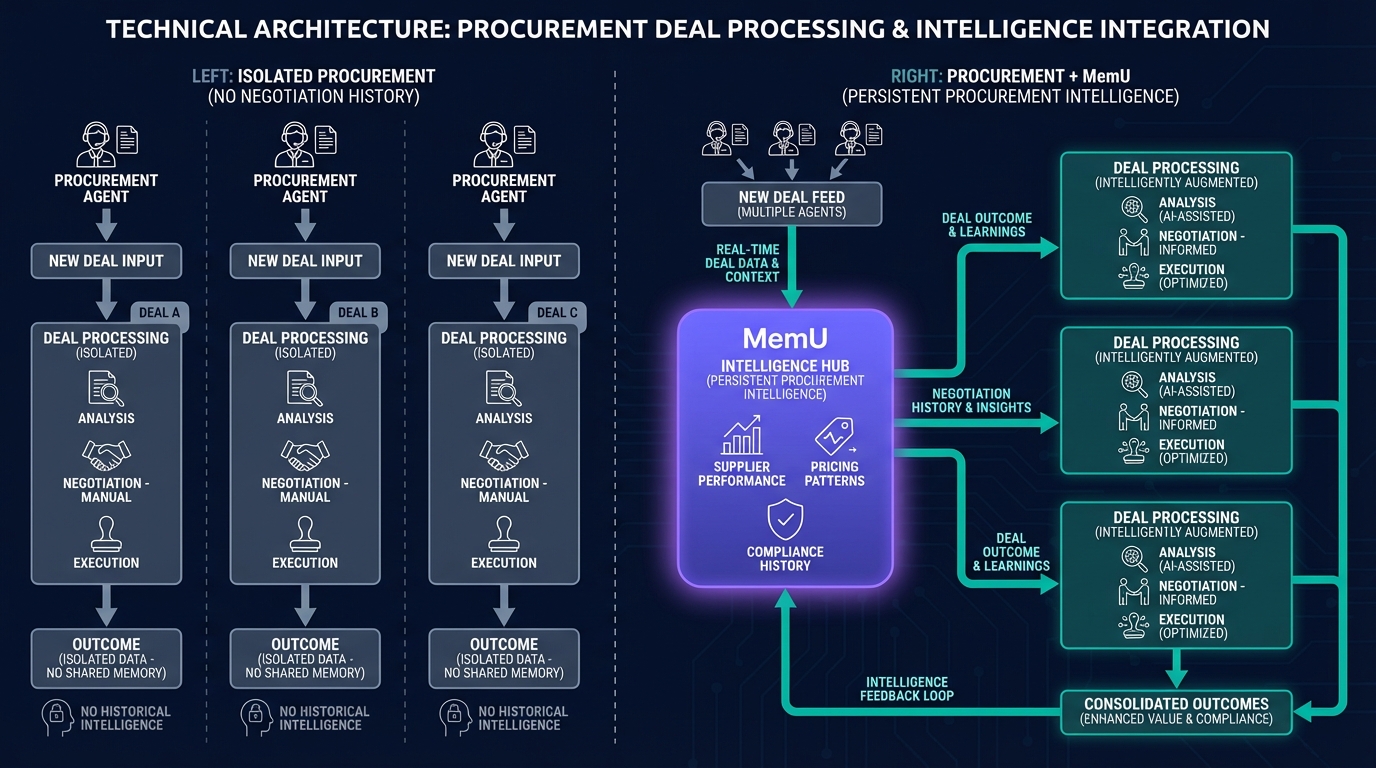
The MemU Agentic Memory Framework: Persistent Procurement Intelligence
The MemU Agentic Memory Framework adds the missing layer. Where Lio manages procurement workflows, MemU manages the institutional knowledge those workflows generate.
Consider a procurement agent negotiating a three-year cloud infrastructure contract. With MemU, the agent recalls that this supplier granted a 15% discount in the last renewal when presented with competitive benchmarks, that their SLA compliance dropped in Q3 due to a datacenter issue they have since resolved, and that similar contracts at this volume typically include a mid-term pricing review clause. Without MemU, the agent negotiates from the current proposal alone.
The MemU Agentic Memory Framework provides:
- Drop-in integration: A simple API that works alongside Lio or any procurement platform. Add memory calls; your procurement agents gain institutional negotiation intelligence.
- Dual-mode retrieval: Semantic search for finding similar past deals plus a structured memory graph for tracking supplier relationships, contract terms, compliance histories, and pricing patterns. Not just transaction records — actual procurement topology.
- Cross-deal persistence: Memory survives across negotiations, fiscal years, and organizational changes. One deal's outcomes inform the next deal's strategy automatically.
Automated procurement without deal memory is negotiation without leverage. The MemU Agentic Memory Framework gives procurement agents the institutional knowledge that transforms each negotiation from isolated transaction to informed strategy.
Retrieval operates across 10,000+ memory entries with sub-100ms latency, ensuring memory lookup never delays procurement workflow execution.
Head-to-Head: Procurement Agents Alone vs. With MemU
Lio alone: Agents analyze current proposals and automate compliance checks against current requirements. Each negotiation is well-executed but starts without historical context. The hundredth supplier negotiation carries the same institutional knowledge as the first.
Lio + MemU Agentic Memory Framework: Each negotiation reads from persistent procurement memory. Agents recall past deal outcomes, supplier performance trajectories, and pricing benchmarks across the organization's entire procurement history. The hundredth negotiation leverages ninety-nine deals of accumulated intelligence.
Cross-category intelligence: With MemU, insights from IT procurement inform facilities procurement when the same supplier serves both categories. Without MemU, each procurement category operates as an isolated silo.
Empowering Lio: Better Together
MemU does not replace Lio — it makes procurement agents dramatically more effective:
- Supplier evaluation: Lio analyzes the current proposal; MemU provides historical supplier performance data, contract compliance history, and relationship context that transforms evaluation from snapshot to trajectory.
- Contract negotiation: Lio automates negotiation workflows; MemU remembers what terms were achievable in past deals, which negotiation strategies worked with specific suppliers, and where flexibility typically exists.
- Compliance management: Lio checks current compliance requirements; MemU tracks how requirements evolved, which suppliers adapted quickly, and which compliance gaps recur — enabling proactive risk management.
Get Started with MemU
Add persistent procurement intelligence to your AI agents in minutes. The MemU Agentic Memory Framework works with any procurement platform — one API, zero lock-in, immediate negotiation intelligence. Visit memu.pro to explore the Agentic Memory Framework API, or check out the GitHub repository to start building agents that remember.
Tags: Lio, AI procurement agents, enterprise procurement automation, supply chain AI, agentic memory, LLM memory, MemU AI