NVIDIA and Eli Lilly Invest $1B in an AI Drug Discovery Lab — Continuous Learning Systems That Don't Actually Remember

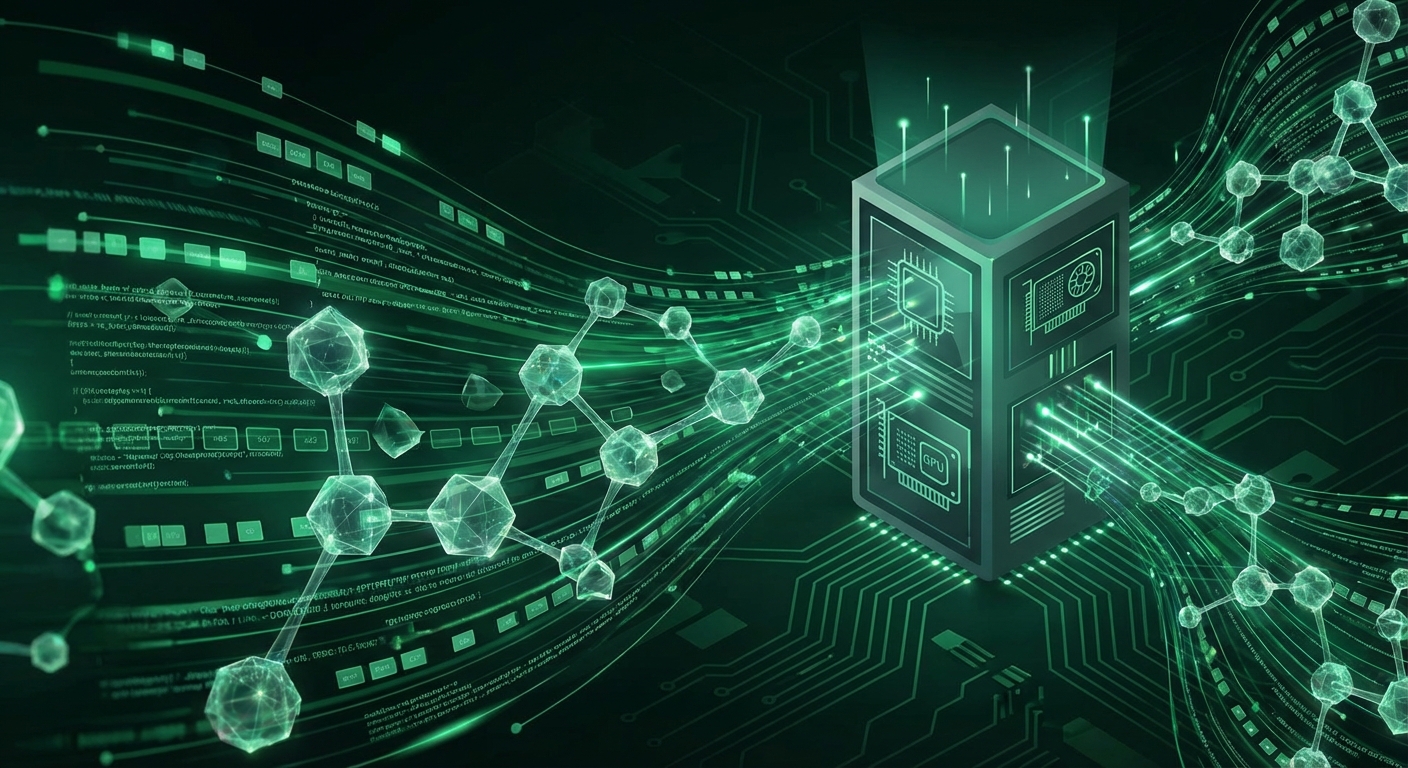
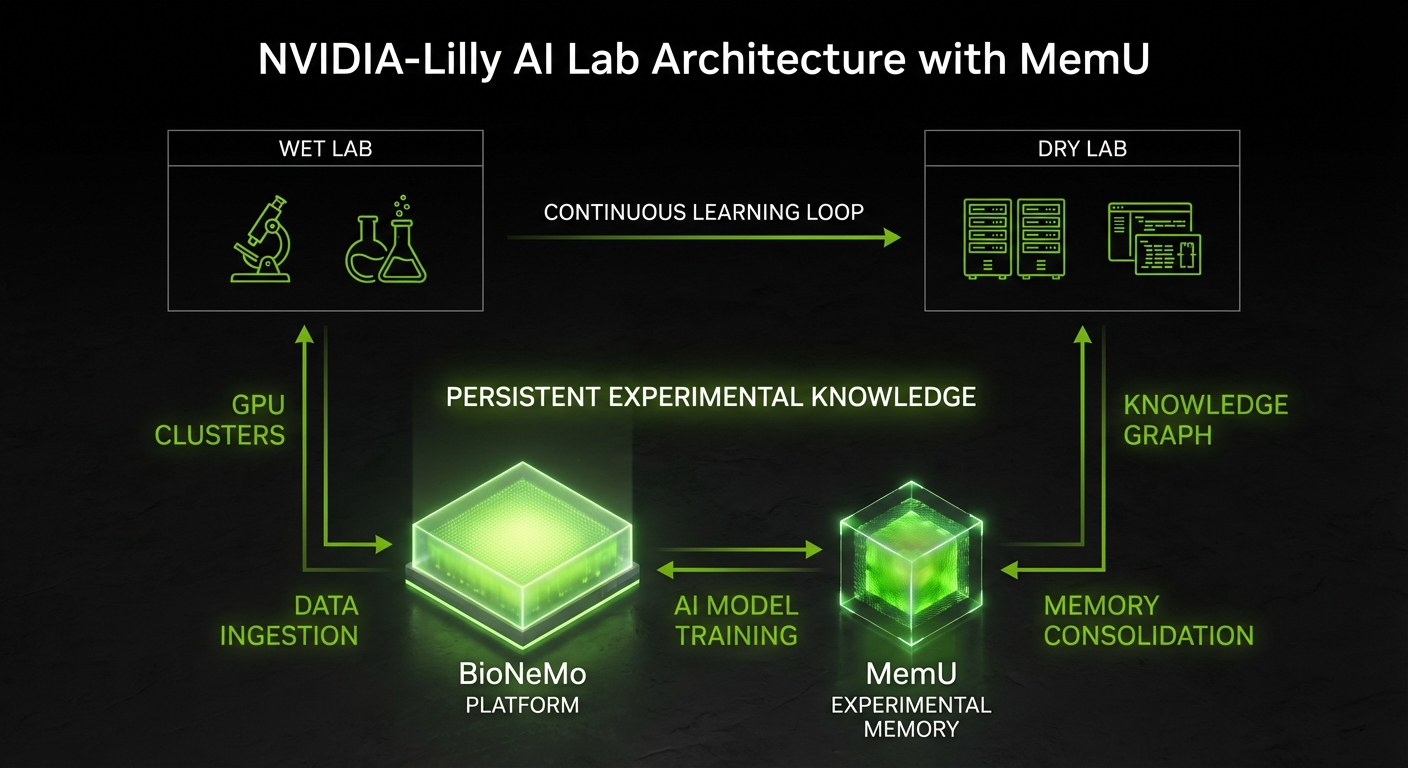
NVIDIA and Eli Lilly just committed $1 billion over five years to build the first AI co-innovation lab for drug discovery. Announced at the J.P. Morgan Healthcare Conference, the Bay Area lab co-locates Lilly's biologists and chemists with NVIDIA's AI engineers. Built on BioNeMo and the Vera Rubin architecture, powered by LillyPod's 1,000+ Blackwell Ultra GPUs, the lab creates a "continuous learning system" connecting computational dry labs with agentic wet labs — 24/7 AI-assisted experimentation where each experiment informs the next AI model in real-time.
The vision is transformational: convert drug discovery from artisanal trial-and-error into systematic engineering. AI models propose molecular candidates. Automated wet labs synthesize and test them. Results feed back into the models. The loop runs continuously, accelerating the decade-long drug development timeline. Jensen Huang and Lilly CEO David Ricks called it a "blueprint for what is possible" in AI-powered pharmaceutical research.
But "continuous learning" in this context means continuous model retraining — not persistent experimental memory: the AI systems that propose molecular candidates don't remember the reasoning behind previous proposals, the edge cases discovered during synthesis, or the subtle patterns that experienced chemists notice across hundreds of experiments.
Why Drug Discovery Needs Experimental Memory
The wet lab-dry lab loop generates enormous amounts of contextual knowledge. A synthesis that fails unexpectedly reveals something about the molecule's chemistry that the computational model didn't predict. A binding assay that produces ambiguous results suggests the assay conditions might need adjustment. A promising candidate that shows unexpected toxicity in early screening points to a structural feature that should be flagged in future candidates.
Model retraining captures the quantitative results — this molecule had this binding affinity, this toxicity profile. It doesn't capture the qualitative insights — why the synthesis failed, what the ambiguous result might indicate, which structural features correlate with toxicity in ways that aren't yet statistically significant. These qualitative insights are exactly what experienced pharmaceutical researchers carry in their heads and apply to every new experiment.
At $1 billion over five years, every experiment is expensive. Repeating experiments because the AI system forgot the context of previous results — why a particular approach was tried, what was learned from its failure, which alternative approaches were considered and rejected — represents a direct cost that persistent memory would eliminate.
The Scientist-in-the-Loop Memory Gap
Lilly's framework includes a "scientist-in-the-loop" model where human researchers guide the AI system's priorities and interpret ambiguous results. This is correct — pharmaceutical research requires human judgment for complex decisions. But the scientist's institutional knowledge — accumulated over years of working with specific molecular targets — is the actual memory of the research program. When scientists rotate between projects or leave the organization, their institutional knowledge goes with them.
Persistent memory captures the institutional knowledge that scientists carry: why this target was chosen, what approaches were tried and failed, which side effects are acceptable for this indication, and which collaborators have relevant expertise. This knowledge exists independently of any individual scientist, available to every AI system and every human researcher who works on the program.
How MemU Adds Experimental Memory to Drug Discovery
MemU provides the persistent memory layer that pharmaceutical AI labs need. Every experiment generates structured memories: the hypothesis, the approach, the results, and the interpretation. Before each new experimental cycle, the AI retrieves relevant memories — not just quantitative results but the full context of previous work. Failed approaches are remembered and avoided. Promising directions are remembered and explored. Institutional knowledge compounds across the entire research program.
For a $1 billion lab running 24/7, the value of not repeating past work is measured in millions of dollars and months of time. MemU transforms the continuous learning loop from continuous retraining into genuine continuous knowledge accumulation.
NVIDIA and Lilly built the lab. MemU gives it a memory that never loses an insight.
Get Started
Add experimental memory to your AI research workflows. Explore MemU at memu.pro and on GitHub.