NVIDIA Nemotron 3 Super Delivers 5x Throughput for Agentic AI — But High-Volume Agents Without Memory Lose What They Process


NVIDIA Nemotron 3 Super: What Everyone's Getting Right (And Missing)
NVIDIA Nemotron 3 Super launched March 11, 2026 — a 120-billion parameter open-source hybrid Mamba-Attention MoE model positioned for multi-agent applications. The model delivers 5x–7x higher throughput than previous Nemotron generations, fitting between the 30B Nano and the forthcoming 500B Ultra. For teams scaling agentic AI workloads across hundreds of concurrent agents, the throughput gains are significant: more inferences per dollar, lower latency under load, and the open weights needed for self-hosted enterprise deployment.
The architecture is purpose-built for agentic AI. Hybrid Mamba-Attention layers handle long-context reasoning efficiently while MoE activation keeps compute costs manageable. NVIDIA positions Nemotron 3 Super as the backbone for agent swarms — exactly the use case where throughput matters. OpenClaw developers building agent pipelines and Moltbook's 2.5 million agents both represent communities where high-volume inference meets the same constraint: processing more doesn't help if nothing accumulates between runs.
But there's a foundational layer that high-throughput inference still depends on getting right — memory.
What Nemotron 3 Super Does With Memory Today
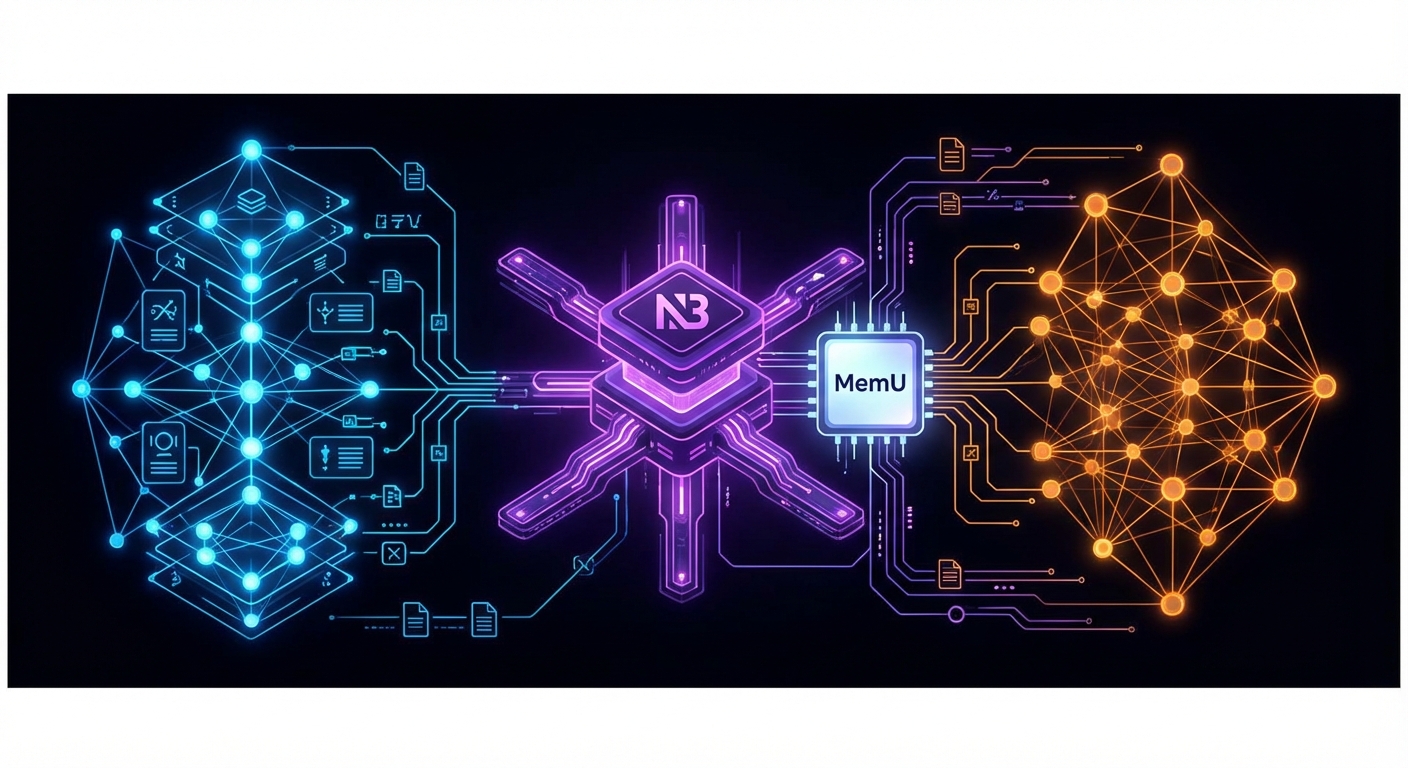
Nemotron 3 Super delivers inference. Each request receives a prompt, processes it through 120B parameters with hybrid Mamba-Attention, and returns a response. For agentic workloads, that means multiple agents can hit the same model endpoint at scale — more requests per second, lower cost per request, faster feedback loops. The model itself is stateless. Session state, conversation history, and accumulated agent knowledge live entirely in the caller's context assembly. Agentic AI throughput without a memory layer means agents process faster but forget everything they process.
This mirrors the broader agentic AI ecosystem. OpenClaw's ContextEngine and Moltbook's agent infrastructure both handle context assembly — what to send to the model. Neither provides persistence. When Nemotron 3 Super processes a threat analysis for Kai Cyber's security agents or an email threading decision for AgentMail's inbox agents, that output feeds the next inference only if the caller explicitly stores and retrieves it. The model's throughput enables scale; it does not create institutional memory.
High-volume agentic inference without persistent memory is optimized amnesia.
The MemU Agentic Memory Framework: A Different Architecture
The MemU Agentic Memory Framework provides the persistence layer that inference engines don't include. Where Nemotron 3 Super delivers throughput for agentic AI, MemU delivers the memory substrate that makes every subsequent inference smarter than the last — regardless of which model produced it.
Throughput lets agents think faster. Memory lets agents think smarter. The first scales compute; the second compounds intelligence. Agentic AI needs both.
Consider a Nemotron 3 Super deployment serving 500 security agents. With MemU, each agent's threat assessments, remediation decisions, and false-positive learnings persist in a structured memory graph. The next agent handling a similar alert retrieves prior outcomes — what worked, what didn't, which patterns preceded real incidents.
The MemU Agentic Memory Framework integrates with any model via REST API — Nemotron, GPT, Claude, or open-source. Three architectural properties matter for agentic AI:
- Dual-mode retrieval: Semantic search finds relevant memories by meaning; the structured memory graph tracks relationships between entities, decisions, and outcomes. Agent outputs become queryable institutional knowledge.
- Cross-agent persistence: Memory survives sessions, agents, and users. One agent's analysis feeds every other agent without explicit handoff logic.
- Sub-100ms retrieval: At Nemotron 3 Super's throughput, memory lookup must not bottleneck inference. MemU retrieval scales with agent volume.
Head-to-Head: MemU vs. Stateless Agentic Inference
Nemotron 3 Super alone: Best-in-class throughput for agentic AI. Open weights enable self-hosted deployment. Hybrid Mamba-Attention delivers the reasoning quality teams need for autonomous agent decisions. But each inference is stateless — no awareness of prior agent outputs, no accumulated institutional knowledge, no learning from execution history. Throughput enables scale; it does not enable intelligence that compounds.
Nemotron 3 Super + MemU Agentic Memory Framework: The same throughput, now backed by persistent memory. Every agent output — threat assessment, email classification, code suggestion — is captured and retrieved for future inferences. High-volume agentic AI transforms from stateless processing into accumulating intelligence. OpenClaw pipelines and Moltbook agents both benefit: the model provides inference; MemU provides the memory layer that makes agent swarms learn.
Empowering Nemotron 3 Super: Better Together
Combining Nemotron 3 Super's agentic AI throughput with persistent memory unlocks use cases neither delivers alone:
- Security agent swarm: 500 agents process alerts at 5x throughput; MemU ensures each agent's threat assessments and remediation outcomes persist. Pattern recognition compounds across the fleet.
- Email agent orchestration: AgentMail-style inbox agents classify and thread at scale; MemU preserves correspondence context across sessions so agents build relationship memory.
- Multi-agent development: Code generation agents powered by Nemotron 3 Super; MemU tracks project conventions, past bugs, and architectural decisions so every agent benefits from prior work.
Get Started with MemU
NVIDIA Nemotron 3 Super brings serious throughput to agentic AI. Open weights, hybrid architecture, and 5x–7x gains make it the right choice for teams scaling agent deployments. What completes the architecture is memory that persists and compounds.
The MemU Agentic Memory Framework adds that layer — one API, any model, instant persistence. Visit memu.pro to explore the Agentic Memory Framework API, or check out the GitHub repository to build agentic AI systems that remember.
Tags: NVIDIA Nemotron 3 Super, agentic AI, MemU Agentic Memory Framework, AI agent memory, multi-agent memory, open-source LLM, MemU AI