NVIDIA Rubin Cuts Inference Costs 10x — But Faster Hardware Doesn't Give Models Longer Memories

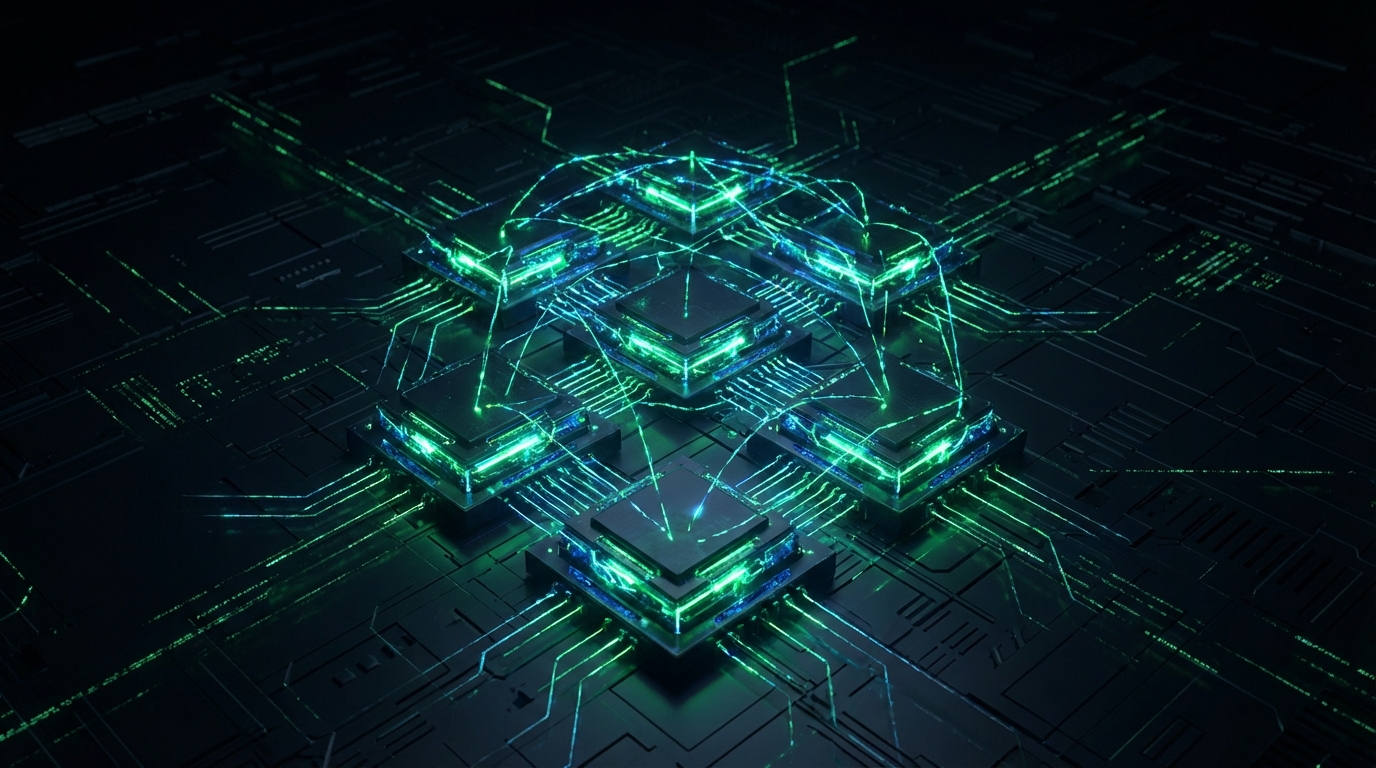
NVIDIA just redefined what AI hardware can do. The Rubin platform, unveiled at CES 2026, is a six-chip AI supercomputer architecture delivering 10x reduction in inference token generation cost and 4x fewer GPUs required to train mixture-of-experts models compared to Blackwell. With 336 billion transistors per Rubin GPU, HBM4 memory, and 3.6 TB/s NVLink 6 bandwidth, this is the most powerful AI platform ever built.
The adoption list reads like an AI industry roster: AWS, Microsoft, CoreWeave, Anthropic. Rubin enters production with shipments beginning late 2026. For organizations running AI at scale, the economics shift dramatically — 10x cheaper inference means applications that were cost-prohibitive become viable.
But here's what faster, cheaper inference doesn't solve: no matter how fast the hardware generates tokens, the model still forgets everything when the session ends.
NVIDIA Rubin: What 10x Cheaper Inference Enables
The cost reduction is transformational. AI applications that burned through GPU budgets become sustainable. Real-time AI assistants serve more users at lower cost per interaction. Training runs that required massive clusters become feasible on smaller deployments. The 50 petaflops of NVFP4 inference capability means enterprise-scale AI workloads run on infrastructure that was previously reserved for the largest labs.
The Vera CPU with 88 custom Olympus cores, ConnectX-9 SuperNIC, and BlueField-4 DPU create a full-stack computing platform optimized for AI end-to-end. This isn't just a faster GPU — it's a redesigned computing paradigm where every component is co-designed for AI workloads.
Hardware acceleration is orthogonal to memory persistence. Rubin makes inference faster and cheaper. It makes training more efficient. But the fundamental architecture of LLM inference — stateless request-response within context windows — remains unchanged. A model running on Rubin generates responses 10x more cheaply but remembers exactly as much between sessions as a model running on previous hardware: nothing.
How Hardware Improvements Interact With Memory

Rubin's performance improvements benefit every aspect of AI inference except persistence. Faster token generation means more responsive AI assistants. Lower cost per token means longer conversations are economically viable. Higher throughput means more concurrent users.
The Transformer Engine improvements in Rubin specifically optimize attention computation — the mechanism that gives models their within-session context awareness. Models running on Rubin handle larger context windows more efficiently, which helps with within-session understanding.
Between sessions, hardware doesn't help. The most powerful GPU in the world can't remember a previous conversation. Memory persistence is a software architecture problem, not a hardware performance problem. Rubin makes the computation faster — but there's no computation happening between sessions to benefit from that speed.
The MemU Agentic Memory Framework: The Software Layer Rubin Needs
The MemU Agentic Memory Framework provides the persistent memory layer that completes the AI infrastructure stack. NVIDIA Rubin handles computation. MemU handles continuity. Together, they create AI systems that are both fast and persistent.
Consider an enterprise deploying AI customer service on Rubin-powered infrastructure. Rubin delivers instant responses at a fraction of previous costs. The MemU Agentic Memory Framework ensures those responses benefit from accumulated customer knowledge — interaction history, preference patterns, resolution approaches that worked. The customer experiences both speed and recognition.
The architecture complements Rubin through three capabilities:
- Memory at inference speed: Sub-100ms memory retrieval matches Rubin's fast inference. Adding persistent context doesn't become a bottleneck for hardware-accelerated response generation.
- Cost-efficient context: Rather than loading extensive context into every inference call (consuming Rubin's compute budget), MemU retrieves only relevant memories — reducing the tokens processed while improving response quality.
- Infrastructure-agnostic persistence: MemU works with any inference hardware. As organizations upgrade from Blackwell to Rubin, their accumulated memory persists. Hardware generations change; knowledge doesn't.
NVIDIA Rubin makes AI inference 10x cheaper. MemU makes every inference 10x smarter by grounding it in persistent memory.
Head-to-Head: Fast Hardware vs. Fast + Persistent
NVIDIA Rubin alone: 10x cheaper inference, 4x training efficiency, 50 petaflops NVFP4. The most powerful AI hardware ever built. But hardware acceleration doesn't create persistence — models remain stateless between sessions regardless of how fast they run.
Rubin + MemU: Same hardware performance plus persistent memory infrastructure. AI systems that are both fast and continuous. Inference draws on accumulated knowledge, not just current context. The complete AI infrastructure stack: Rubin for compute, MemU for memory.
Get Started with MemU
NVIDIA Rubin represents the next generation of AI compute. The performance and cost improvements make previously impossible AI applications viable at scale.
The MemU Agentic Memory Framework provides the persistent memory that makes those applications genuinely intelligent over time. Hardware makes AI fast. Memory makes it wise.
Visit memu.pro to explore the Agentic Memory Framework API, or check out the open-source repository on GitHub to start building persistent memory into your AI infrastructure today.