OpenAI Symphony Orchestrates Autonomous Agents — But Every Run Starts Without Memory of the Last

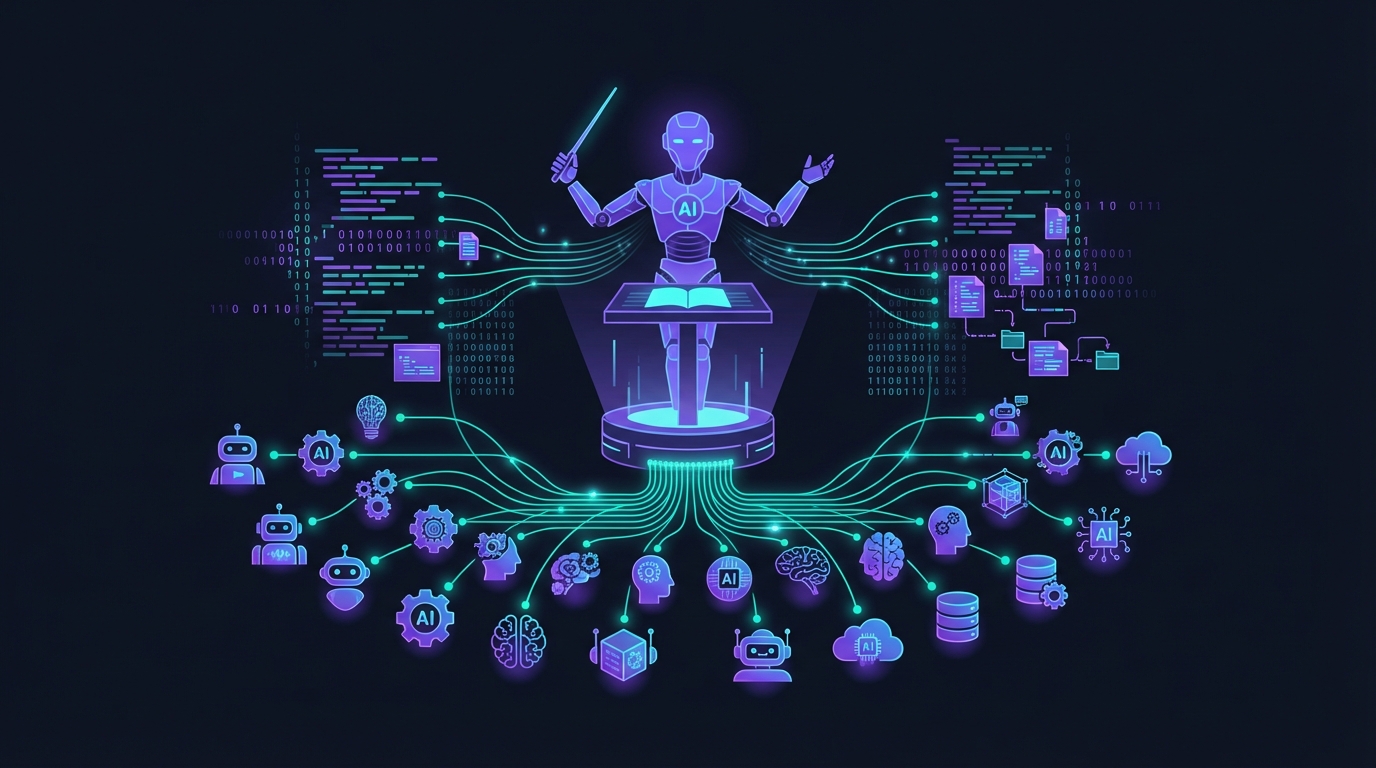
OpenAI Symphony just dropped as an open-source framework for orchestrating autonomous AI agents. Built on Elixir and the BEAM runtime, Symphony brings fault tolerance, structured implementation runs, and scalable concurrency to agentic workflows. The developer community responded fast — the framework's architecture solves real problems around agent coordination that plagued earlier approaches.
But there is a foundational layer that Symphony, like every orchestration framework before it, still depends on getting right — memory.
OpenAI Symphony: What Everyone's Getting Right (And Missing)
Symphony gets orchestration right. Its structured "runs" let developers define agent tasks with clear inputs, outputs, and fault boundaries. The BEAM runtime gives each agent process-level isolation — if one agent crashes, the system recovers without losing the entire workflow. This is a meaningful step forward from brittle Python-based orchestration.
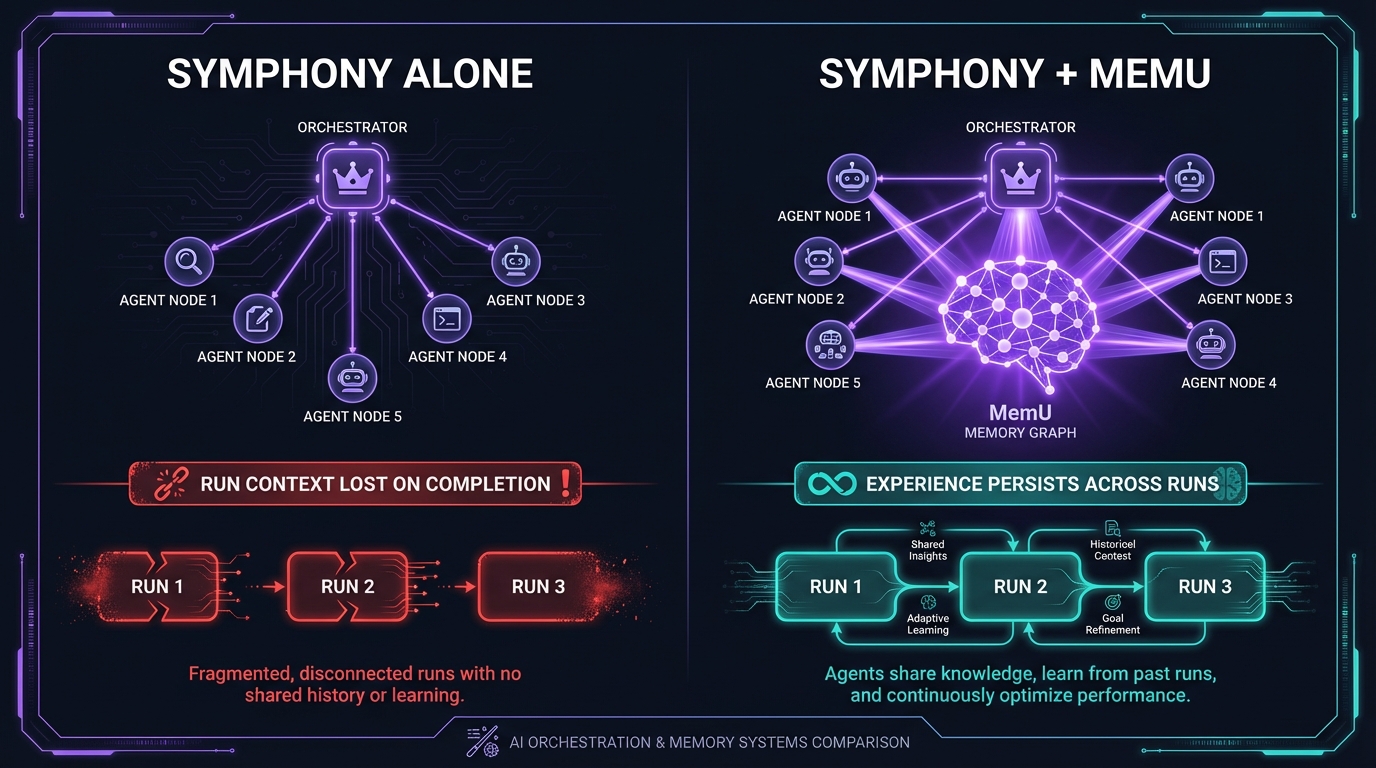
What Symphony does not address is what happens between runs. Each implementation run starts with a clean slate. The agent that spent forty minutes researching your codebase yesterday builds that understanding from scratch today. Symphony orchestrates execution, not experience.
Other orchestration frameworks — LangGraph, CrewAI, AutoGen — share this same architectural constraint. The category solves coordination; none of them solve continuity.
The MemU Agentic Memory Framework: Persistent Experience for Orchestrated Agents
The MemU Agentic Memory Framework adds the missing layer. Where Symphony manages how agents execute, MemU manages what agents remember.
Consider a Symphony run that analyzes a production incident. With MemU, the agent recalls that this service failed the same way three weeks ago, what the root cause was, and which fix worked. Without MemU, it starts the investigation from zero.
The MemU Agentic Memory Framework provides:
- Drop-in integration: A simple API that works alongside any orchestration framework — Symphony, LangGraph, CrewAI, or custom pipelines. Add memory read/write calls; your agents gain continuity.
- Dual-mode retrieval: Semantic search for fuzzy recall plus a structured memory graph for precise relationship queries. Not just embeddings — actual knowledge structure.
- Cross-run persistence: Memory survives across sessions, agents, and users. One Symphony run's insights feed the next run's decisions automatically.
Orchestration without memory is coordination without learning. The MemU Agentic Memory Framework gives orchestrated agents the ability to accumulate experience, not just execute tasks.
Retrieval operates across 10,000+ memory entries with sub-100ms latency, so memory lookup never becomes the bottleneck in your agent pipeline.
Head-to-Head: Symphony Alone vs. Symphony + MemU
Symphony alone: Each run executes with current context only. Agent coordination is excellent, but institutional knowledge resets between runs. The hundredth incident investigation has the same starting context as the first.
Symphony + MemU Agentic Memory Framework: Each run reads from and writes to persistent memory. The agent recalls past decisions, outcomes, and patterns. The hundredth run benefits from ninety-nine runs of accumulated intelligence.
Cross-agent learning: In multi-agent Symphony workflows, MemU enables agents to share memory. The research agent's findings persist for the implementation agent. The QA agent remembers what the coding agent decided and why.
Empowering Symphony: Better Together
MemU does not replace Symphony — it makes Symphony dramatically more capable:
- Incident response: Symphony coordinates the response workflow; MemU provides historical incident memory so agents recognize recurring patterns.
- Code generation: Symphony orchestrates multi-step coding tasks; MemU remembers project conventions, past bugs, and architectural decisions across sessions.
- Research pipelines: Symphony manages parallel research agents; MemU ensures findings from previous research compounds rather than evaporating.
Get Started with MemU
Add persistent memory to your Symphony agents in minutes. The MemU Agentic Memory Framework works with any orchestration layer — one API, zero lock-in, immediate continuity. Visit memu.pro to explore the Agentic Memory Framework API, or check out the GitHub repository to start building agents that remember.
Tags: OpenAI Symphony, agentic framework, AI agent orchestration, MemU AI, agent memory, LLM memory