Perplexity Computer Orchestrates 19 AI Models Into Autonomous Workflows — Every Workflow Starts Without Memory of the Last

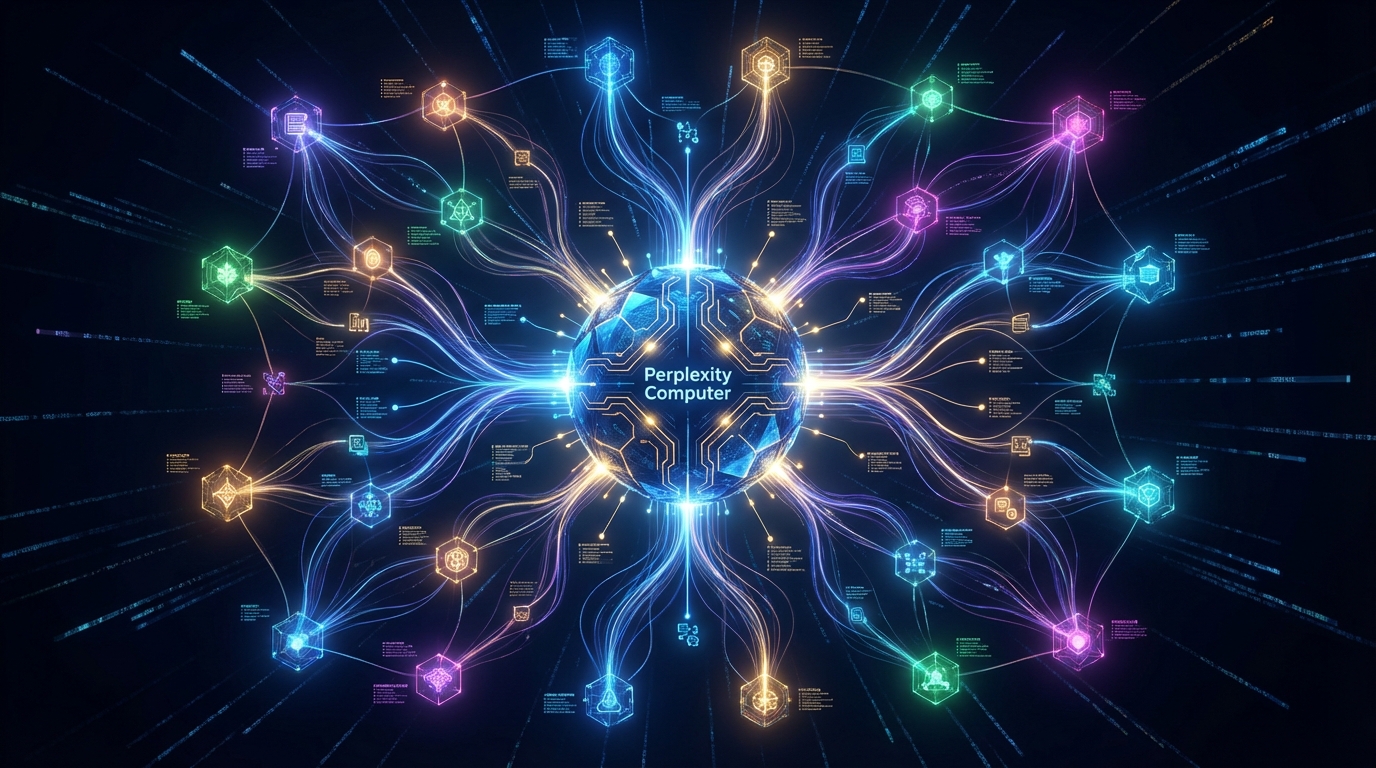
Perplexity Computer represents a fundamental shift in how AI systems work. Instead of chatting with a single model, users describe outcomes — launch a marketing campaign, build an Android app, analyze a competitive landscape — and Perplexity Computer decomposes the objective into subtasks, assigns each to purpose-built AI agents, and orchestrates execution across 19 specialized models. Claude Opus 4.6 handles core reasoning, Gemini powers research, Nano Banana generates images, Veo 3.1 produces video, and ChatGPT 5.2 manages long-context recall. The system runs autonomously for hours or months in sandboxed cloud environments.
The architecture is genuinely impressive. Perplexity Computer routes each subtask to the best available model, integrates with hundreds of applications including Gmail, Slack, Notion, and GitHub, and provides a real-time dashboard for monitoring active workflows. It transforms what advanced users manually stitched together across multiple AI tools into an accessible, unified platform.
But there is a foundational layer the system still depends on getting right — memory. When Perplexity Computer finishes a complex workflow, the accumulated knowledge about what worked, what failed, and what the user actually wanted disappears entirely.
Perplexity Computer: What Everyone's Getting Right (And Missing)
The multi-model orchestration approach solves a real problem. Different AI models excel at different tasks, and manually coordinating them is tedious and error-prone. A marketing campaign needs research, copywriting, image generation, and scheduling — previously requiring four different tools with manual handoffs. Perplexity Computer handles the coordination layer, letting each model focus on its strength.
For Perplexity Max subscribers, Computer transforms AI from a conversation partner into a digital worker. The isolated compute environments provide security, the app integrations provide reach, and the real-time monitoring provides visibility. It is the most complete workflow orchestration system available to consumers.
The gap is workflow memory. Perplexity Computer executes workflows brilliantly in isolation, but the twentieth marketing campaign runs with zero knowledge of the previous nineteen. User preferences about tone, audience, channel mix, and formatting must be re-specified every time. The system that orchestrates 19 models simultaneously cannot remember what it learned from orchestrating them yesterday.
What Perplexity Computer Does With Workflow Context Today
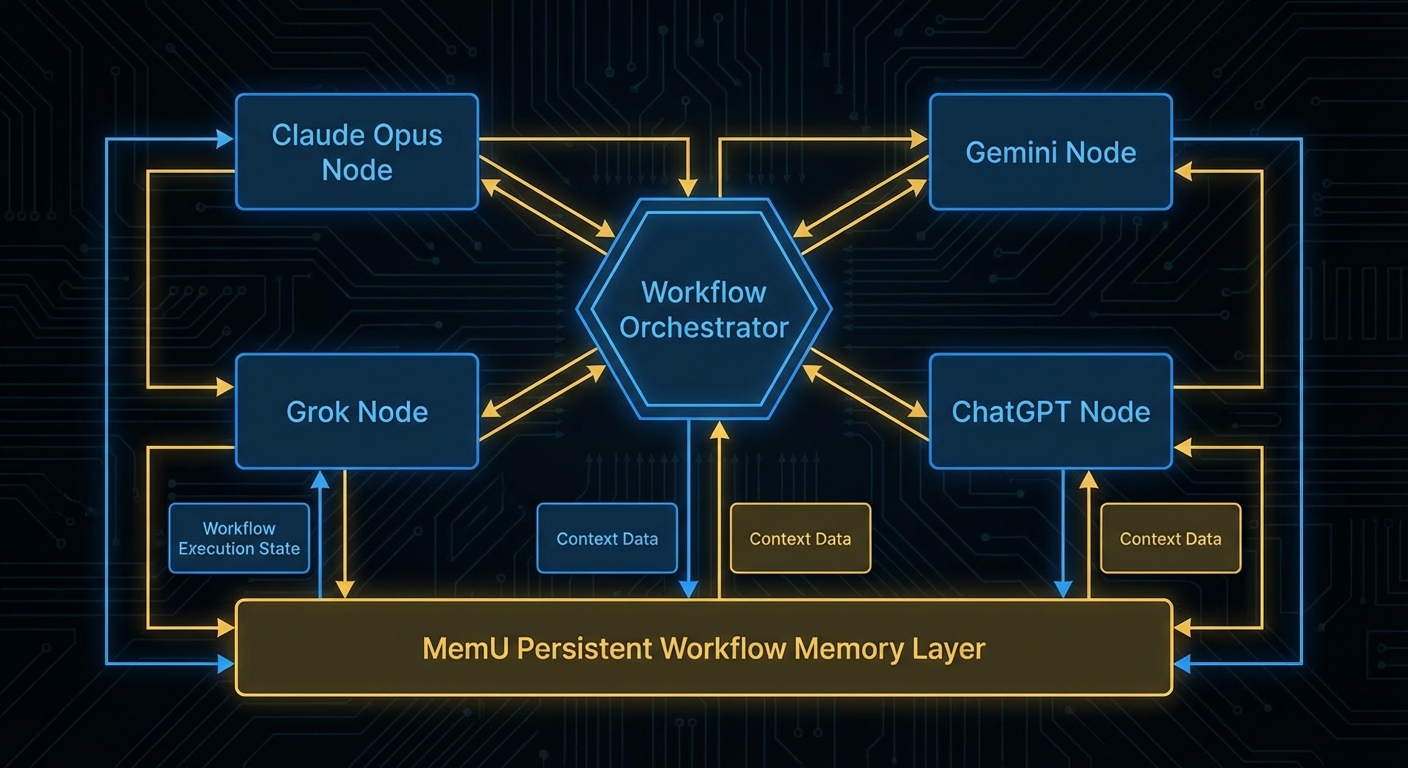
Perplexity Computer maintains state within a running workflow. Subtasks share context through the orchestration layer, and results from one agent inform the next. This intra-workflow memory is well-designed — the research agent's findings feed directly into the copywriting agent's prompts.
However, workflow-to-workflow learning does not exist. Each new execution starts from the user's initial prompt, not from accumulated experience. The system that spent eight hours building your company's first competitive analysis retains nothing when you request the quarterly update. OpenAI's Frontier and Tess AI's orchestration platform share this same architectural constraint — powerful within-session coordination with no cross-session continuity.
Workflow orchestration without workflow memory means every complex project inherits zero organizational knowledge from previous projects. The system scales execution, not intelligence.
The MemU Agentic Memory Framework: Workflows That Compound Intelligence
The MemU Agentic Memory Framework provides persistent workflow memory that captures execution patterns, user preferences, and outcome quality across every workflow run.
Consider a product team that uses Perplexity Computer weekly to generate competitive intelligence reports. Without the MemU Agentic Memory Framework, each report requires re-specifying competitors, data sources, format preferences, and analysis depth. With MemU, the orchestrator retrieves the complete workflow history: which competitors matter, which data sources produced actionable insights last time, the preferred report structure, and even which sections the team consistently skipped or expanded. The twentieth report takes minutes to configure instead of hours.
The MemU Agentic Memory Framework transforms multi-model orchestration through:
- Cross-workflow learning: Execution outcomes, user corrections, and quality feedback persist across workflow runs. Each execution improves the next through accumulated experience rather than starting cold.
- Multi-model preference memory: When the user adjusts Gemini's research scope or edits Opus 4.6's reasoning output, the MemU Agentic Memory Framework records these preferences. Future workflows route model-specific instructions based on learned patterns.
- Organizational knowledge persistence: Workflow templates, domain-specific configurations, and team preferences survive across sessions, users, and even platform updates.
Multi-model orchestration routes the right task to the right model. MemU ensures each model starts with the right context — learned from every previous execution.
Head-to-Head: Stateless Orchestration vs. Memory-Enhanced Orchestration
Perplexity Computer alone: Best-in-class multi-model routing with 19 model integrations, sandboxed execution, and real-time monitoring. Each workflow executes independently — the hundredth run has the same starting knowledge as the first.
Perplexity Computer + MemU Agentic Memory Framework: Same orchestration power plus persistent workflow memory. User preferences, execution patterns, and quality outcomes inform every future run. Sub-100ms memory retrieval adds negligible latency to workflow initialization while dramatically reducing configuration time and improving output quality.
This applies equally to competing platforms — OpenAI Frontier, Tess AI, and custom LangGraph orchestration pipelines all benefit from persistent workflow memory that compounds execution intelligence over time.
Empowering Perplexity Computer: Better Together
MemU does not replace Perplexity Computer's orchestration — it makes the orchestration progressively smarter with every execution.
- Adaptive model routing: The MemU Agentic Memory Framework tracks which models performed best for specific task types in your domain, enabling Computer to make increasingly precise routing decisions without user intervention.
- Template evolution: Workflow templates naturally improve through accumulated execution feedback. The marketing campaign template that worked for product launches adapts based on actual performance data stored in persistent memory.
- Team knowledge sharing: When one team member discovers an effective workflow configuration, the memory persists for the entire team. The MemU Agentic Memory Framework enables organizational learning, not just individual productivity.
Get Started with MemU
Perplexity Computer orchestrates the best models for every task. The MemU Agentic Memory Framework ensures each orchestration starts smarter than the last, transforming isolated workflow executions into compounding organizational intelligence.
Visit memu.pro to explore the Agentic Memory Framework API and add persistent memory to your multi-model workflows.
Tags: Perplexity Computer, AI workflow orchestration, multi-model AI, agentic memory, MemU AI, AI agent memory, workflow automation