Profound Raises $96M to Optimize Brands for AI Search — But Brand Memory Across AI Engines Needs a Deeper Layer


The SEO era is ending. The AEO era is beginning. Profound, an 18-month-old startup, just raised $96 million in Series C funding at a $1 billion valuation to help brands stay visible in AI-generated answers. Led by Lightspeed Venture Partners with Sequoia Capital and Kleiner Perkins participating, the round signals that Answer Engine Optimization is now a billion-dollar category.
The numbers back the urgency. McKinsey reports half of consumers already use AI systems for product discovery. $750 billion in consumer spending is predicted to flow through AI search by 2028. Profound tracks how ChatGPT, Gemini, and Perplexity describe and recommend brands across 15 million daily prompts, serving 700+ enterprise customers including 10% of Fortune 500 companies — Target, Walmart, MongoDB, Figma, and U.S. Bank among them.
Profound solves the visibility problem: making sure AI engines mention and recommend your brand. But there's a deeper challenge: how do the AI agents doing the searching remember brand interactions over time?
Profound: What AI Search Optimization Achieves
Traditional SEO optimized web pages for Google's ranking algorithm. AEO (Answer Engine Optimization) optimizes brand presence for AI-generated answers. When a user asks ChatGPT "What's the best project management tool?", the answer isn't a list of links — it's a synthesized recommendation. Whether your brand appears in that recommendation depends on factors fundamentally different from traditional SEO.
Profound's platform tracks brand mentions, source citations, and sentiment across major AI engines. It analyzes crawler behavior and page preference patterns — which content structures AI engines favor when building their knowledge. The platform uses AI agents to automate content optimization and publishing workflows, creating a feedback loop between brand content and AI engine responses.
For brand visibility in AI-generated answers, Profound delivers real results. But the interaction between brands and AI search is one-directional. Profound optimizes how AI engines perceive brands at a point in time. It doesn't address how AI agents that interact with users on behalf of brands maintain context across those interactions.
How AI Search Currently Handles Brand Context
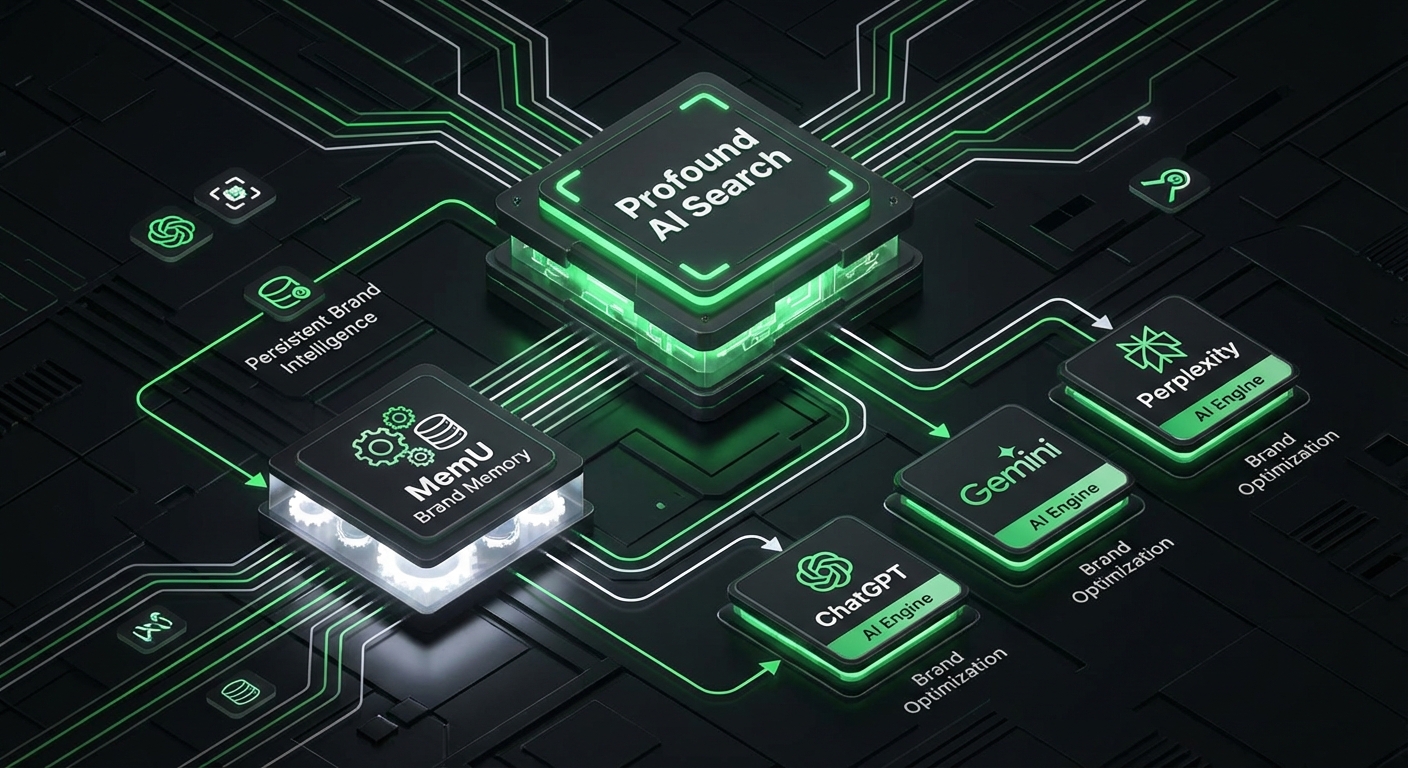
AI search engines process queries using their training data and retrieved web content. When a user asks about a product category, the AI synthesizes information from its knowledge base, real-time web results, and content signals that tools like Profound optimize. The response reflects the AI's current understanding of the brand landscape.
Profound's optimization ensures that this understanding is favorable. Content structure, factual accuracy, competitive positioning, and source authority are all levers that influence AI-generated brand recommendations.
What's missing is the relational layer. A user who asked ChatGPT about project management tools last month, received a recommendation, tried the product, and returns with follow-up questions — that user starts fresh. The AI engine that recommended the brand has no memory of the recommendation, the user's engagement, or the evolving relationship. Brand interaction with AI-mediated consumers is entirely stateless.
As AI search becomes the primary discovery channel, this statelessness means brands can optimize for first impressions but not for relationship building through AI intermediaries.
The MemU Agentic Memory Framework: Brand Relationships Through AI Memory
The MemU Agentic Memory Framework provides the relational memory layer that connects brand optimization with persistent user context. Rather than optimizing for isolated AI-generated answers, MemU enables brands to build progressive relationships through AI-mediated interactions.
Consider a SaaS company using Profound to optimize its visibility in AI search. Profound ensures the brand appears in relevant recommendations. With the MemU Agentic Memory Framework, the AI agent that recommends the product also remembers the user's context — their previous queries, stated requirements, and engagement history. "Based on what you told me last time about needing better collaboration features, here's how this product's latest update addresses that specific need."
The architecture bridges brand optimization and user relationships through three capabilities:
- User journey memory: The MemU Agentic Memory Framework captures the progression from discovery to evaluation to adoption. AI agents remember where each user is in their brand journey and adapt recommendations accordingly.
- Preference accumulation: User preferences, requirements, and feedback accumulate over time. Brand recommendations become increasingly personalized rather than generically optimized.
- Cross-engine consistency: Memory persists regardless of which AI engine the user queries. Context follows the user, not the platform — whether they ask ChatGPT today and Gemini tomorrow.
MemU adds the relationship layer to AI search — brands don't just appear in answers, they build progressive connections through persistent memory.
Head-to-Head: Brand Visibility vs. Brand Relationships
AI search optimization alone: Brands appear in AI-generated answers with optimized positioning and sentiment. But each user interaction is independent — no relationship building, no personalization evolution, no journey continuity.
AI search + MemU: Same brand visibility plus persistent relationship memory. User journeys build over time. Recommendations evolve with user context. Sub-100ms retrieval ensures memory-enhanced responses feel instant.
Get Started with MemU
Profound's $1 billion valuation confirms that AI search optimization is a critical enterprise capability. As AI engines become the primary discovery channel, brand visibility in AI-generated answers directly impacts revenue.
The MemU Agentic Memory Framework extends that visibility into relationships. AI-mediated brand interactions that remember and evolve. User journeys that build progressively. Discovery that leads to genuine, context-aware engagement.
Visit memu.pro to explore the Agentic Memory Framework API, or check out the open-source repository on GitHub to start building persistent memory into your AI-powered brand experiences today.