Simile Raises $100M to Simulate Human Behavior — Digital Agents That Predict Decisions but Don't Learn from Outcomes

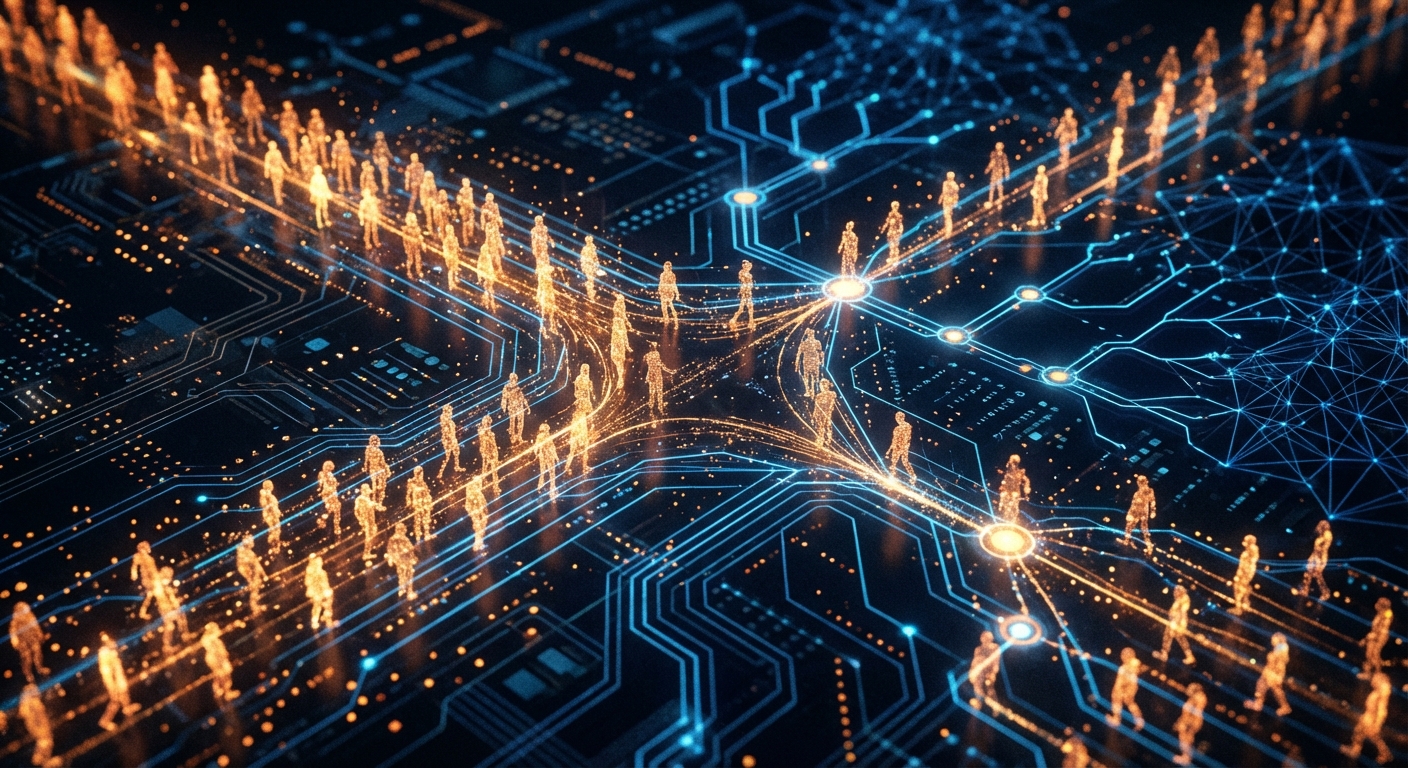
Simile, a Stanford spinout backed by Fei-Fei Li and Andrej Karpathy, just raised $100 million from Index Ventures to build high-fidelity digital models of human decision-making. The company creates simulated agents that predict real-world behavior — and the early results are striking. CVS Health uses hundreds of thousands of Simile agents for concept testing and store layout design. Gallup is building digital polling panels. The company claims 80% accuracy predicting analyst questions during corporate earnings calls. This isn't chatbot roleplay; it's computational behavioral science at enterprise scale.
Founded by Joon Sung Park (creator of the famous "Generative Agents" paper), Percy Liang, Michael Bernstein, and Lainie Yallen, Simile represents the intersection of social science and AI. The agents don't just respond to prompts — they model preferences, habits, decision-making heuristics, and behavioral patterns that emerge from real-world data. Index Ventures describes it as "foundational infrastructure for decision-making in an AI-native world." With only seven months of model training, the commercial traction is remarkable.
But behavioral simulation has a fundamental gap: Simile's agents can predict what people will do, but they don't learn from what people actually did — the outcomes that should update future predictions.
Why Simulating Behavior Changes Everything
Traditional market research relies on surveys, focus groups, and A/B tests — methods that are slow, expensive, and limited in scale. Simile replaces these with simulated populations that can be queried instantly. Want to know how customers will react to a new store layout? Simulate 100,000 customer agents walking through the design. Want to predict how voters will respond to a policy announcement? Query a digital polling panel. Want to anticipate investor questions? Run the earnings call simulation first.
The scale advantage is enormous. A physical focus group involves 10-15 people and costs thousands of dollars. Simile can simulate millions of behavioral agents at a fraction of the cost. The speed advantage is equally significant: results in hours instead of weeks. For enterprises making decisions that affect millions of customers, the ability to simulate behavioral responses before committing resources is transformational.
The research foundation is rigorous. Park's "Generative Agents" paper demonstrated that LLM-powered agents can exhibit surprisingly human-like social behavior — forming opinions, building relationships, and making decisions that align with their defined personalities. Simile takes this academic insight and builds enterprise-grade infrastructure around it.
The Outcome Learning Gap
Simile's behavioral models are trained on data that captures how people have behaved in the past. This training produces agents that can predict behavior in similar situations. But the real world changes: consumer preferences shift, market conditions evolve, new products alter competitive dynamics. Without incorporating outcome data — what actually happened after a prediction was made — the models can't adapt.
Consider CVS using Simile for store layout testing. Simile predicts that Layout A will increase foot traffic by 15%. CVS implements Layout A. Actual foot traffic increases by 8%. This discrepancy contains valuable information: the behavioral model overweighted certain factors or missed others. But without a mechanism to feed this outcome back into the simulation, the model makes the same overestimation next time.
The earnings call prediction use case illustrates this clearly. Simile predicts analyst questions with 80% accuracy. That's impressive — but the 20% it misses likely represents systematic blind spots. If the model consistently underestimates questions about a specific risk factor, that pattern should be learned. Without outcome memory, the same blind spots persist across every simulation run.
How MemU Enables Outcome-Aware Simulation
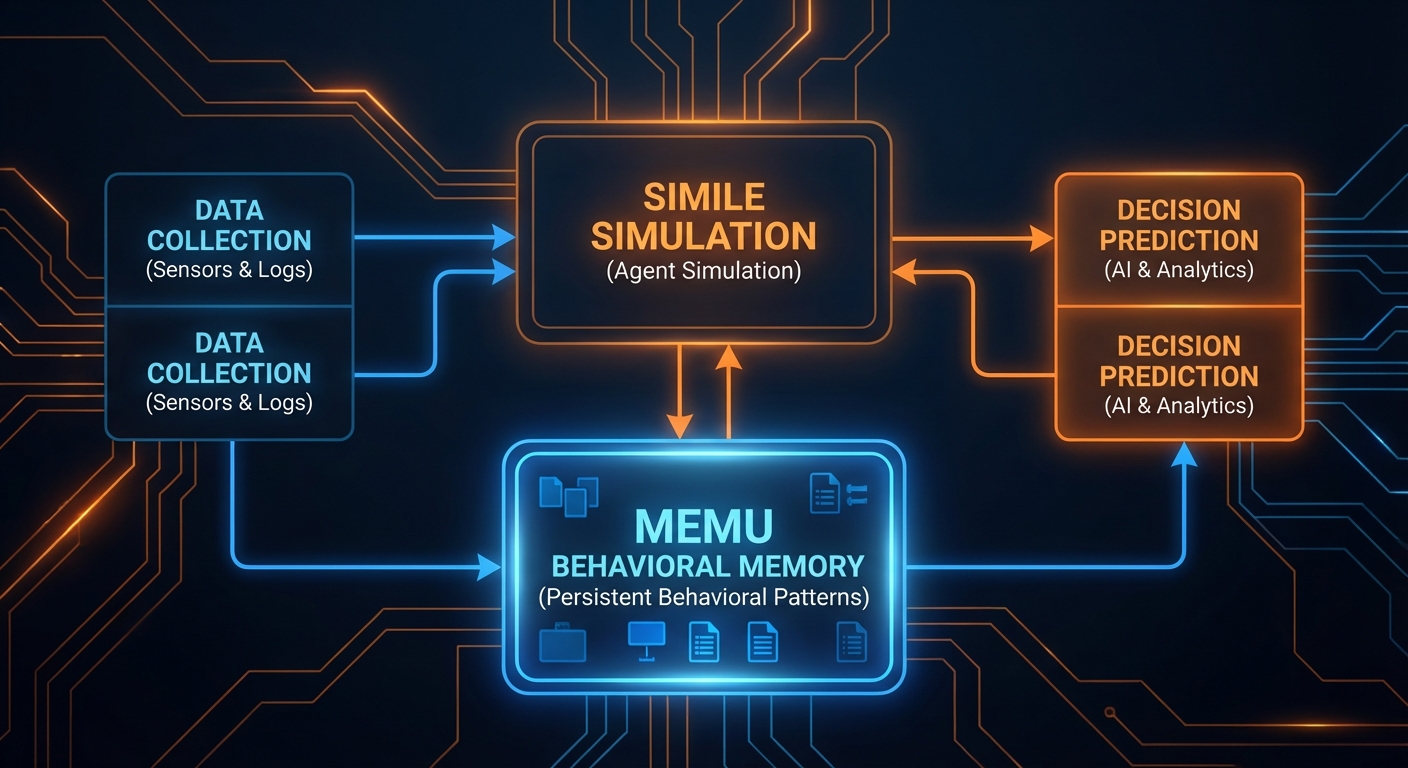
MemU provides the persistent memory layer that connects Simile's predictions to real-world outcomes. Every simulation run generates predictions that are stored as memories. When outcomes become available — actual sales data, real poll results, the actual earnings call questions — they're stored alongside the predictions. Before the next simulation, the system retrieves these prediction-outcome pairs, enabling the simulation to account for systematic biases and improve over time.
For enterprise clients, this transforms Simile from a prediction tool into a learning system. Each simulation cycle generates better predictions because it incorporates lessons from previous cycles. The CVS store layout simulator gets more accurate with each implementation. The polling model self-corrects based on actual election results. The earnings call predictor learns from its misses.
Simile simulates how people decide. MemU remembers what actually happened. Together, they create behavioral intelligence that gets smarter with every prediction cycle.
Get Started
Add outcome memory to your behavioral simulations. Explore MemU at memu.pro and on GitHub.