SWE-Bench Pro Drops AI Coding Scores from 80% to 23% — The Gap Between Benchmarks and Real Engineering Is Memory

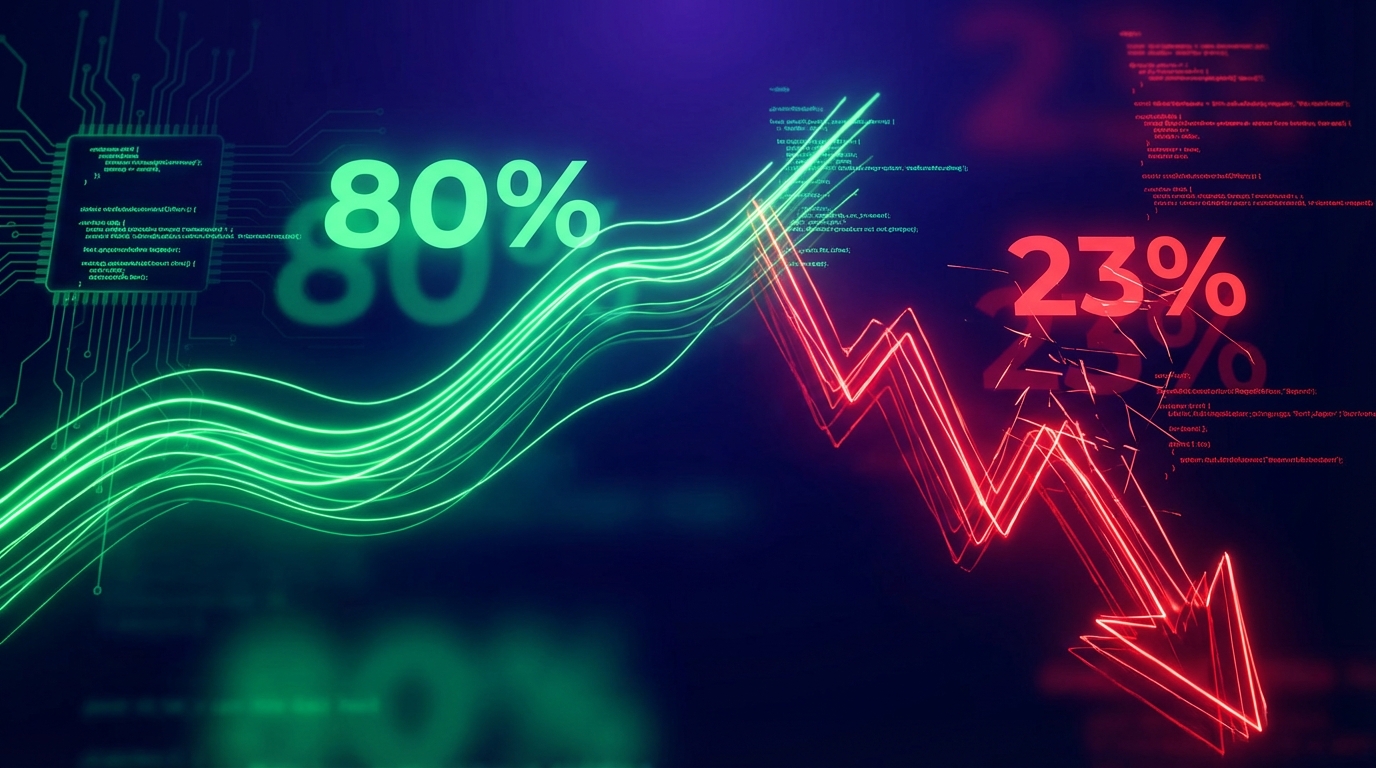
SWE-Bench Verified shows AI coding agents solving 80% of real GitHub issues. SWE-Bench Pro, a harder benchmark designed to address data contamination and task diversity, shows the same models scoring around 23%. The 57-percentage-point gap between the two benchmarks reveals an uncomfortable truth about AI coding capabilities: performance on curated tasks doesn't translate to performance on genuinely novel engineering challenges. The models that seemed ready to replace junior developers are still struggling with the kind of problems that senior engineers solve daily.
The leaderboard tells the story. On SWE-Bench Verified: Claude Opus 4.5 at 80.9%, Opus 4.6 at 80.8%, MiniMax M2.5 at 80.2%, GPT-5.2 at 80.0%. On SWE-Bench Pro: scores plummet to the low 20s across the board. The models that achieve near-human performance on familiar tasks drop to less than a quarter success rate when the tasks are genuinely challenging, diverse, and resistant to pattern-matching strategies.
The benchmark gap points to a deeper truth: AI coding models are excellent at pattern matching within their training distribution but struggle with tasks that require the accumulated understanding that comes from actually working with a codebase over time.
Why the Scores Drop So Dramatically
SWE-Bench Verified uses well-known open-source repositories that are extensively represented in model training data. The models have seen similar code, similar bugs, and similar fix patterns during training. High performance on familiar repositories doesn't necessarily indicate genuine engineering capability — it may indicate sophisticated pattern recall.
SWE-Bench Pro addresses this by including tasks from less-represented repositories, requiring cross-file reasoning that can't be solved by local pattern matching, and testing for the kind of deep contextual understanding that comes from working with a codebase. The difficulty increase isn't artificial — it reflects the difference between solving a bug you've seen before and solving a bug that requires understanding the system's architecture, history, and design intentions.
Human engineers face this same distribution: familiar bugs are easy, novel bugs are hard. The difference is that human engineers accumulate codebase understanding over time. A developer who has worked on a project for six months can solve novel bugs because they understand the system's design, its historical evolution, and the team's conventions. This accumulated understanding is what SWE-Bench Pro tests for — and what models lack.
Benchmarks Measure Capability, Not Knowledge
The AI coding benchmark landscape measures what models can do in isolation — given complete context, how well do they solve a defined problem? This is a valid measure of capability, but capability is necessary and not sufficient for production software engineering. Production effectiveness requires capability plus knowledge: understanding the specific codebase, the team's patterns, the project's history, and the architectural decisions that constrain the solution space.
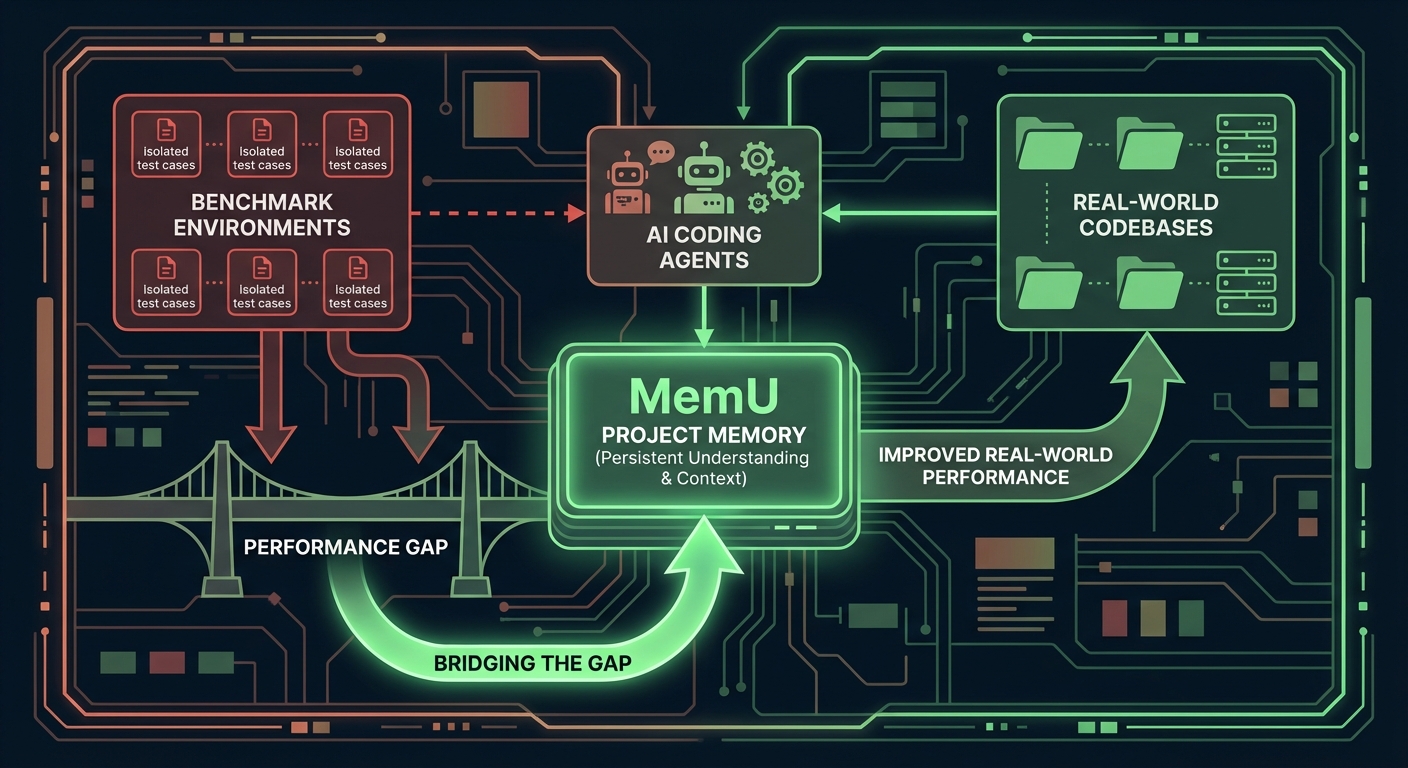
SWE-Bench Pro's lower scores reveal the gap between capability and knowledge. The models are capable — they can write code, reason about logic, and generate patches. What they lack is the specific knowledge that a developer accumulates through extended engagement with a codebase. This isn't a model capability limitation; it's a memory architecture limitation.
A model with persistent codebase memory — understanding the project's architecture, conventions, common pitfalls, and design rationale — would approach SWE-Bench Pro tasks more like a senior developer than a talented stranger. The 57-point gap isn't permanent; it's the measured cost of not having memory.
From Benchmark Champion to Production Engineer
Closing the gap between SWE-Bench Verified and SWE-Bench Pro performance requires giving models the same advantage human engineers have: accumulated project knowledge. This doesn't mean larger context windows or more training data — it means persistent memory that captures the specific understanding generated through interaction with each individual codebase.
Every time an AI coding agent works on a project, it generates knowledge: the architecture is organized this way, this module has a known race condition, the team prefers this pattern over that one. Currently, all of this knowledge is generated and discarded. With persistent memory, it accumulates — and accumulated project knowledge is exactly what SWE-Bench Pro measures the absence of.
How MemU Bridges the Benchmark Gap
MemU provides the persistent codebase memory that transforms benchmark-capable models into production-effective engineers. Every coding session generates memories: architectural discoveries, bug patterns, convention preferences, and design rationale. Before each new task, the model retrieves relevant codebase memories, approaching the work with accumulated understanding rather than cold-start analysis.
For AI coding agents deployed in production, MemU means that the model's effectiveness improves with every session. The first day looks like SWE-Bench Verified performance. After weeks of accumulated memory, it approaches what SWE-Bench Pro demands — genuine understanding of specific codebases built through experience.
SWE-Bench Pro revealed the real challenge of AI coding. MemU provides the memory architecture that addresses it.
Get Started
Give your AI coding agent the project memory to bridge the benchmark gap. Explore MemU at memu.pro and on GitHub.