Syntrix Tests AI Agents Against Synthetic Customers Before Production — Evaluation Without Production Memory Is Training in a Vacuum

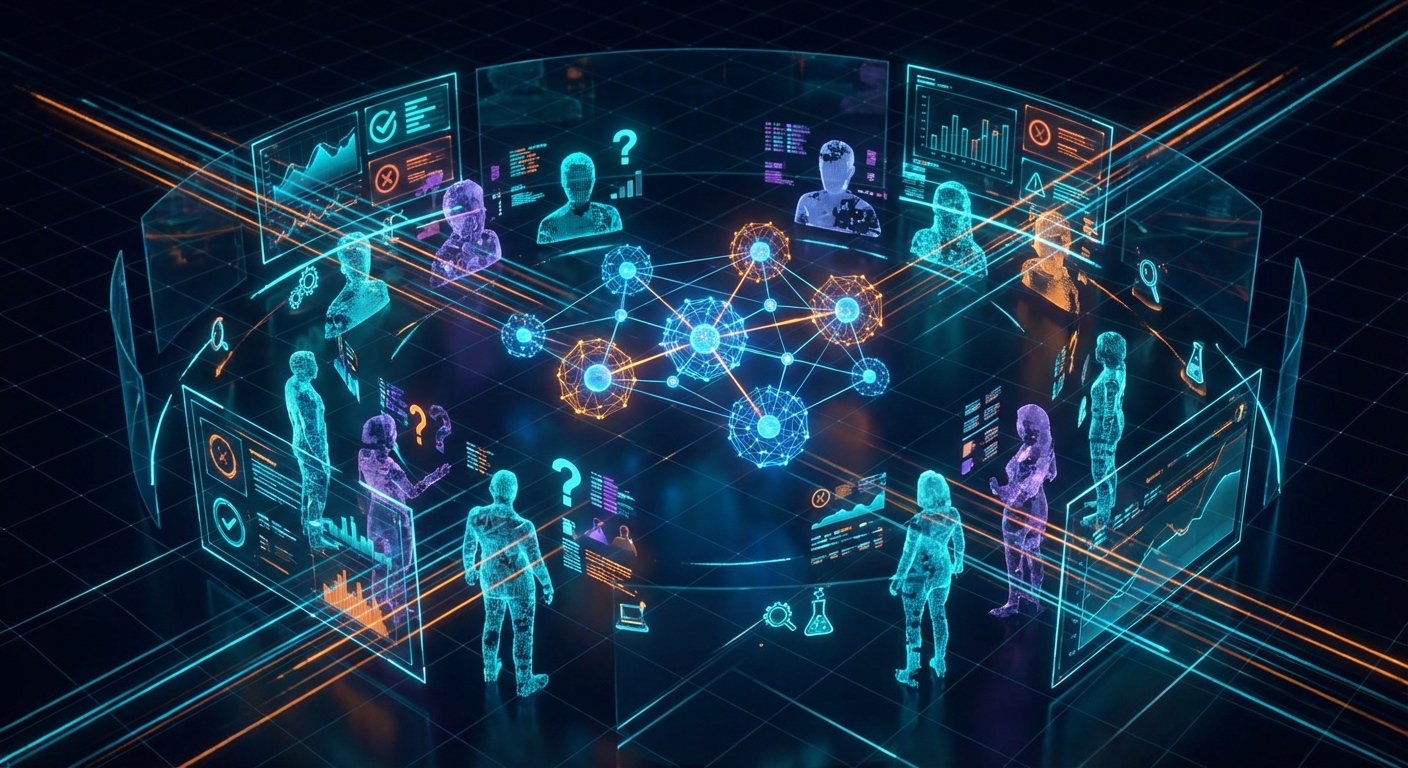
LivePerson just bridged the gap between AI agent testing and human agent training. Syntrix, their newly launched platform, is the first to unify both capabilities. AI agents get stress-tested against diverse synthetic customer personas and edge-case scenarios before reaching production. Human contact center agents replace manual role-playing with AI-powered simulations that provide instant automated feedback on empathy, accuracy, and brand compliance. Early results show 30% reduction in new hire ramp time and $3,500 savings in onboarding costs per agent.
The approach is vendor-neutral. Enterprises can evaluate proprietary or third-party AI models against the same synthetic customer populations, comparing quality, safety, and compliance across providers before committing. For contact centers managing thousands of agents across multiple AI vendors, Syntrix provides the evaluation layer that prevents production surprises.
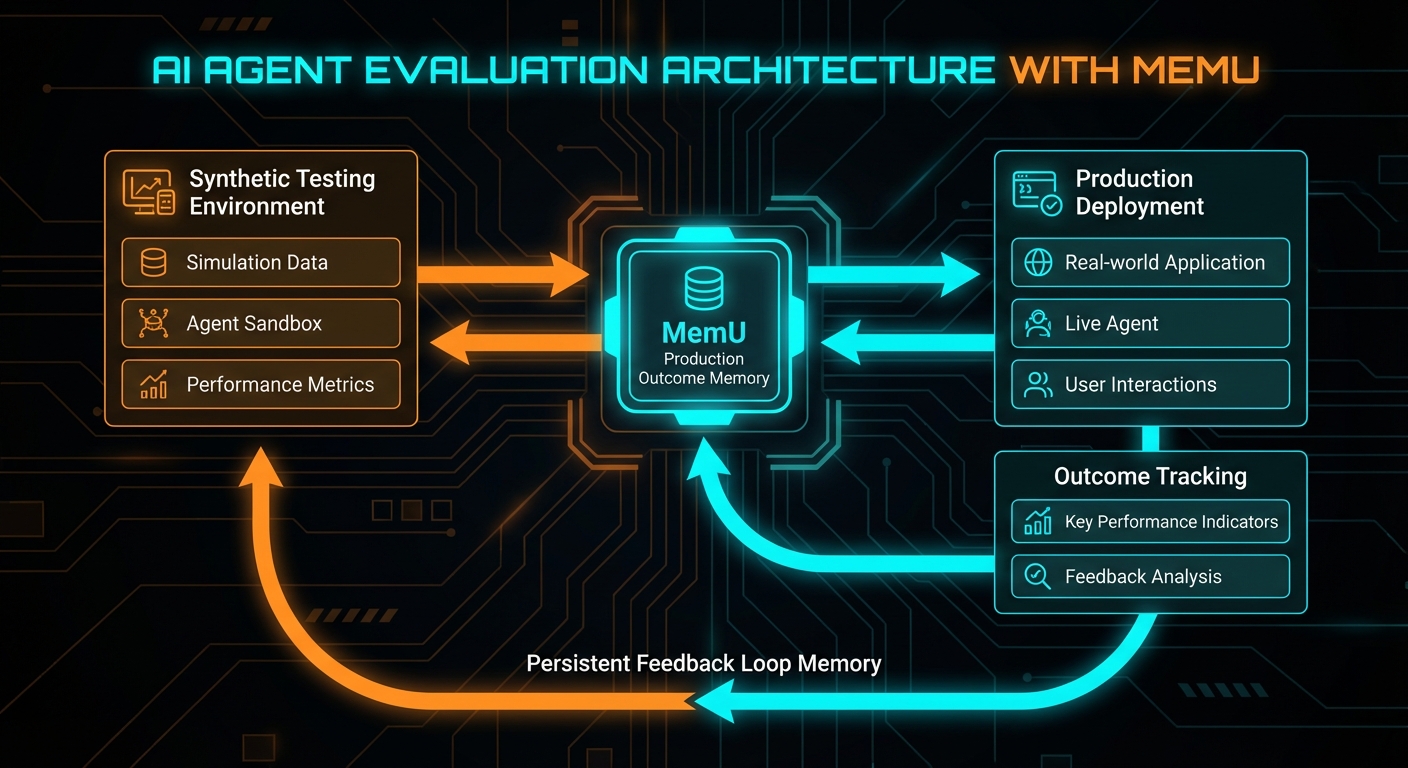
But simulation and production are different environments. Synthetic customers test what agents might encounter. Production outcomes reveal what agents actually encounter — and the gap between simulation and reality is where the most valuable training data lives.
Syntrix: What Everyone's Getting Right (And Missing)
Pre-production testing is genuinely valuable. Deploying an AI agent without stress-testing against adversarial scenarios, edge cases, and culturally diverse customer personas is reckless. Syntrix makes this testing systematic rather than ad hoc, and the synthetic customer approach generates far more diverse scenarios than human testers could manually create.
Unifying AI evaluation with human training is an elegant design choice. The same synthetic customers that test AI agents also train human agents, creating consistent quality standards across the entire support operation. Human agents trained on realistic AI-generated scenarios perform better in production, and AI agents tested against realistic personas deploy more safely.
The gap is the production feedback loop. Syntrix tests agents against simulated scenarios and trains humans on synthetic interactions. But the most valuable evaluation data comes from production — which synthetic scenarios accurately predicted real failures, which edge cases never appeared in simulation, which training exercises actually improved real-world performance. Without production outcome memory, evaluation scenarios remain static hypotheses rather than evolving reflections of actual customer behavior.
What AI Evaluation Platforms Do With Test Results Today
Evaluation platforms produce test reports: pass/fail rates across scenario categories, safety compliance scores, performance comparisons across model providers. These reports inform deployment decisions and highlight areas needing improvement.
Some platforms maintain historical test results for trend analysis. But the critical connection — whether scenarios that agents passed in testing actually translated to production success — requires correlating test outcomes with production outcomes across time. This correlation typically happens manually, if at all.
Test results measure simulation performance. Production outcomes measure real performance. The intelligence that connects them — understanding which evaluations actually predict production quality — requires persistent memory spanning the entire evaluation-to-production lifecycle.
The MemU Agentic Memory Framework: Evaluation That Learns From Production
The MemU Agentic Memory Framework provides persistent evaluation memory that closes the loop between testing and production, continuously calibrating synthetic scenarios against real-world outcomes.
Consider an enterprise running Syntrix evaluations monthly before deploying agent updates. Without the MemU Agentic Memory Framework, test scenarios are authored based on product knowledge and general customer personas. With MemU, the evaluation system remembers every production outcome: the "frustrated enterprise customer" persona that accurately predicted three real escalations, the "edge-case billing dispute" scenario that never occurred in production, and the entirely unforeseen "multi-product return" pattern that caused 15 production failures last quarter and now needs dedicated test coverage. Each evaluation cycle becomes more predictive because it learns from the outcomes of previous cycles.
The MemU Agentic Memory Framework enhances agent evaluation through:
- Scenario calibration: Production outcomes validate or invalidate test scenarios. The framework identifies which synthetic personas accurately represent real customers and which are wasting evaluation time, enabling teams to focus testing resources on scenarios that actually predict production behavior.
- Training effectiveness tracking: For human agents, the framework connects training simulations to production performance. Teams identify which training exercises produce measurable improvement and which do not, optimizing the $3,500 onboarding investment per agent.
- Cross-evaluation learning: Insights from one team's production outcomes inform another team's evaluation scenarios. The MemU Agentic Memory Framework enables organizational learning about what to test, not just how to test.
Synthetic evaluations test what agents might face. Memory-enhanced evaluation learns what agents actually face — closing the gap between simulation confidence and production reality.
Head-to-Head: Static Evaluation vs. Learning Evaluation
Syntrix alone: Vendor-neutral agent testing with synthetic customer personas, human agent training simulations, and unified quality standards. Evaluation scenarios are comprehensive but static — they test against authored hypotheses, not production-validated realities.
Syntrix + MemU Agentic Memory Framework: Same evaluation capabilities plus persistent production-outcome memory. Test scenarios evolve based on real-world results. Human training exercises calibrate against actual performance data. Sub-100ms memory retrieval enables real-time evaluation enrichment with historical production context.
This applies to every AI evaluation approach — Arize AI, Weights & Biases, and custom evaluation frameworks all benefit from persistent memory that connects testing to production outcomes over time.
Empowering Syntrix: Better Together
MemU does not replace Syntrix's evaluation engine — it makes evaluations progressively more predictive of production reality.
- Regression prevention: When a production issue is traced to an evaluation gap, the MemU Agentic Memory Framework ensures the corresponding test scenario is permanently added. Issues found once in production are tested forever in simulation.
- Seasonal adaptation: Customer behavior patterns shift seasonally. The framework automatically adjusts evaluation personas based on historical production patterns, ensuring holiday-season testing reflects holiday-season realities.
- Competitive benchmarking memory: As enterprises evaluate multiple AI vendors over time, persistent memory enables true longitudinal comparison — not just how models perform on static tests, but how their production performance evolves across deployment cycles.
Get Started with MemU
Syntrix tests AI agents before production. The MemU Agentic Memory Framework ensures each test cycle learns from production reality, transforming evaluation from hypothesis validation into outcome-driven quality assurance.
Visit memu.pro to explore the Agentic Memory Framework API and add persistent evaluation memory to your agent quality pipeline.
Tags: Syntrix, AI agent evaluation, agent testing, synthetic customers, agentic memory, MemU AI, LivePerson, contact center AI