Together AI ATLAS-2 Adapts Inference With Real-Time User Data — But Adaptation Without Memory Resets Every Session

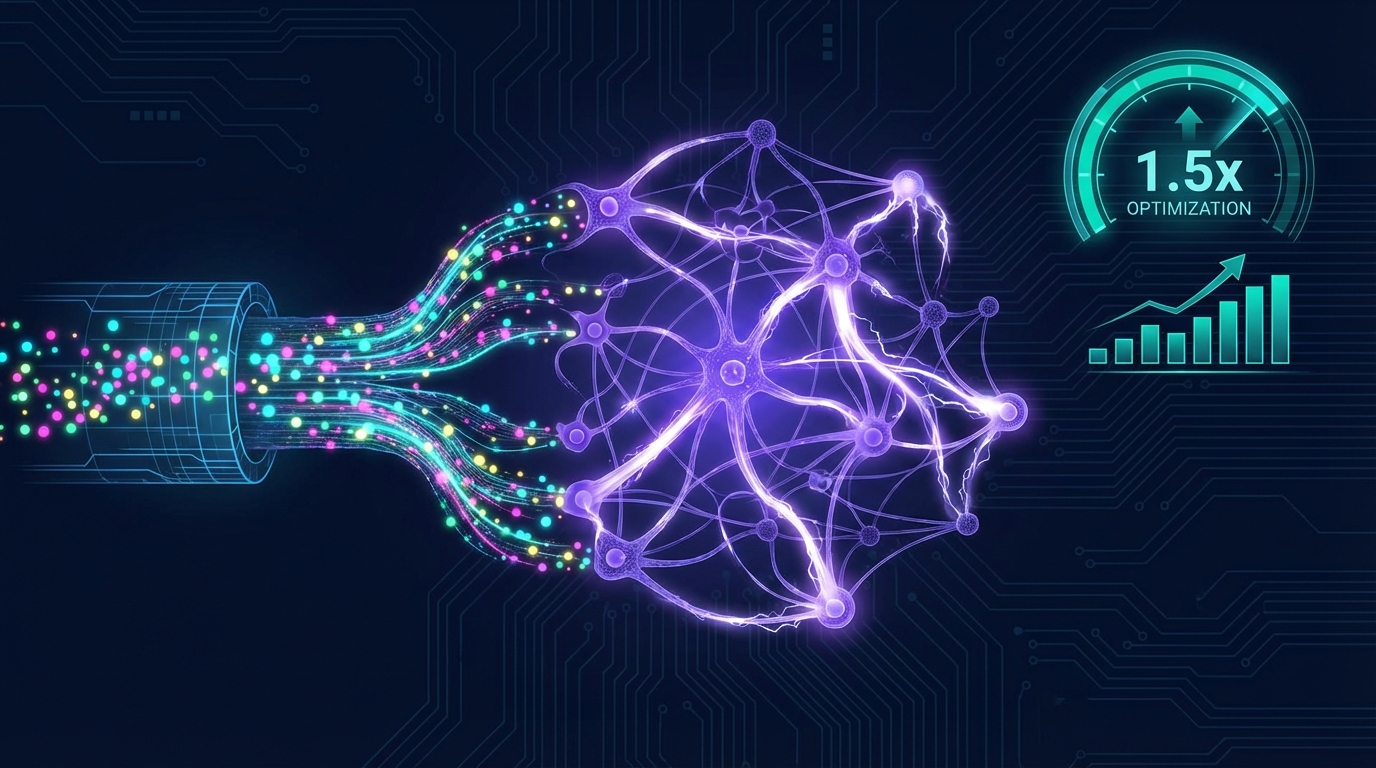
Together AI ATLAS-2 launched at AI Native Conf as an inference system that adapts in real time using actual user data. The result: 1.5x faster inference by continuously optimizing model serving based on observed usage patterns. Rather than relying on static benchmarks, ATLAS-2 learns from live traffic to tune performance dynamically. For organizations running large-scale agent deployments, this kind of adaptive optimization closes the gap between synthetic benchmarks and real-world performance.
But there is a foundational layer that ATLAS-2, like every adaptive system, still depends on getting right — memory that persists beyond the current optimization window.
Together AI ATLAS-2: What Everyone's Getting Right (And Missing)
ATLAS-2 gets adaptive optimization right. Traditional inference systems are tuned once against benchmarks and deployed statically. ATLAS-2 continuously observes real user patterns — which queries are common, what sequence lengths dominate, how workload characteristics shift throughout the day — and adjusts serving parameters accordingly. This is a genuine advance in inference infrastructure.
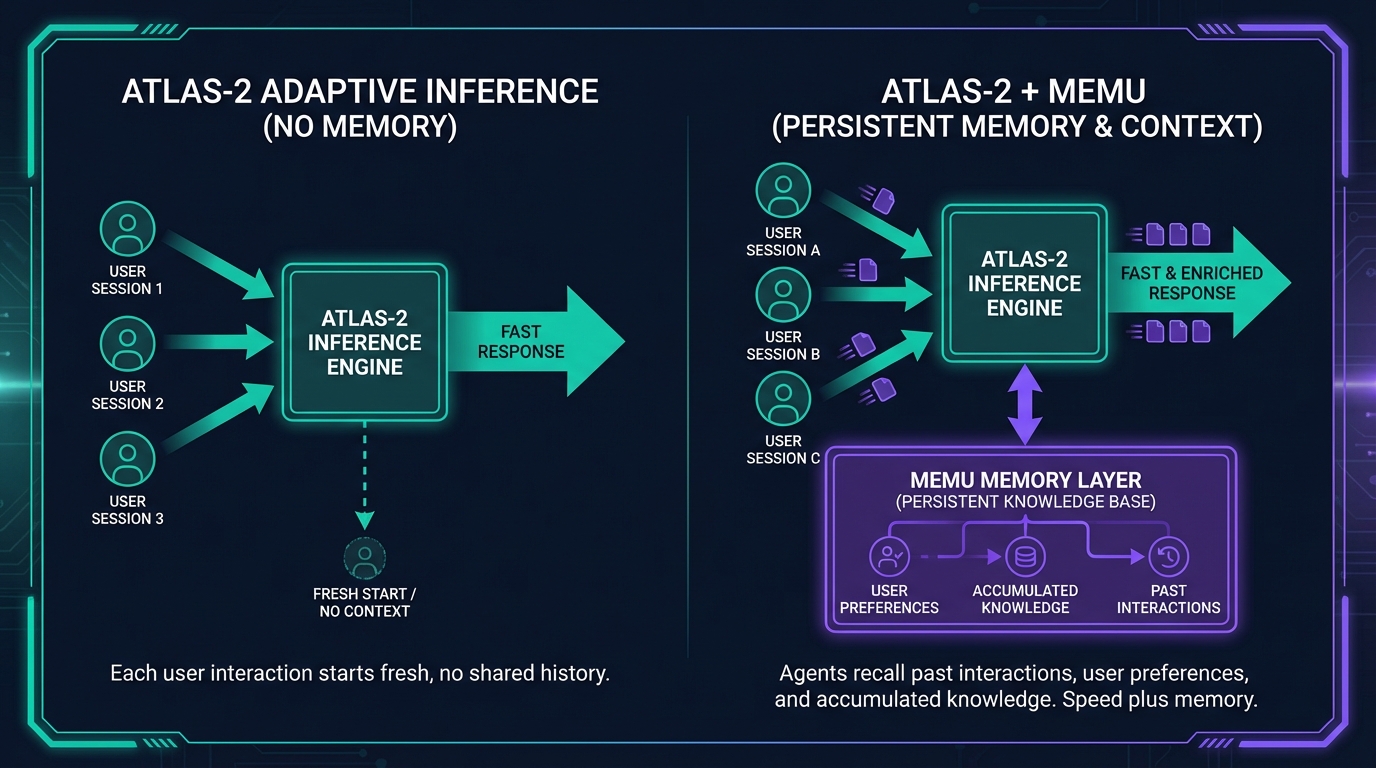
What ATLAS-2 does not address is what happens when the agents it serves need to remember. ATLAS-2 optimizes how fast the model processes requests; it does not give agents access to what they processed before. The agent that adapted perfectly to a user's workflow yesterday starts the optimization cycle again today. ATLAS-2 adapts the serving layer; it does not adapt the agent's knowledge.
Other adaptive inference systems — dynamic batching in vLLM, auto-scaling in SageMaker, speculative decoding in Medusa — share this same architectural constraint. They optimize the compute path; none of them optimize what agents carry forward from previous interactions.
The MemU Agentic Memory Framework: Persistent Intelligence for Adaptive Infrastructure
The MemU Agentic Memory Framework adds the missing layer. Where ATLAS-2 optimizes how quickly agents get responses, MemU ensures those responses draw on accumulated experience.
Consider an enterprise support agent handling product questions. ATLAS-2 serves responses 1.5x faster by adapting to the traffic profile. With MemU, that same agent recalls that this customer asked a related question last week, that the product team shipped a fix for the underlying issue two days ago, and that similar customers in this industry tend to need migration-specific guidance. The response is both fast and informed by experience.
The MemU Agentic Memory Framework provides:
- Drop-in integration: A simple API that works alongside any inference infrastructure — Together AI, vLLM, TGI, or custom serving stacks. Add memory calls; your adaptively-served agents gain persistent knowledge.
- Dual-mode retrieval: Semantic search for meaning-based recall of past interactions plus a structured memory graph for precise relationship queries. Not just cached responses — actual experiential intelligence.
- Cross-session persistence: Memory survives across sessions, traffic shifts, and infrastructure scaling events. Agent intelligence compounds with every interaction, independent of serving layer changes.
Adaptive inference without persistent memory delivers faster amnesia. The MemU Agentic Memory Framework ensures that optimized responses are also informed responses — speed multiplied by knowledge.
Retrieval operates across 10,000+ memory entries with sub-100ms latency, adding negligible overhead to the inference time ATLAS-2 works hard to minimize.
Head-to-Head: Adaptive Inference Alone vs. Adaptive Inference + MemU
ATLAS-2 alone: Inference adapts to real-time traffic patterns. Responses arrive 1.5x faster. But faster responses to the same questions, reconstructed from scratch every session, is optimized redundancy. The agent serves answers quickly; it does not serve answers that build on previous interactions.
ATLAS-2 + MemU Agentic Memory Framework: Fast inference meets persistent knowledge. The agent retrieves from memory, reasons with fresh context, and returns a response that is both computationally optimized and experientially rich. Each interaction is fast AND informed by the full history of previous interactions.
Compound optimization: ATLAS-2 reduces the time per request. MemU reduces the work per request — because the agent does not need to rediscover knowledge it already has. Together, they cut both latency and wasted computation, delivering more value per inference dollar.
Empowering ATLAS-2: Better Together
MemU does not replace ATLAS-2 — it makes adaptive inference dramatically more productive:
- Customer-facing agents: ATLAS-2 delivers low-latency responses; MemU ensures those responses reflect the full history of each customer relationship, turning fast replies into personalized experiences.
- Research automation: ATLAS-2 optimizes throughput for parallel research queries; MemU ensures each query builds on findings from previous research sessions, so exploration is cumulative rather than repetitive.
- Real-time analytics: ATLAS-2 adapts serving for bursty analytical workloads; MemU remembers past analysis patterns, data quality issues, and successful query strategies, so each analytical session starts further ahead.
Get Started with MemU
Add persistent memory to your adaptively-served agents in minutes. The MemU Agentic Memory Framework works with any inference infrastructure — one API, zero lock-in, immediate intelligence persistence. Visit memu.pro to explore the Agentic Memory Framework API, or check out the GitHub repository to start building agents that remember.
Tags: Together AI, ATLAS-2, adaptive inference, real-time AI optimization, agentic memory, LLM memory, MemU AI