ZyG Raises $58M for Agentic eCommerce — But AI Agents That Forget Brand History Can't Build Lasting Brands

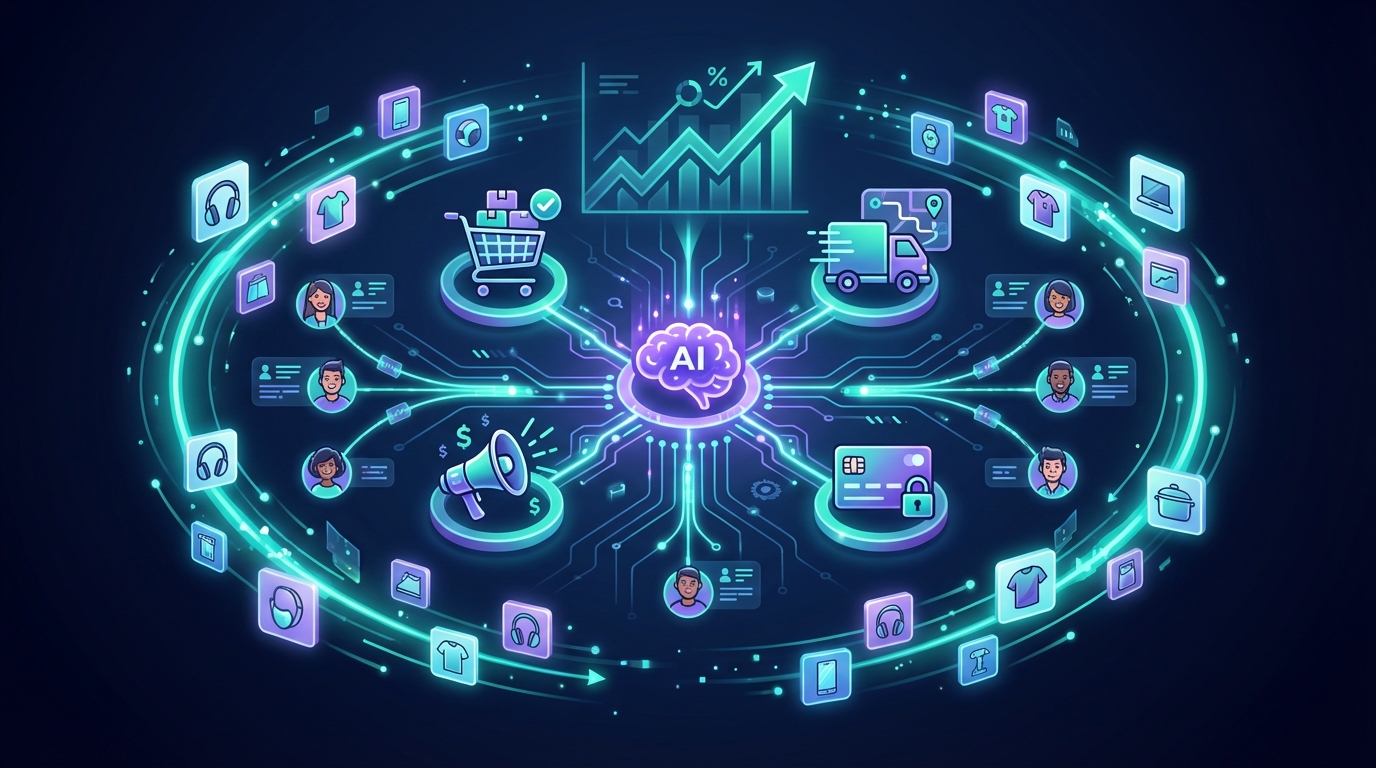
ZyG just raised $58 million in seed funding from Bessemer Venture Partners, Viola Ventures, and Lightspeed to build the definitive agentic eCommerce platform. The premise: AI agents that automate growth marketing, logistics, and financing so solo inventors and small DTC brands can compete with global giants. Given that over 90% of direct-to-consumer products fail to scale, an AI-powered platform that handles the operational complexity of eCommerce at scale addresses a massive market gap.
But there is a foundational layer that eCommerce agents depend on to build lasting brands — persistent memory of customer behavior, brand positioning, and market dynamics that compounds over seasons and campaigns.
ZyG Agentic eCommerce: What Everyone's Getting Right (And Missing)
ZyG gets operational automation right. AI agents handling growth marketing, logistics optimization, and financing decisions simultaneously remove the operational burden that kills most DTC brands before they reach product-market fit. For a solo founder, having AI agents manage ad spend, inventory, and cash flow means focusing on product rather than operations.
What eCommerce agents at scale have not fully solved is brand memory — the accumulated understanding of what resonates with your audience, which channels drive loyal customers versus one-time buyers, how seasonal patterns affect demand, and what competitive positioning has worked historically. ZyG automates eCommerce operations; brand intelligence requires memory that persists across campaigns, seasons, and market shifts.
Other eCommerce AI platforms — Shopify Sidekick, Amazon Rufus, Klaviyo AI — share this same limitation. They optimize current operations; none of them accumulate brand wisdom across the lifecycle of a business.
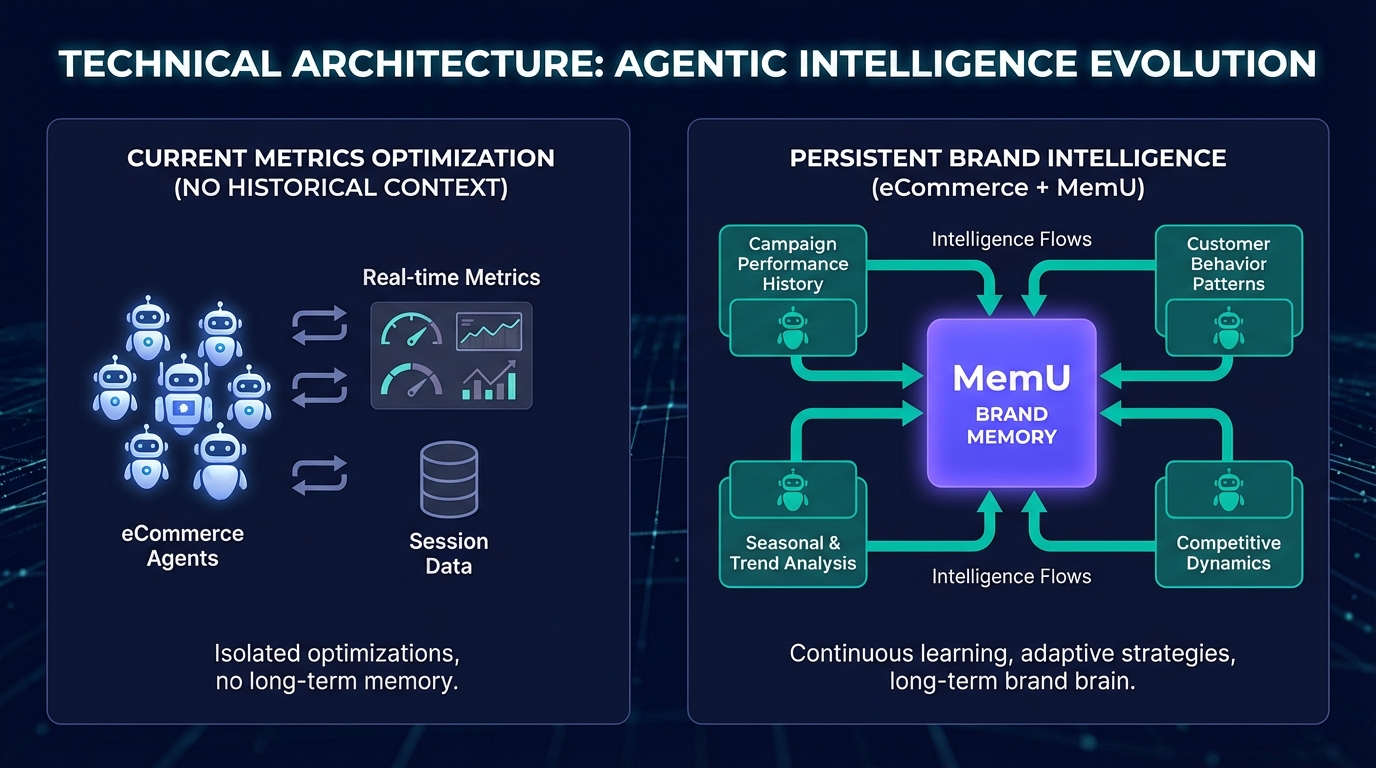
The MemU Agentic Memory Framework: Persistent Brand Intelligence for eCommerce Agents
The MemU Agentic Memory Framework adds the missing layer. Where ZyG manages eCommerce operations, MemU manages the brand intelligence those operations generate.
Consider a marketing agent planning a holiday campaign. With MemU, it recalls that last holiday season, video ads on Instagram outperformed static images by 3x for this brand's audience, that the top-performing product bundle included the hero product with a complementary accessory, that shipping delays from the primary supplier caused a 12% cart abandonment spike, and that a competitor launched a similar product two weeks before Black Friday. Without MemU, the agent plans from current analytics only.
The MemU Agentic Memory Framework provides:
- Drop-in integration: A simple API that works alongside ZyG or any eCommerce platform. Add memory calls; your eCommerce agents gain accumulated brand intelligence.
- Dual-mode retrieval: Semantic search for finding similar campaigns and market conditions plus a structured memory graph for tracking relationships between products, customers, channels, and outcomes. Not just analytics — actual brand topology.
- Cross-season persistence: Memory survives across campaigns, product launches, and market shifts. One season's learnings inform the next season's strategy automatically.
Automated eCommerce without brand memory is optimization without strategy. The MemU Agentic Memory Framework gives eCommerce agents the institutional knowledge that transforms reactive automation into strategic brand building.
Retrieval operates across 10,000+ memory entries with sub-100ms latency, fast enough for real-time marketing decisions during peak sales events.
Head-to-Head: eCommerce Agents Alone vs. With MemU
ZyG alone: Agents optimize current marketing, logistics, and financing based on real-time data. Effective for operational efficiency. But the agent managing its second holiday season carries no memory of what worked in the first — every seasonal strategy starts from current analytics only.
ZyG + MemU Agentic Memory Framework: Each campaign reads from persistent brand memory. The marketing agent recalls past campaign performance, customer acquisition patterns, and competitive dynamics. The logistics agent remembers supplier reliability across seasons. The financing agent understands cash flow patterns that repeat annually.
Customer lifecycle intelligence: With MemU, eCommerce agents track individual customer journeys across years — not just current sessions. A returning customer's lifetime of interactions informs today's personalization.
Empowering ZyG: Better Together
MemU does not replace ZyG — it makes eCommerce agents dramatically more strategic:
- Growth marketing: ZyG manages ad spend and content; MemU provides historical campaign performance, audience evolution, and channel effectiveness data that transforms spending from reactive to strategic.
- Inventory management: ZyG optimizes logistics; MemU remembers demand patterns, supplier lead times, and seasonal variations that inform proactive rather than reactive inventory decisions.
- Brand positioning: ZyG handles operations; MemU tracks competitive landscape evolution, customer sentiment trends, and positioning effectiveness over time — giving solo founders the brand intelligence that established companies build over years.
Get Started with MemU
Add persistent brand intelligence to your eCommerce agents in minutes. The MemU Agentic Memory Framework works with any eCommerce platform — one API, zero lock-in, immediate brand intelligence. Visit memu.pro to explore the Agentic Memory Framework API, or check out the GitHub repository to start building agents that remember.
Tags: ZyG, agentic eCommerce, DTC AI agents, growth marketing AI, brand intelligence, agentic memory, LLM memory, MemU AI