From Reactive to Proactive: How Memory Gives AI a Sense of Agency

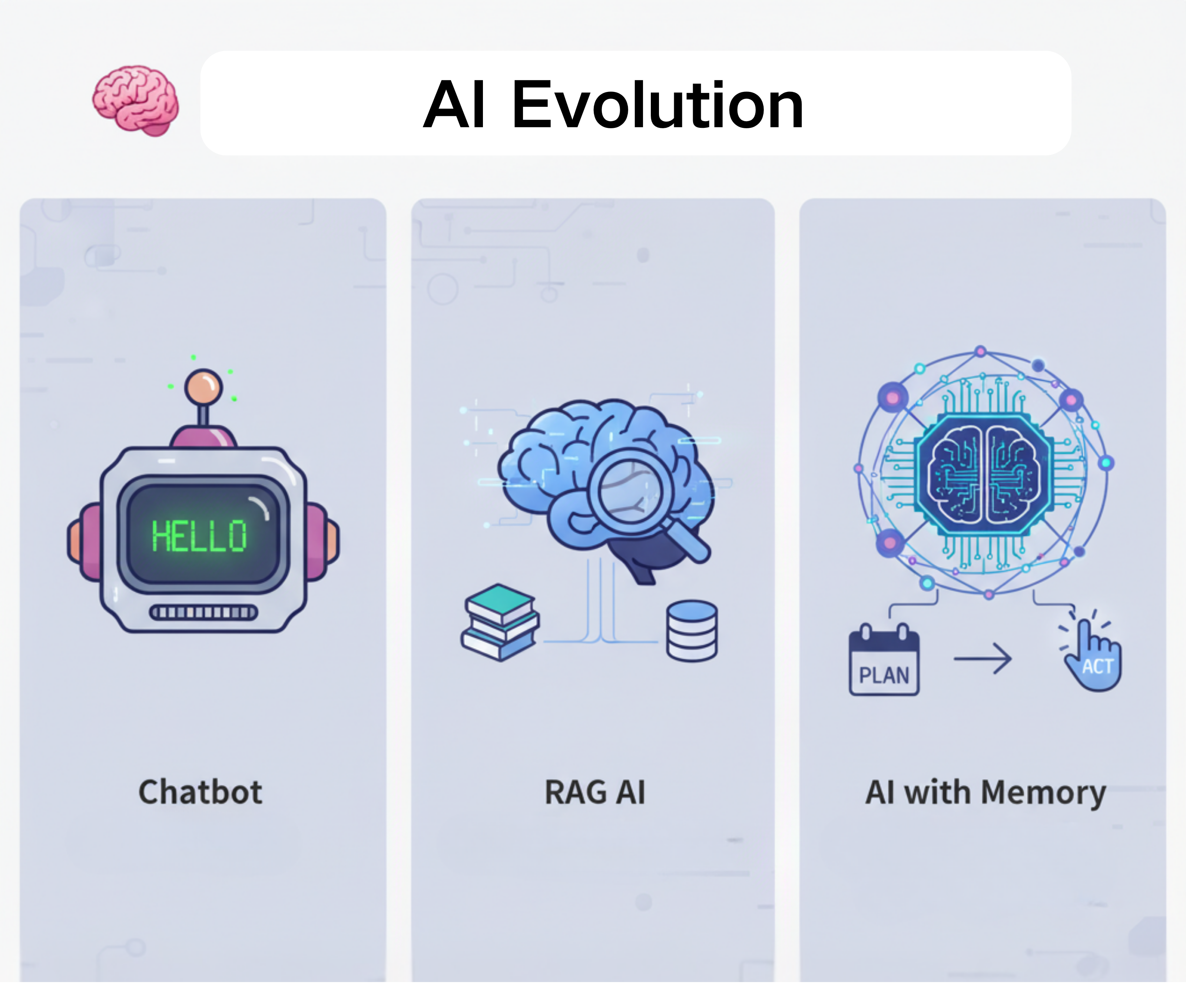
Over the past few years, AI has been all about understanding and generation. Models have become better at language, better at writing, and even better at art.
But a deeper question has emerged: If AI can only respond, it remains passive. If AI can think proactively, it becomes a true assistant.
You can see this shift everywhere:
- In emotional companion apps that want AI to care about the user.
- In personal agents that should remind, summarize, and propose actions.
- In enterprise settings where AI should anticipate business trends, not just wait for commands.
Turning AI from a reactive responder into a proactive being can’t be done with clever prompts alone. The key enabling technology is memory.
When a system can retain, understand, and organize its past experiences, it gains continuity of thought. And continuity of thought gives rise to intent.
Without memory, there’s no continuous thinking.
Without continuous thinking, there’s no true proactivity.
Giving AI a sense of agency means giving it a sense of time:
- Past (Memory): It knows what it has experienced.
- Present (Context): It understands the current situation and goal.
- Future (Planning): It can anticipate, plan, and act ahead of time.
Among these, memory is the foundation. Without an accessible, interpretable, and updatable memory system, context and planning cannot exist. That’s why many teams are now emphasizing the memory layer — not as a helper module, but as the foundation of AI cognition.
I. From RAG to Folder-Based Memory: Why True Proactivity Starts Here
For a long time, many believed that RAG (Retrieval-Augmented Generation) could give AI memory. But RAG only improves retrievability — not continuity of experience.
RAG’s design goal is to let the model pull relevant knowledge from an external database before generating a response, improving factual accuracy. From a memory perspective, however, RAG has three inherent limitations:
- Temporal discontinuity. RAG doesn’t know when something happened. It retrieves isolated documents without understanding time sequences. It can’t tell what’s “just updated” versus “long outdated.” A real memory system must track the evolution of information.
- Fragmented structure. RAG is a collection of points — disconnected embeddings. There’s no semantic or thematic organization. When asked “What did I discuss most with my clients over the past three months?”, RAG can’t synthesize across fragments. Memory, in contrast, must organize knowledge by topic, time, and causality.
- No self-evolution. RAG never updates itself. It doesn’t summarize, merge, or reflect. Every retrieval depends on static text. True memory must evolve — integrating new events into prior understanding, just as humans form narratives, not piles of text.
A genuine memory system therefore needs:
- Temporality: Awareness of updates, decay, and evolution.
- Plasticity: The ability to merge, summarize, and refine over time.
- Structure: Organizing knowledge by theme, time, and causality.
- Accessibility: Readable and editable by both humans and AI.
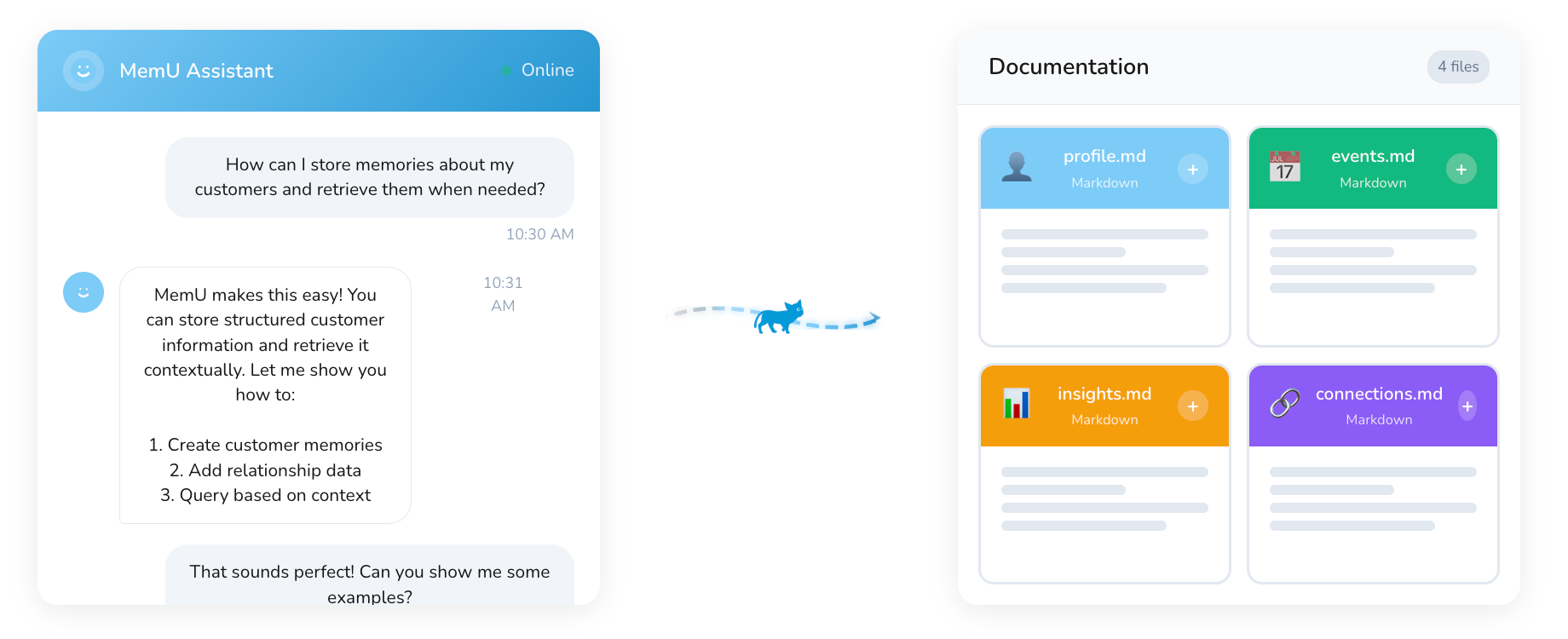
Each “memory file” in memU carries topic, context, timestamp, and evolution records. AI can link across folders, or run background reflection tasks to summarize and refine past memories — so it doesn’t just “know” what was said, but understands its meaning today.
II. memU Architecture: How Memory Enables AI Proactivity
memU introduces several design principles that make “memory → agency” a real, technical pathway:
- Folder-style, layered structure – developers and users can view memories as organized files.
- Dedicated memory agent – processes conversations, documents, and behaviors into structured memory files.
- Rich metadata – timestamps, tags, and version history give each memory temporal and contextual grounding.
- Self-Reflection and Evolution – memories can be archived, summarized, linked, and updated automatically.
- Multimodal support – text, images, audio, and more.
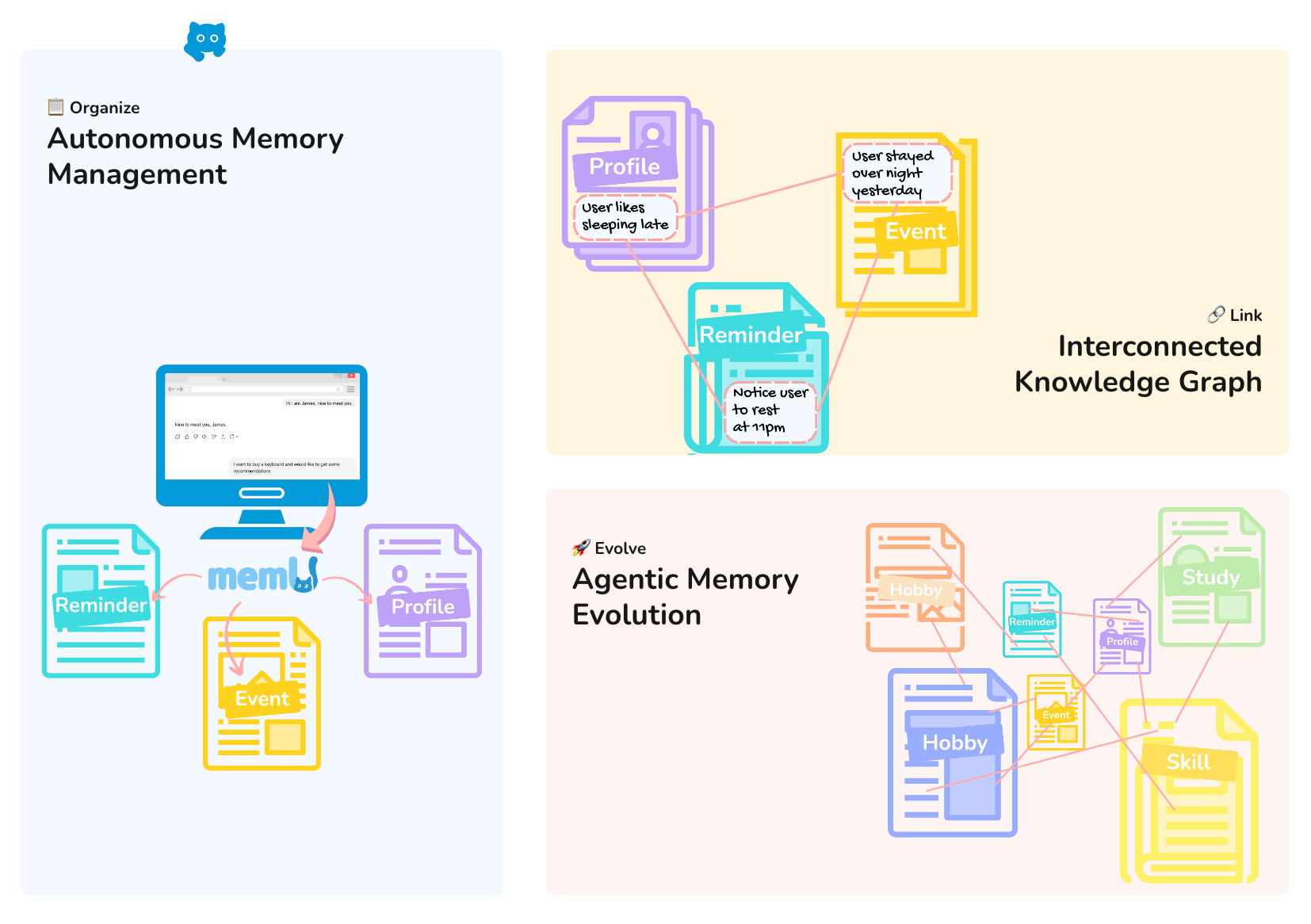
This enables a five-step technical loop for proactive AI:
- Record / Accumulate: Capture interactions as events with timestamps and context.
- Organize: Store memories in structured folders by topic, time, or user-defined schema.
- Retrieve / Link: Bring only relevant memories into the current context, avoiding full-history noise.
- Reflect / Evolve: Summarize, merge, and connect experiences in the background to form higher-level understanding.
- Trigger / Act: Based on memory + context, identify when to remind, suggest, or act.
memU sits at the center of this pipeline — provides the memory layer that other modules (like agent logic or trigger engines) can build upon.
“Proactivity = Memory + Structured State Management + Trigger Mechanisms.”
Without these, even the best LLM + static knowledge base remains reactive.
III. What Can Proactive, Memory-enabled AI Actually Do?
Let’s see how this plays out in real-world applications.
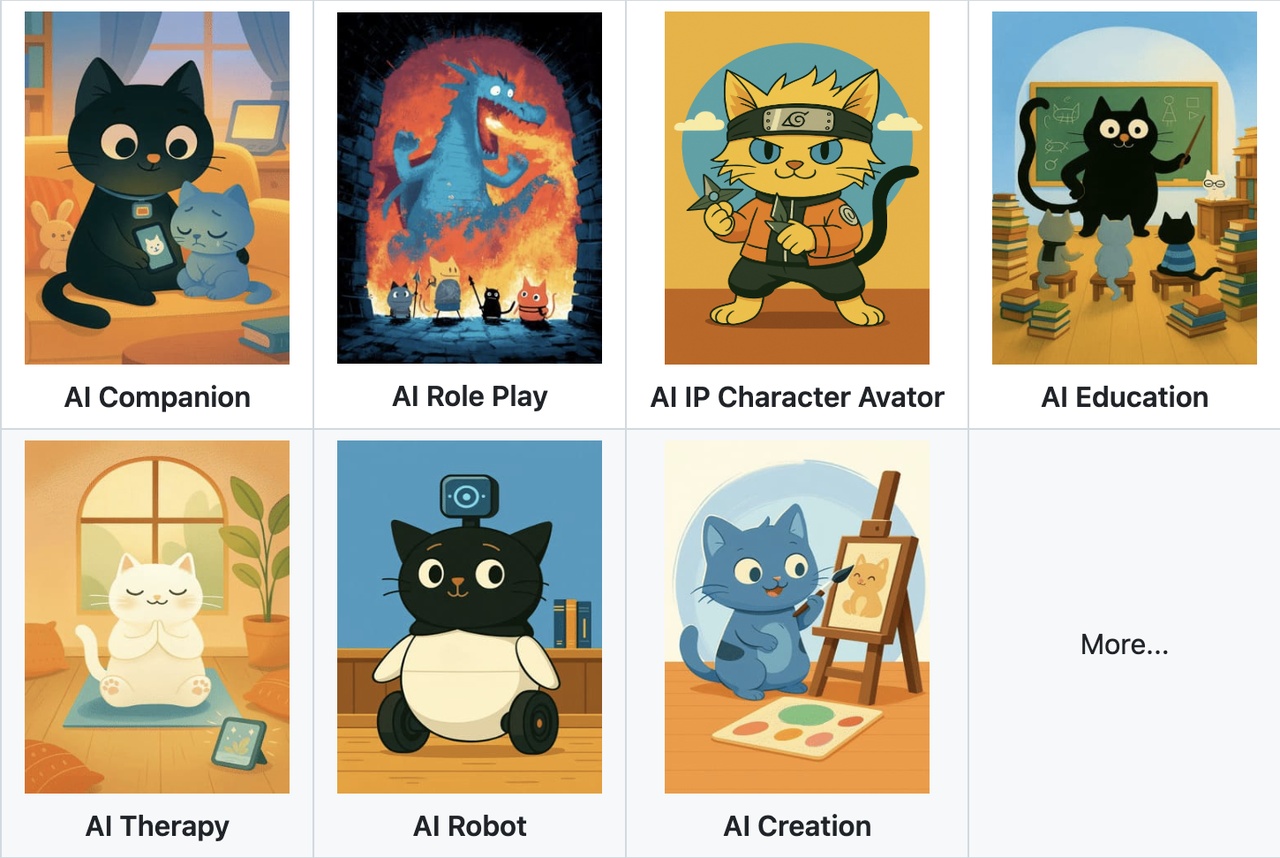
🧠 A. Emotional Companions / Life Assistants
AI remembers past conversations — “You mentioned you’ve been having trouble sleeping.”
- It follows up — “Did you practice guitar this week?”
- It reminds you — “Your health checkup is next Tuesday.”
- It detects behavior changes — “You’ve been online late again — should we try a screen-free night plan?”
- And when you disappear — “Haven’t heard from you lately. Everything okay?”
Result: Emotional continuity, stronger trust, deeper attachment.
💼 B. Knowledge / Project Assistants
AI tracks goals, milestones, and meeting outcomes.
- Before the next meeting, it reminds you — “You planned to submit the report by this week.”
- It identifies trends — “Complaint rates rose 0.8% this quarter.”
- It connects experiences — “Check your Q1 project, risk A already appeared there.”
Result: Less mental overhead, fewer forgotten tasks, better decisions.
💬 C. CRM & Customer Agents
AI tracks every client interaction, knows what they care about, and prompts timely follow-ups.
- “Mr. Zhang mentioned logistics delays last time — highlight our new delivery upgrade.”
- “Client X hasn’t ordered in 90 days — it’s time for a re-engagement.”
Result: Continuous relationships, higher conversion, smarter sales timing.
🎓 D. Education / Learning Companions
AI remembers what the student mastered or missed. It adapts lesson plans, tracks progress, and reminds you of upcoming goals.
- “You planned to review vocabulary at 6 a.m. — shall I adjust your reminder?”
- “Two months left until your exam — let’s start mock tests this week.”
Result: Personalized learning with proactive support and sustained motivation.
IV. One Line to Build a Proactive AI
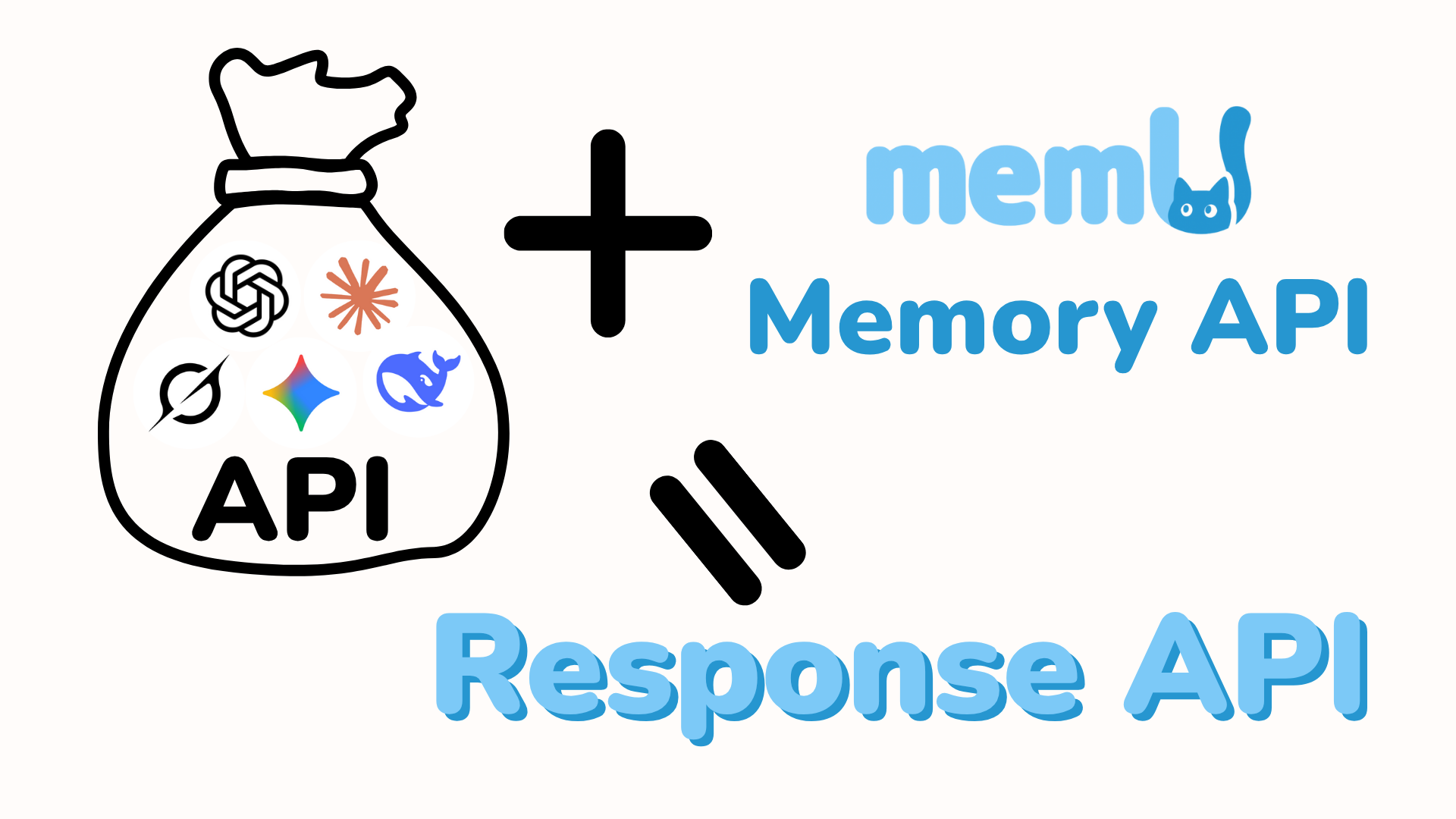
You don’t need to build a complex memory infrastructure from scratch to make AI proactive. memU unifies memory, retrieval, reflection, and reasoning into a single API — the memU Response API.
With one call, your AI can understand, generate, and update memory simultaneously. No need to handcraft retrieval pipelines or memory layers — just one unified interface. Compatible with major LLMs (OpenAI, Claude, Gemini, DeepSeek, Qwen, and more), memU Response API powers emotional companions, intelligent assistants, enterprise agents, and educational AIs alike.
Quickstart: https://memu.pro/docs#responseapi